Art Scavenger Hunt
Overview
Throughout the history of Battleship Texas, there have been many artists who have walked the decks. As they continued in their standard duties throughout the ship, they also honed their craft. Their art varied heavily depending on the time period and the many different mediums sailors and marines were inspired by.
Essential Questions
What inspired sailor and marine artists to create during their time on board? What were some limitations to their craft? Who were the intended audiences of the different art forms? (Hint: they are not always the same audience.)
Objectives
Throughout this activity, students will:
- Analysis
Analyze, compare, and contrast the provided materials and methods of crewmember art examining their various properties and characteristics. - Knowledge
Learn about the materials used in the evolution of Navy art trends and their importance in crew member morale and leisure. - Discussion
Discuss the importance of a crew member made art and how many distinct forms it took throughout the years, and how each period affected the art made.
Art Scavenger Hunt
Review the artifacts below and attempt to match them to each question. Click on the artifact to view additional images and read the context. Each question indicates how many possible answers there are.
Additional questions to ask for each piece: Who is the artist, and when did they make this? What experiences influenced the creation of this art piece?
- You may not think to find art on me, but I can make an interesting canvas. I am metal. I am usually flying so people don’t get a chance to look at me very closely. What am I? (1 option)
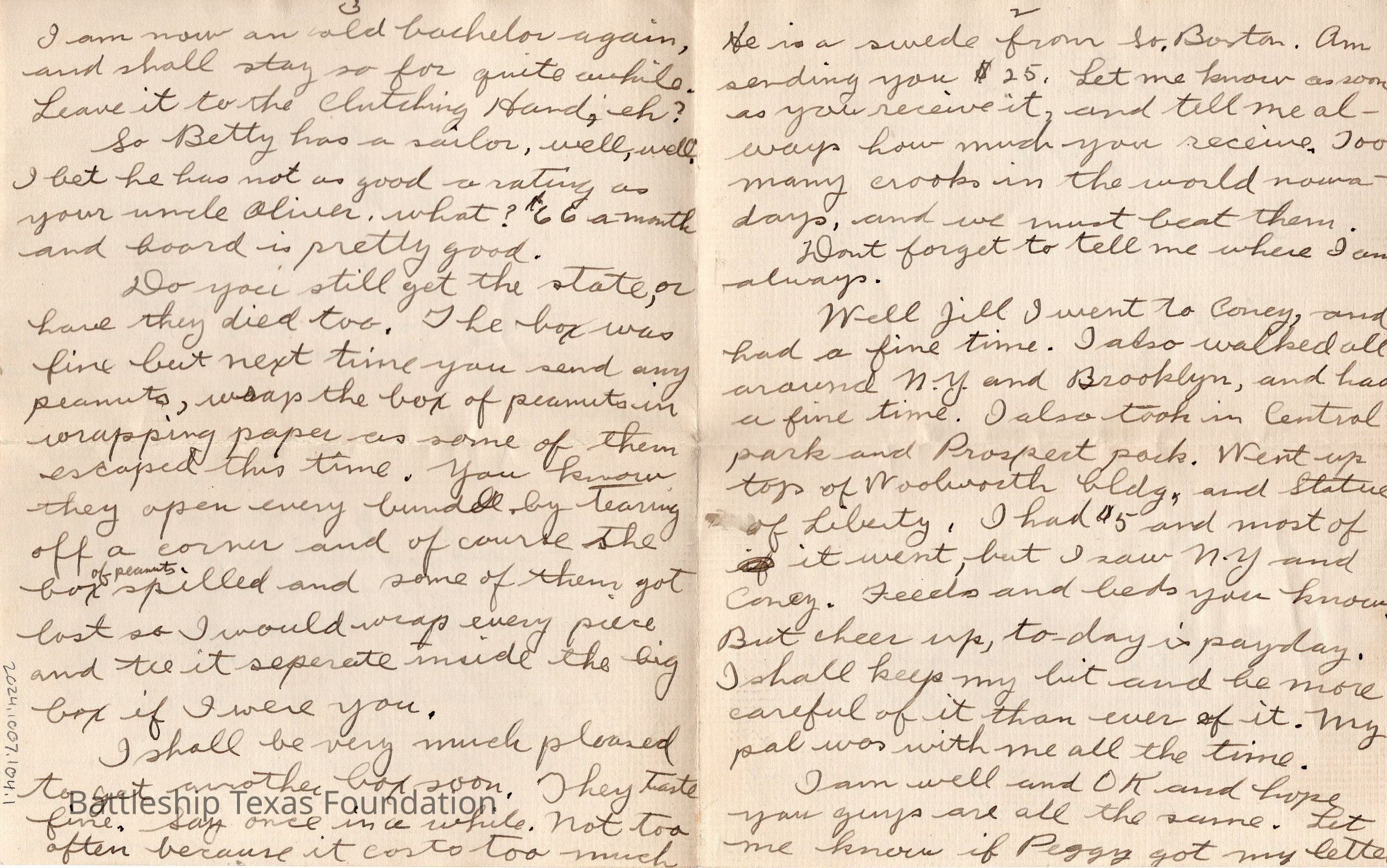
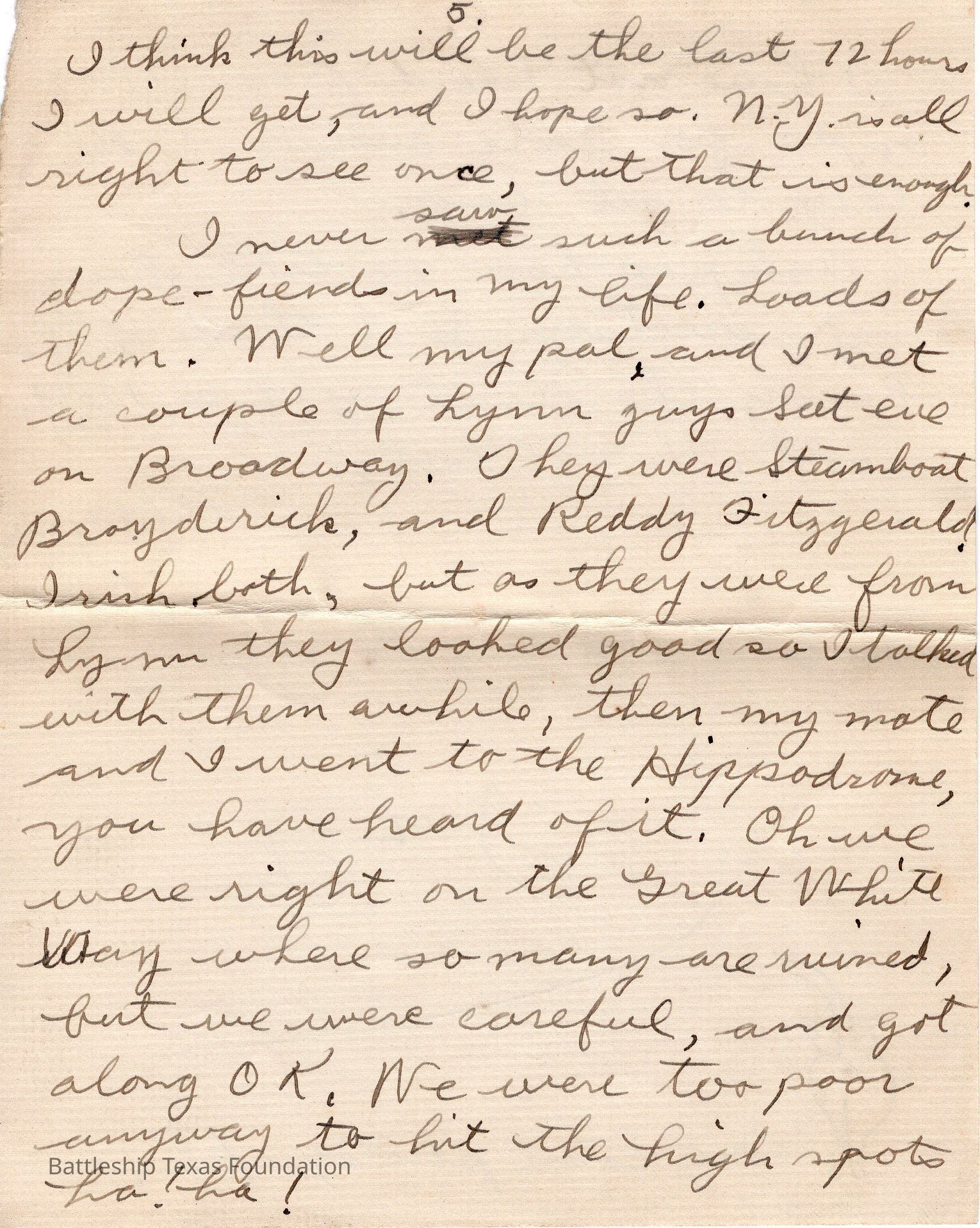
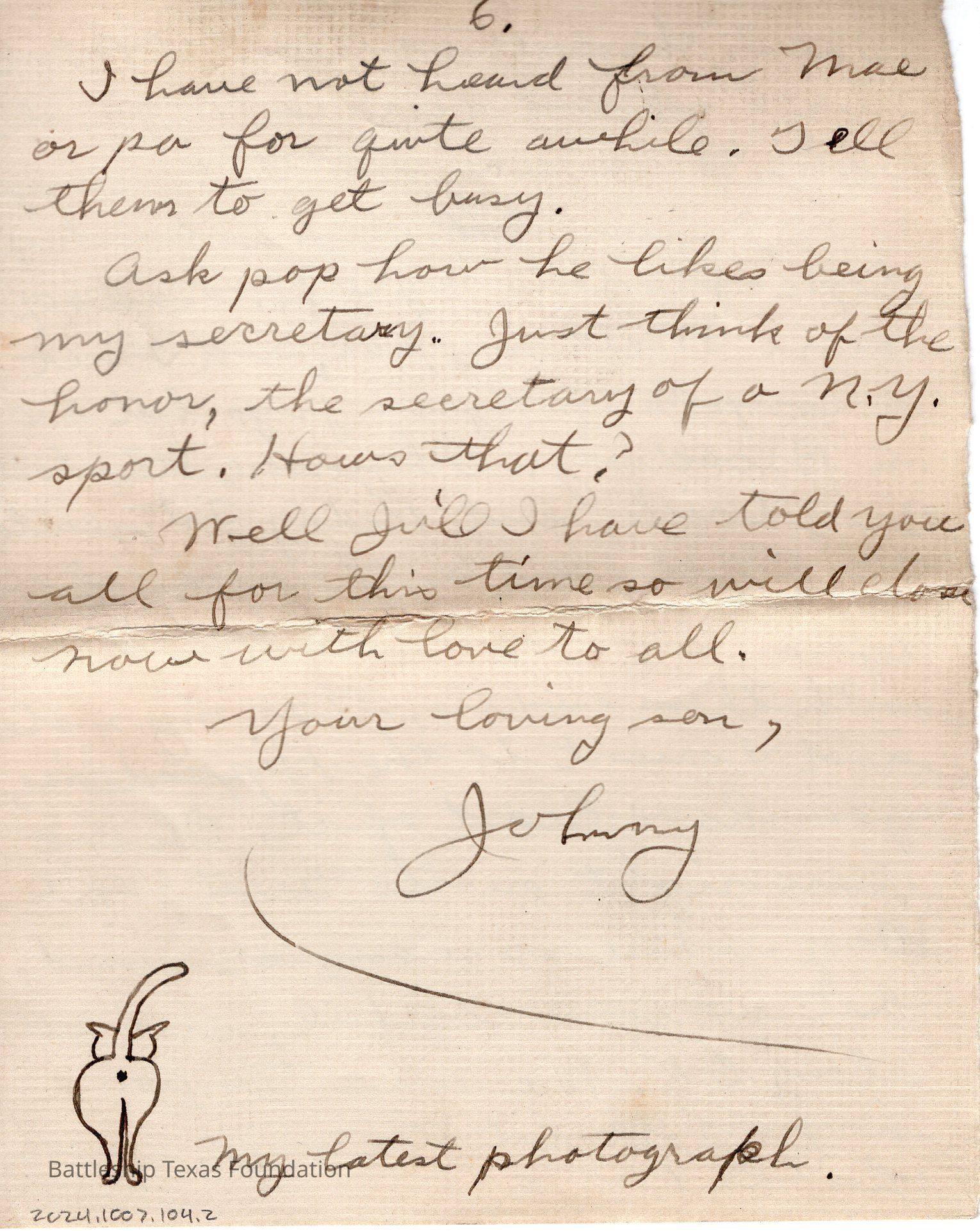
- I am not meant to stay on Battleship Texas. My artist sent me home to his family. I think I made him feel better when he was stressed. I made my artist laugh, and I hope his family also found me funny. What am I? (2 options)
- I am usually used to celebrate anniversaries, holidays, and even birthdays. I am small, but meant for everyone, not just the crew of Battleship Texas. I carry things. What am I? (5 options)
- I should not exist. I was made when someone should have been paying attention in class. Because of this, I am hidden away on the back of the page. My artist wished he was here instead of class. What am I? (1 option)
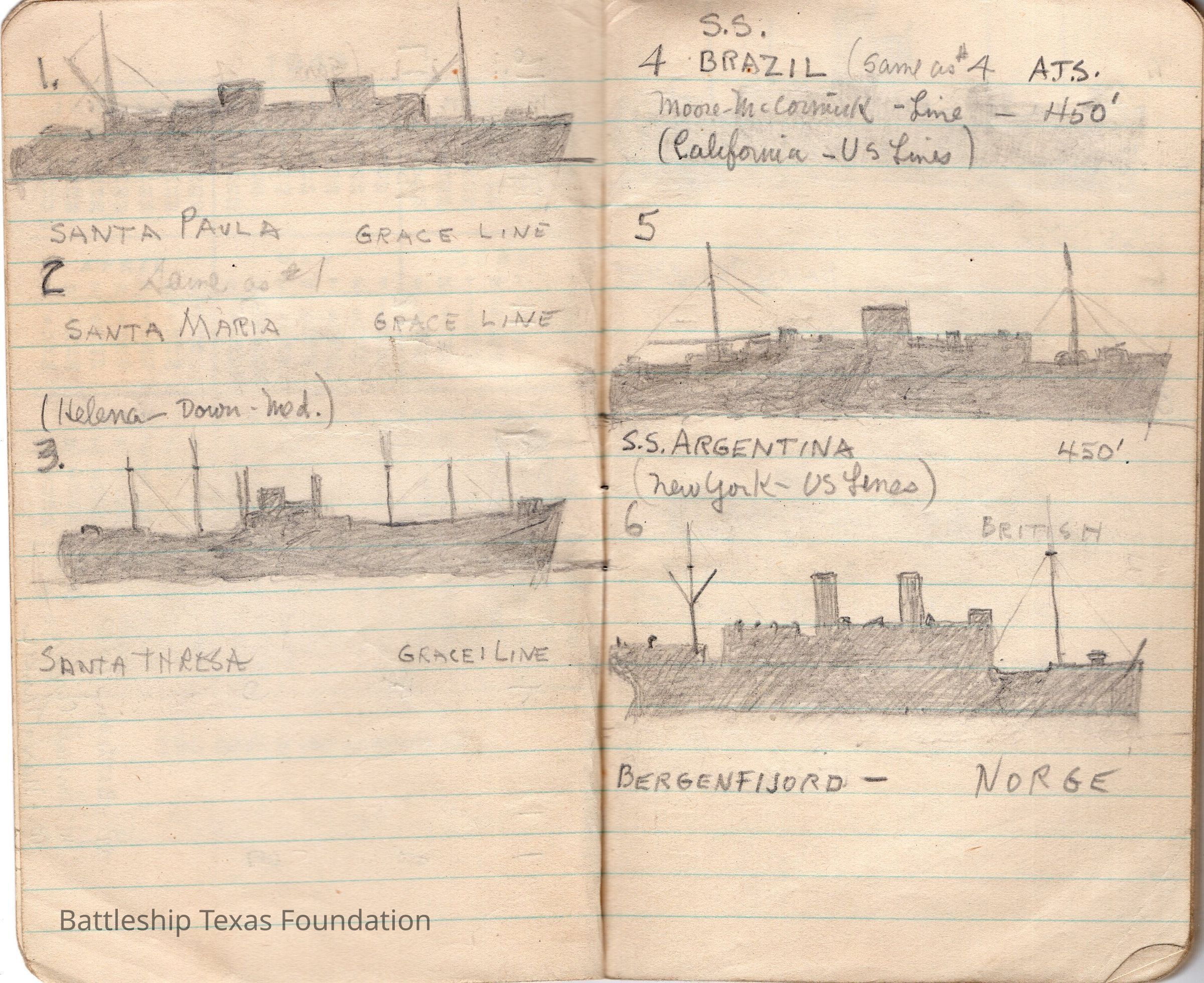
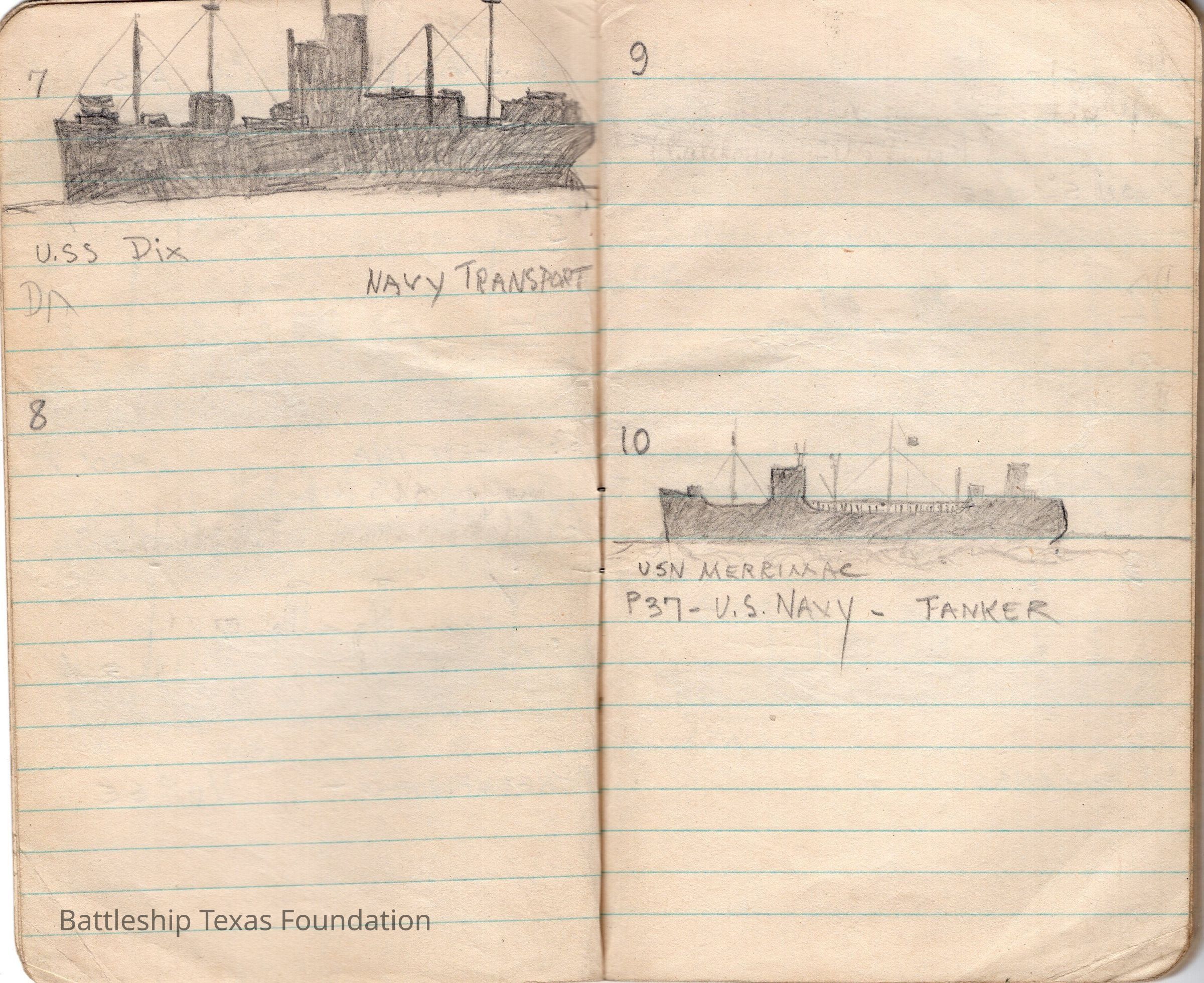
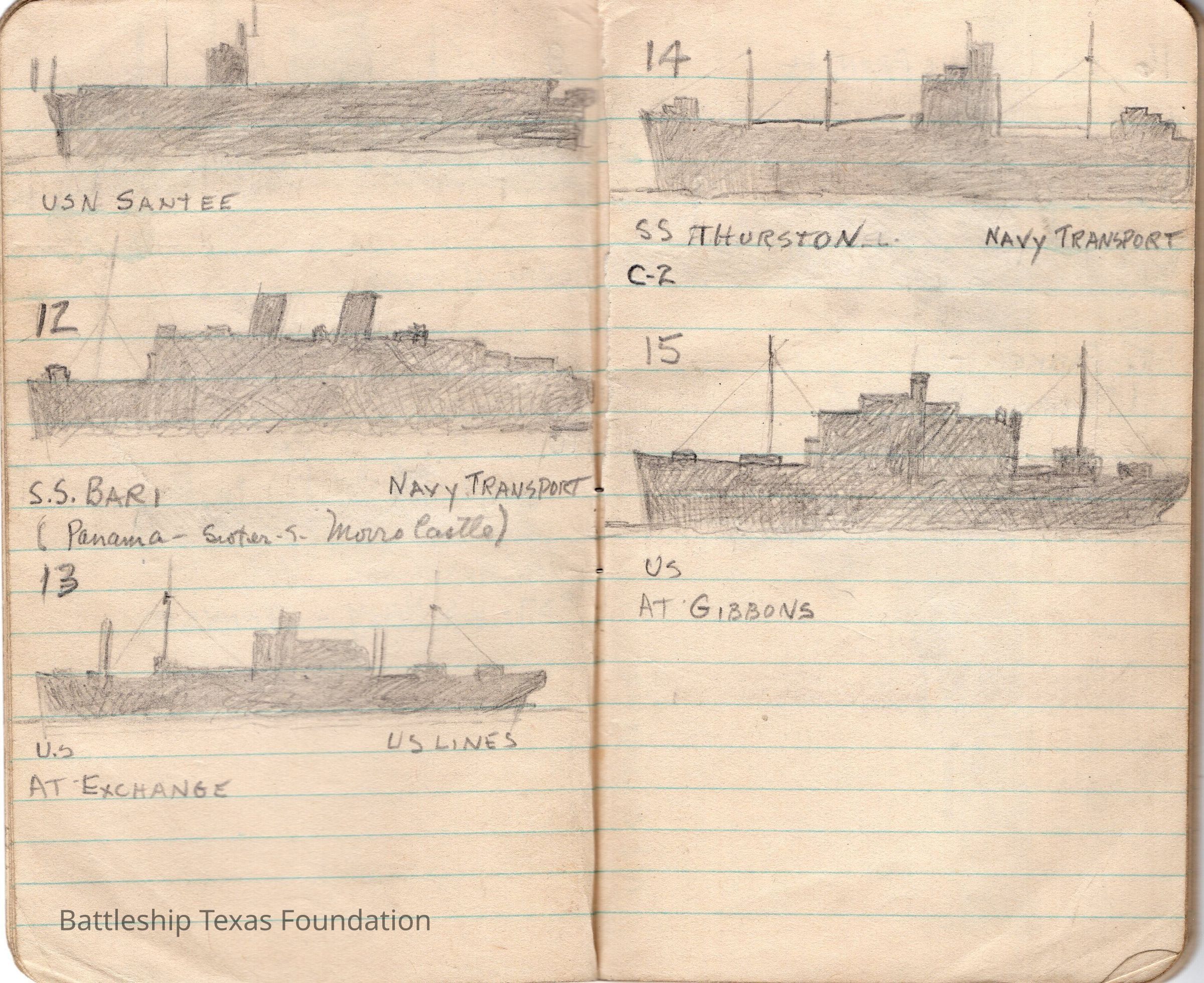
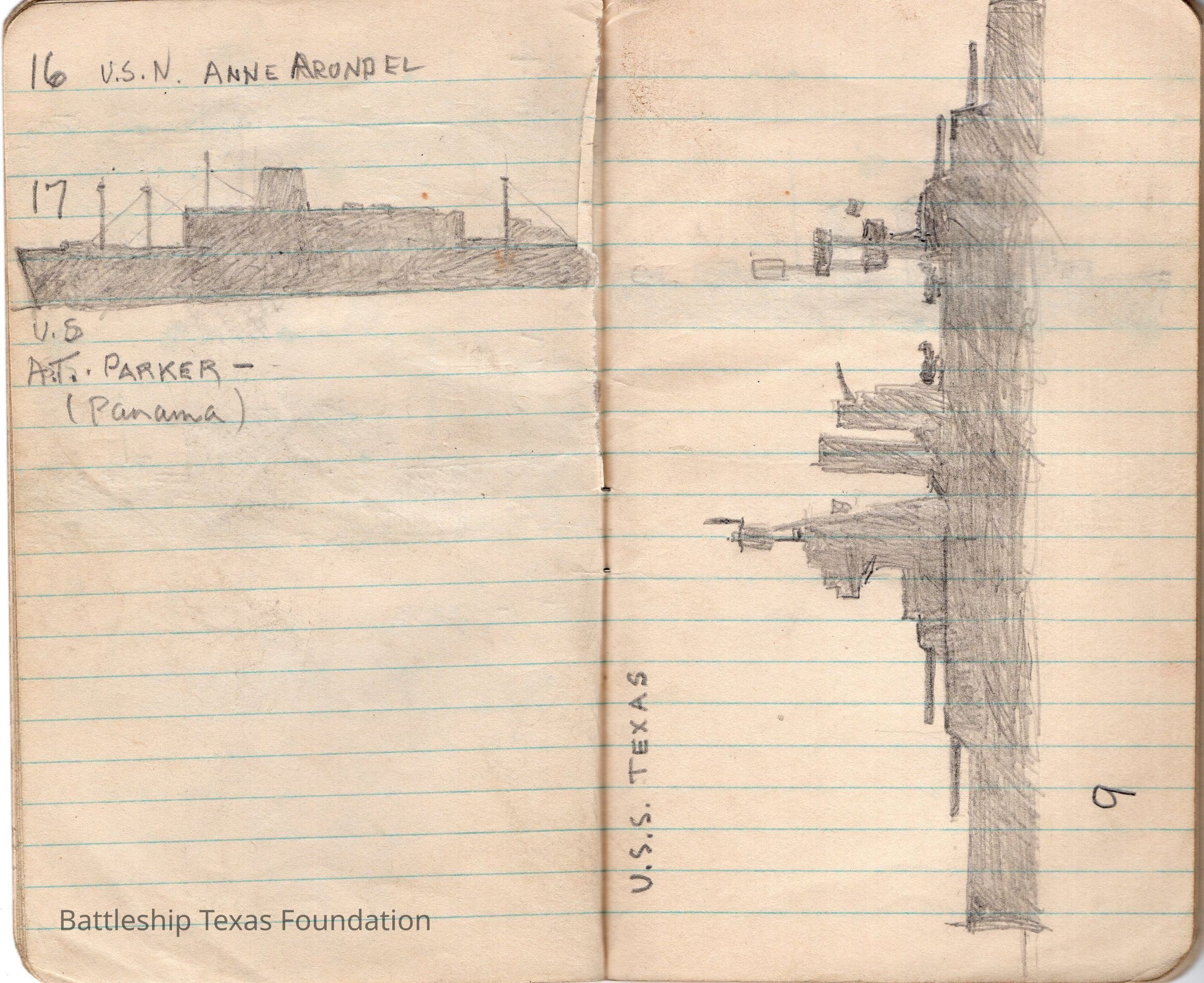
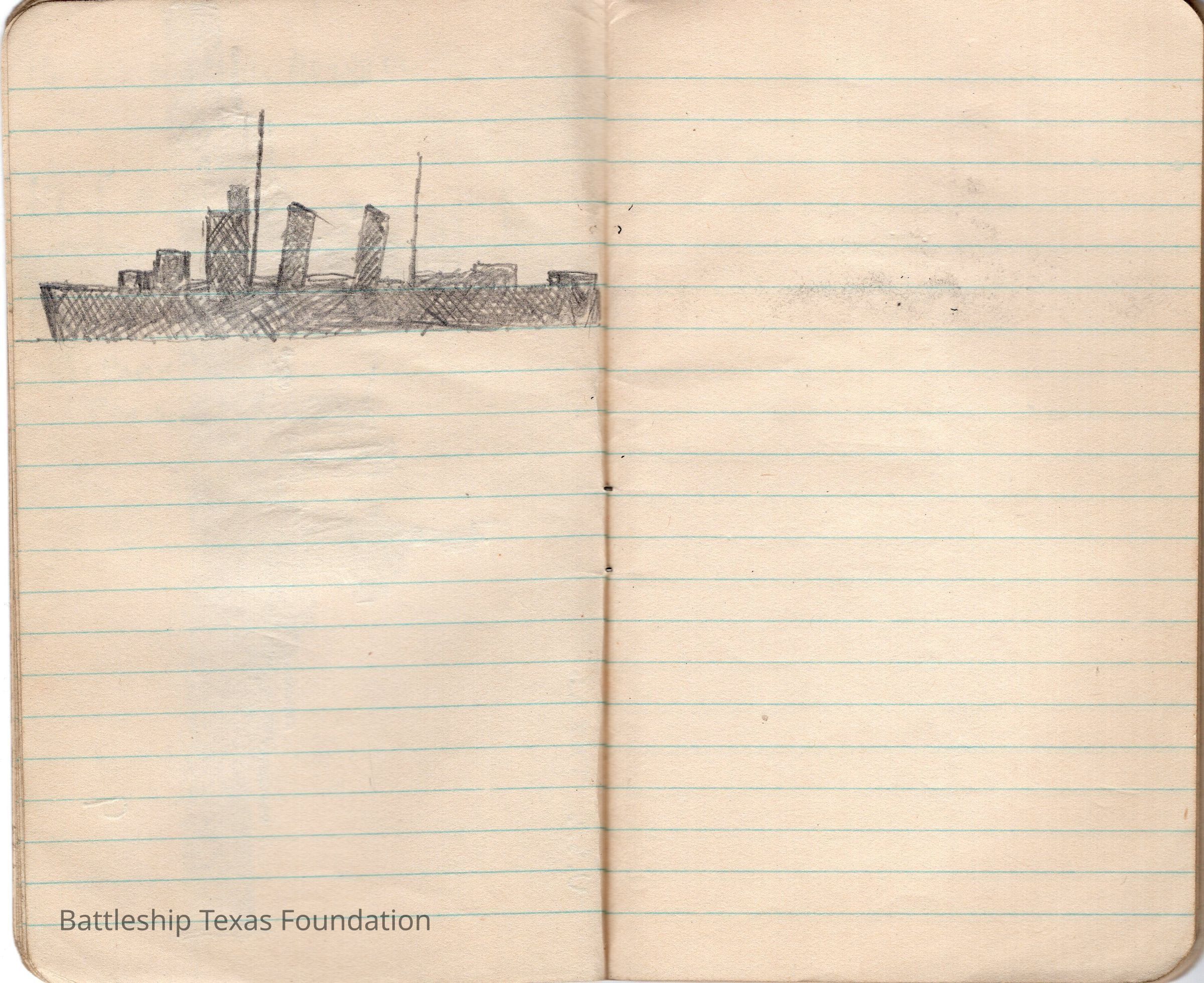
- My artist was just passing through. He was not a crewmember of Battleship Texas, but he did sail with her. My artist had no camera, so I was made to capture what he saw sailing with the fleet. What am I? (1 option)
- I am not thought of as being a canvas for art. Art is not the reason I exist, but it is the first thing of me you see. I am enjoyed and read by the entire crew of Battleship Texas and keep the men updated on news. What am I? (3 options)
- I require a bit of metal working to look this good. I was made as a status symbol because my artist thought I would make him look cool. What am I? (1 option)
- I am made of several pieces stitched together. I was meant to be decoration. One of the pieces used to make me was the cover of a photo album. What am I? (1 option)
- I am a display of skill and represent a long tradition in the Navy. I could not be achieved alone. I am not actually here, but a representation of me is. What am I? (1 option)
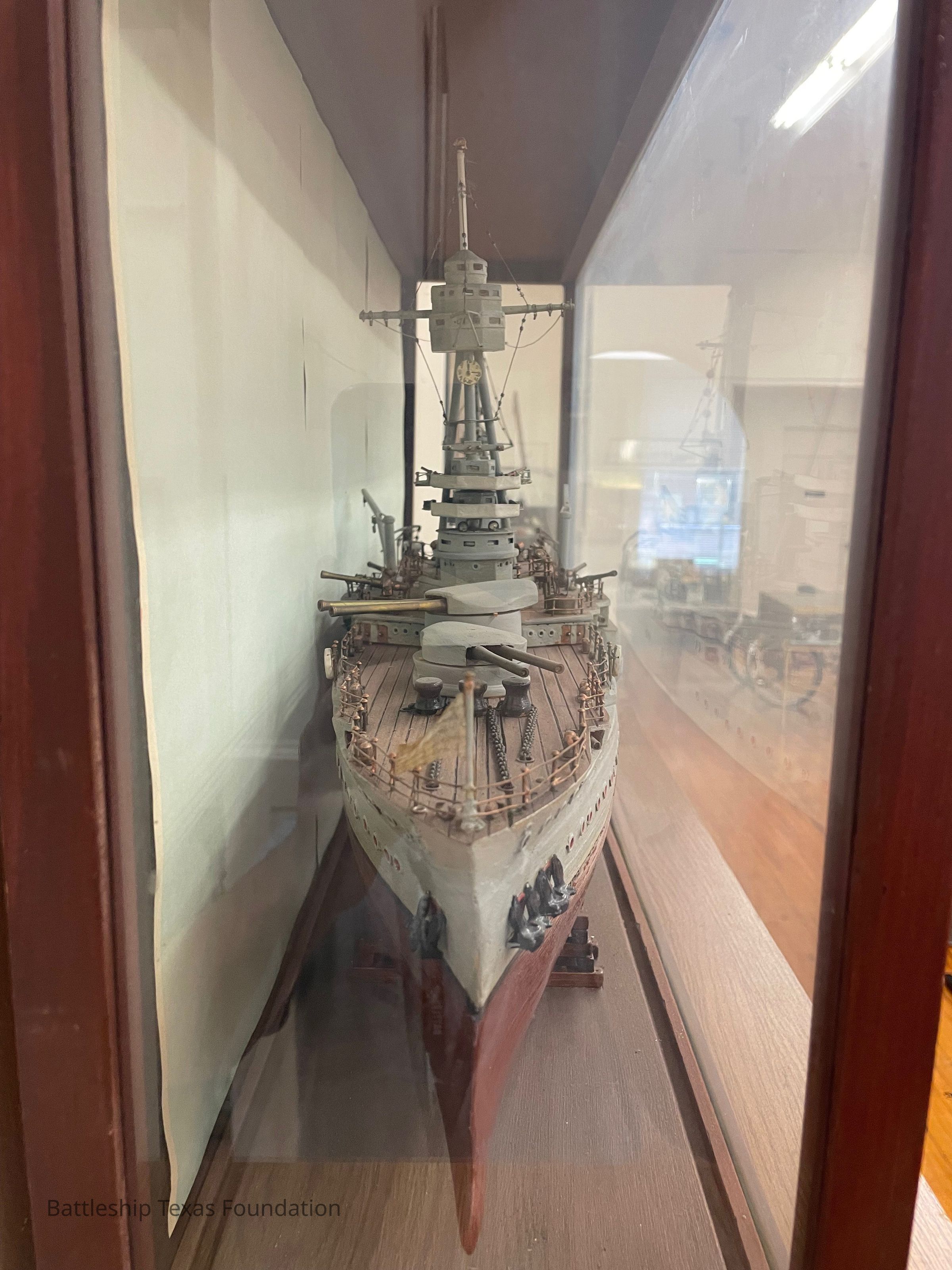
- I was not made by anyone on Battleship Texas. I am wooden. Making me took a lot of time, precision, and instruction. I am larger than most other pieces of art. What am I? (1 option)


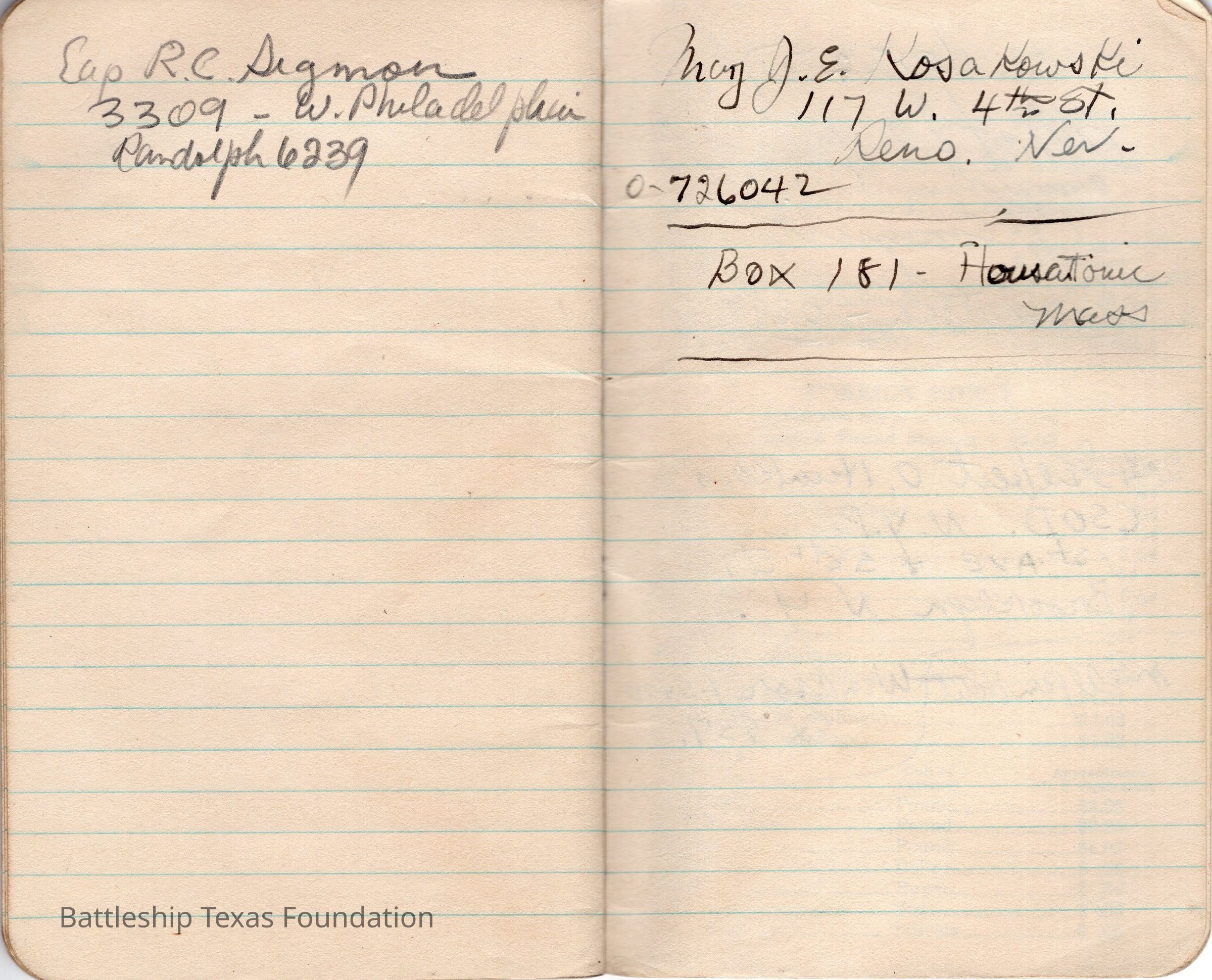
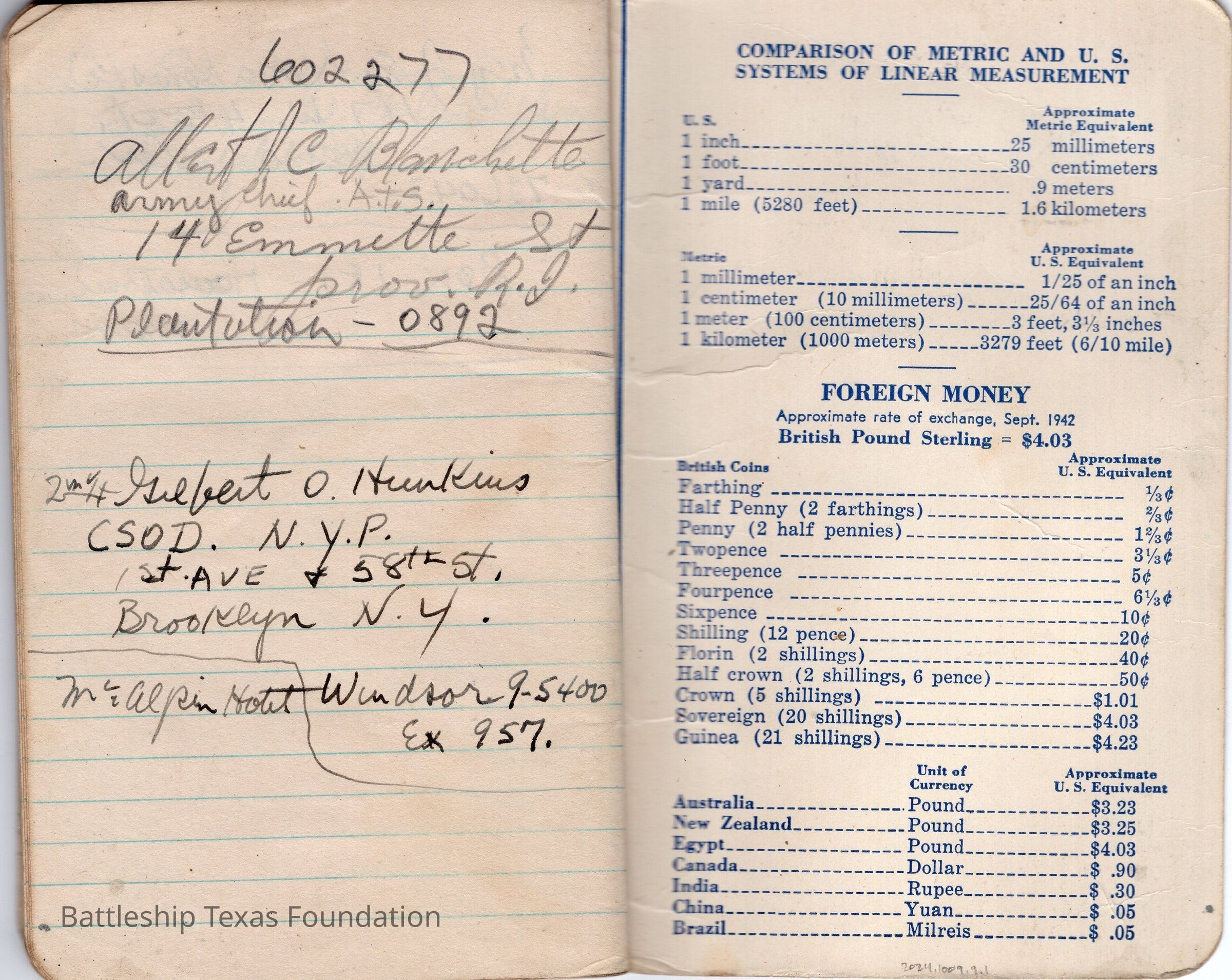
1943 fleet notebook
Description
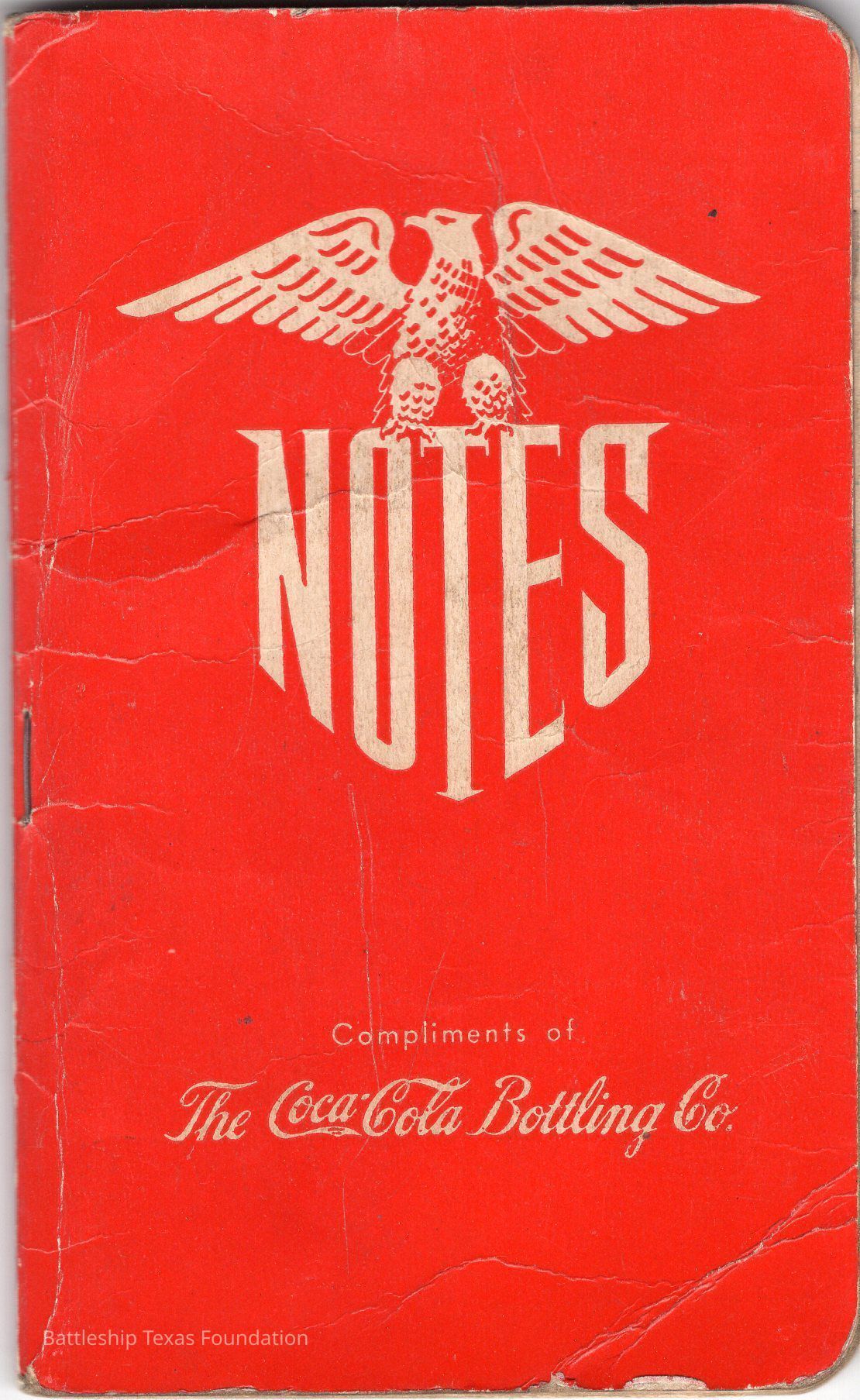
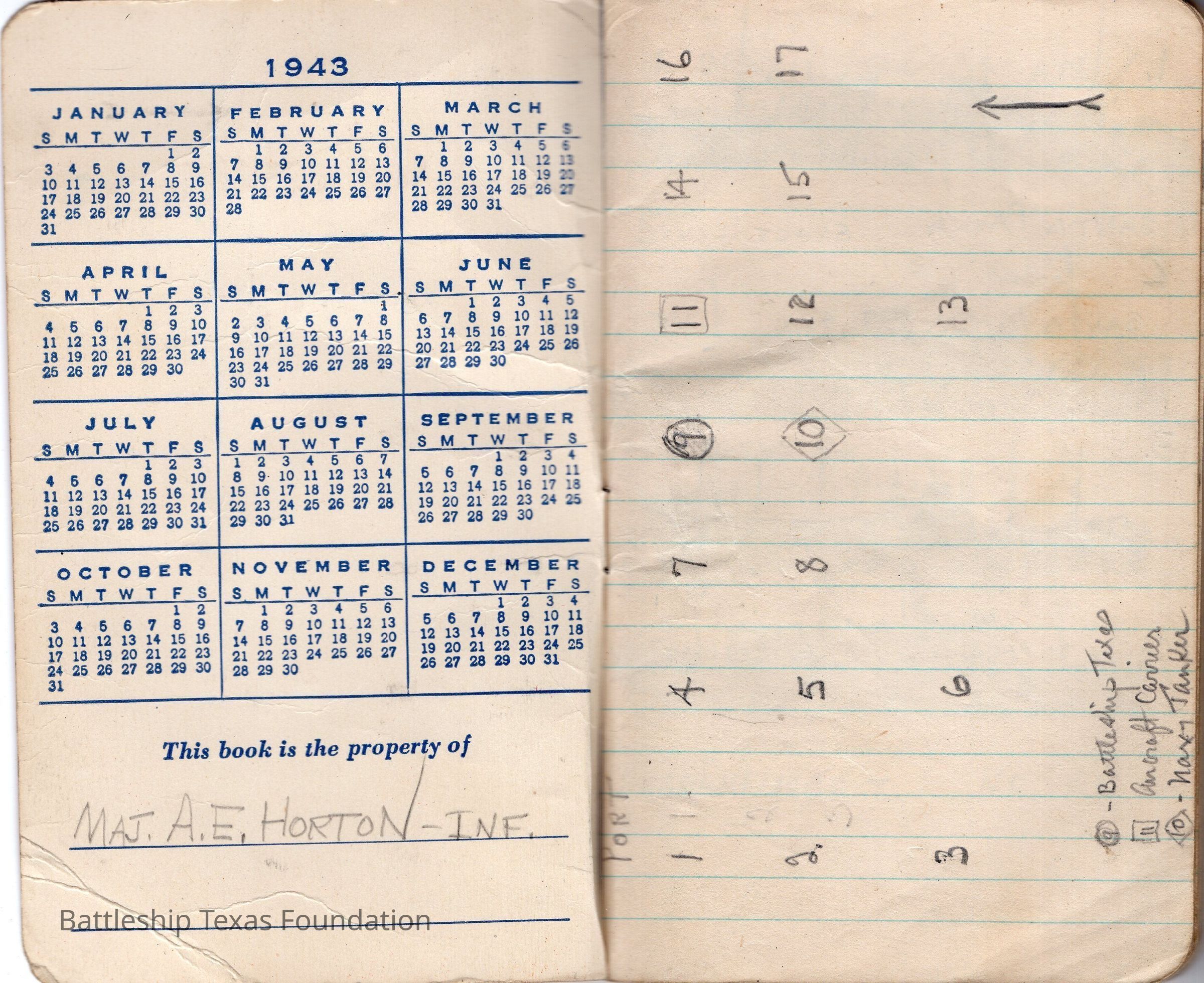
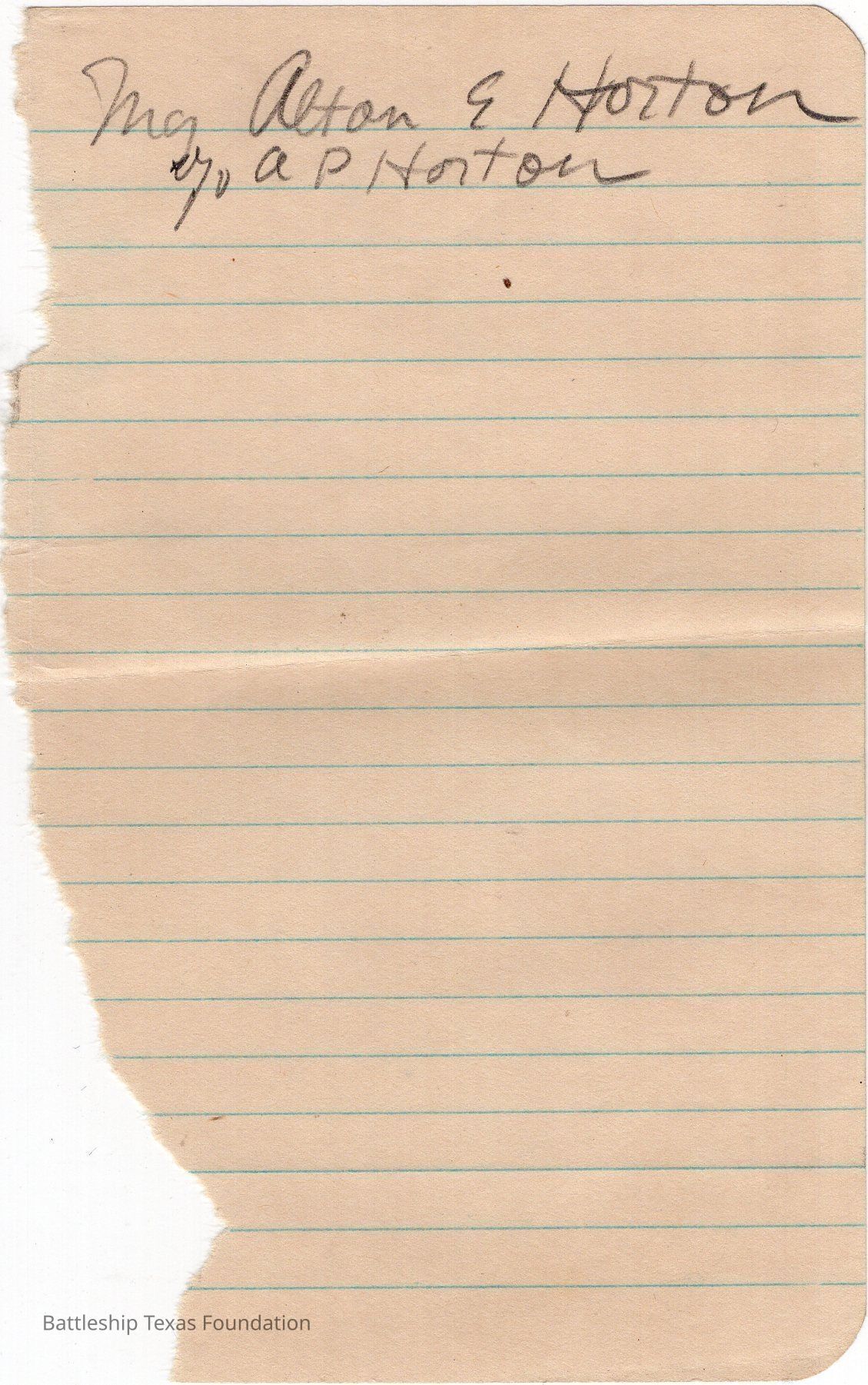
Notebook drawings by Major Alton E. Horton of the fleet Texas was a part of in 1943. Red cover with eagle perched on "NOTES" title. Bottom of the cover notes the book a product of the Coca-Cola Bottling Company. Notable ships included in the fleet drawings are USS Texas on page 9 and USS Santee (CVE-29) on page 6. Page torn from 1943 fleet notebook. "Mg Alton E. Horton of, A E Horton
Context
Battleship Texas largely escorted Allied ships across the Atlantic from January 1943 to April 22, 1944. She mainly sailed from New York to either the UK, Gibraltar, or Casablanca. Alton E. Horton was a soldier on a troop transport which was under escort of Battleship Texas in 1943. During his time at sea, he sketched many silhouettes of ships in the fleet. USS Santee (CVE-29) was originally commissioned (AO-29) as a Cimarron-class fleet oiler from October 18, 1940, to Spring 1942. She was converted and recommissioned as a Sangamon-class escort carrier from August 24, 1942, to October 21, 1946. She was sold for scrap to West Germany on December 5, 1959.
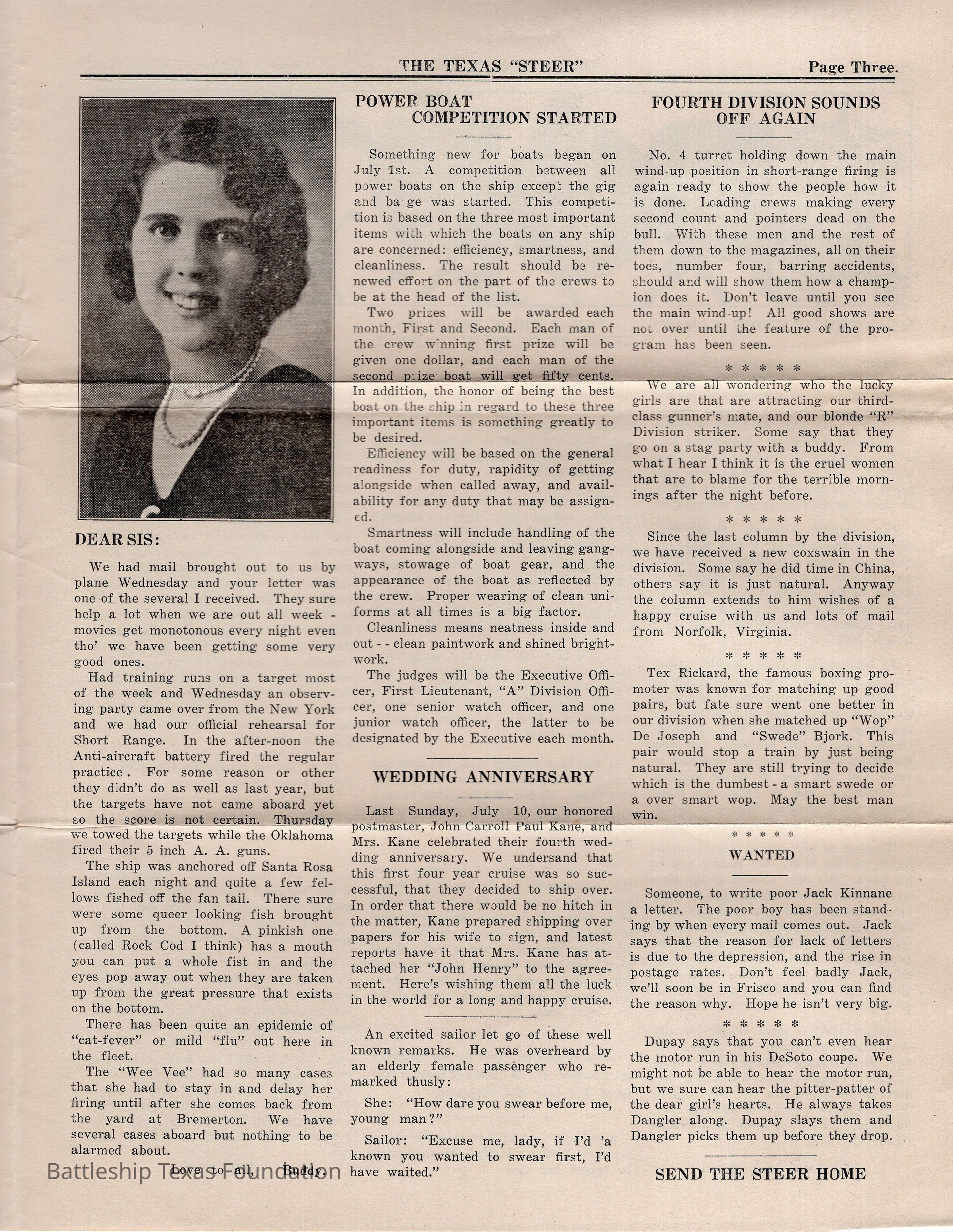
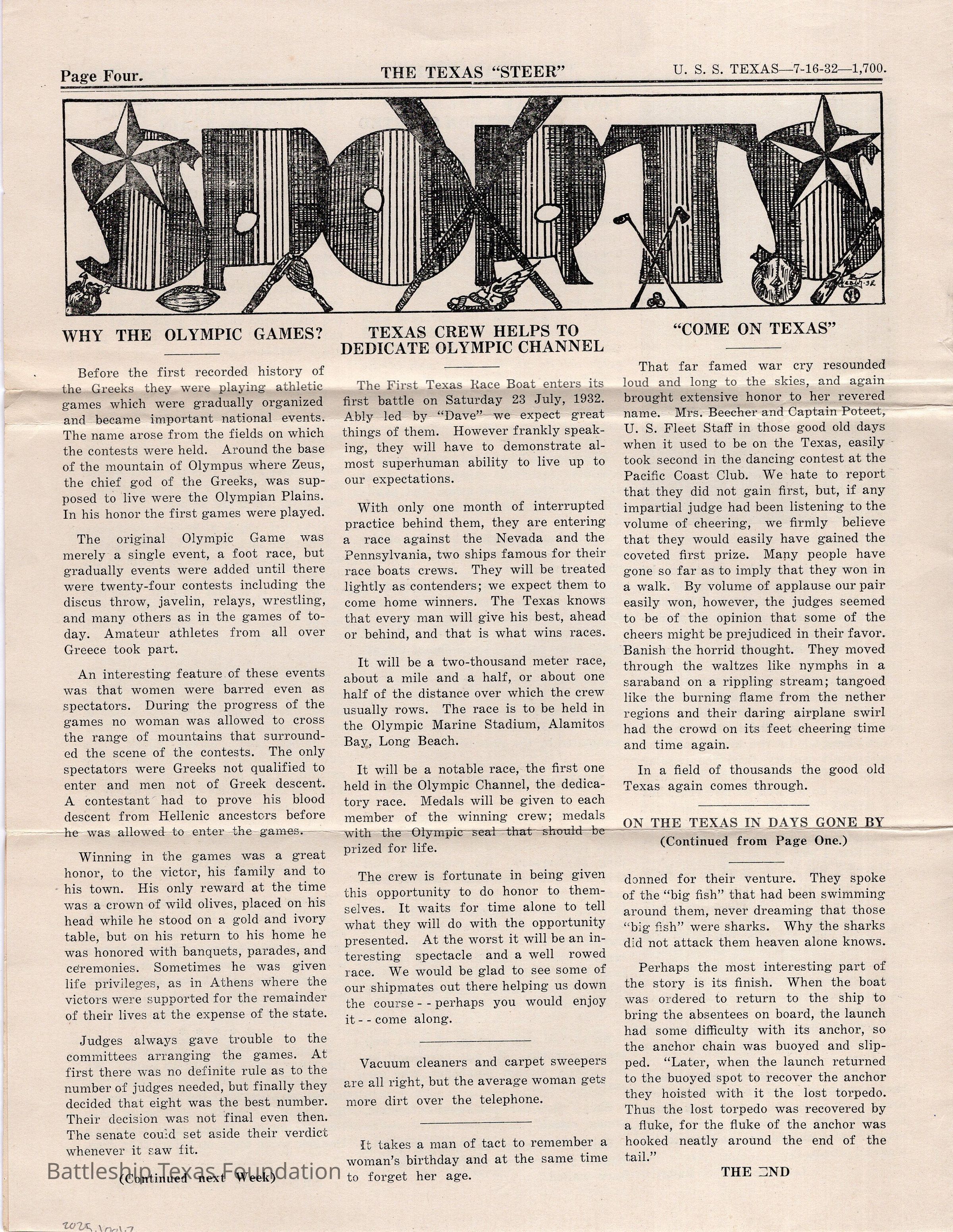
Texas Steer (Vol.3 No.41)
Description
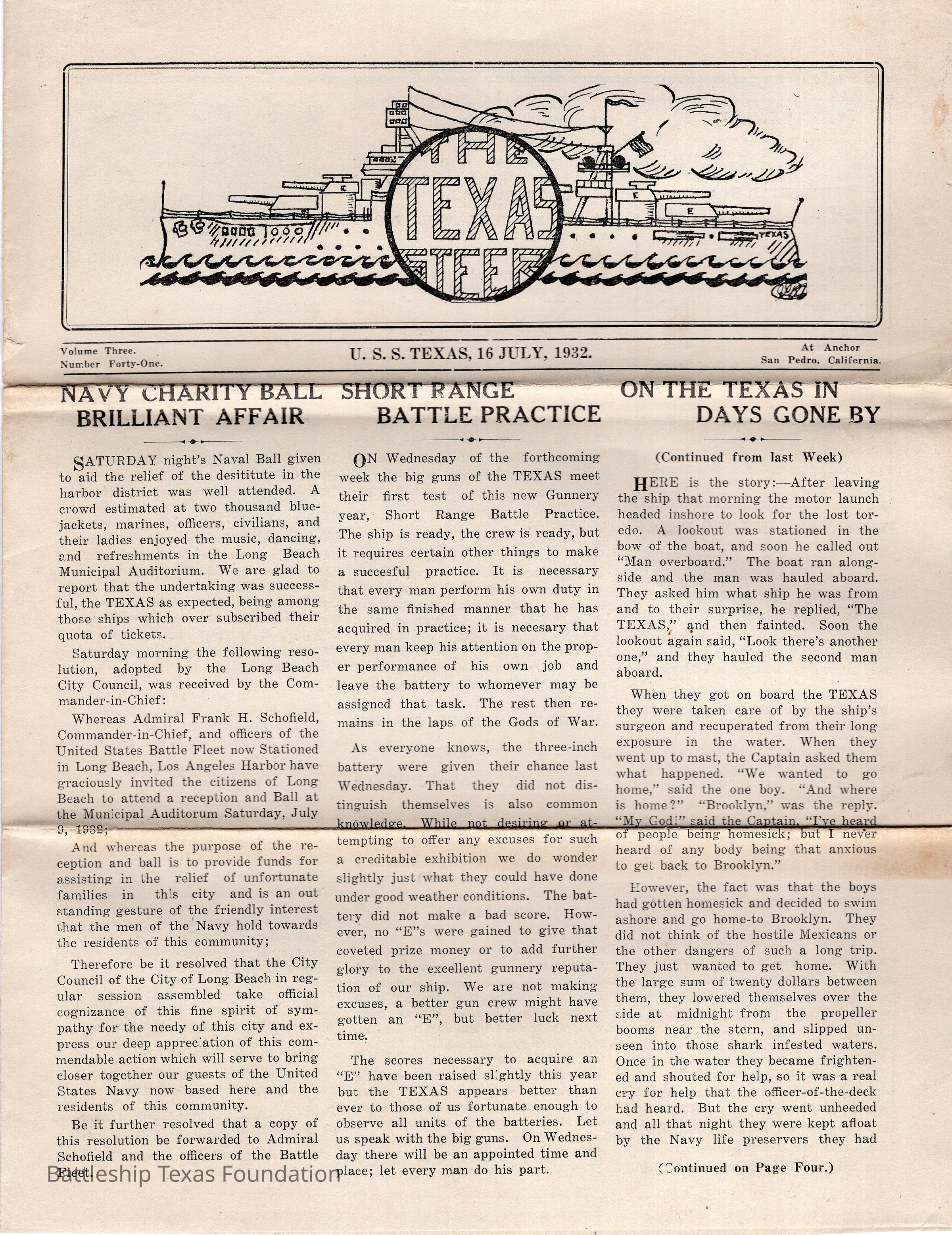
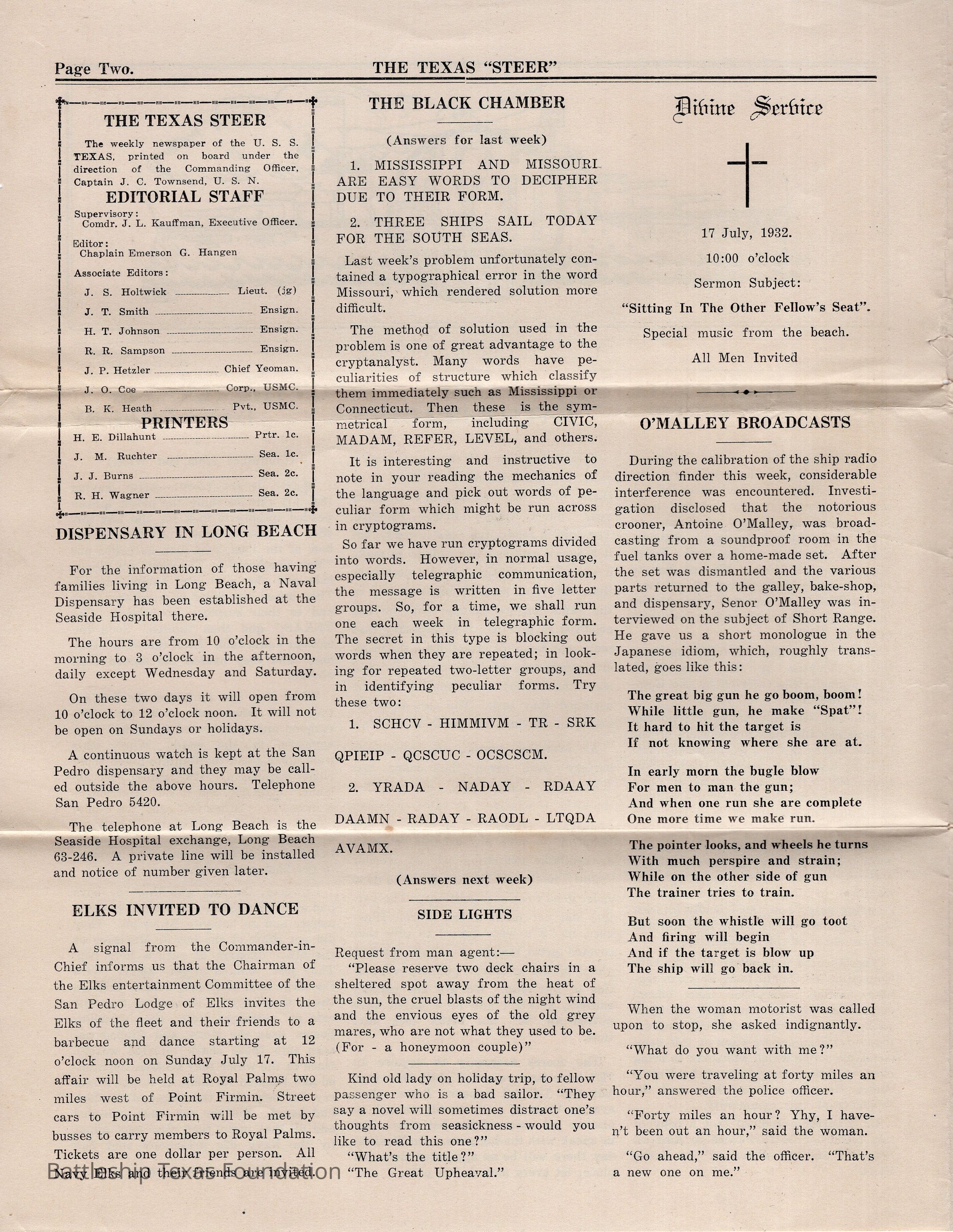
Vol. 3 No. 41 USS Texas published newspaper from 16 July, 1932 while she was at anchor in San Pedro, California. Artwork by Buford K. Heath.
Context
Battleship Texas was flagship of Battleship Division One from September 15, 1931, to June 27, 1937. She continued to participate in Fleet Problems throughout this period. The Texas Steer was a biweekly newsletter first appearing in 1924 and running until 1934. “The Texas Steer” was a biweekly newsletter, started in 1924, and published by the crew of Battleship Texas. The paper was published until 1935, running a total of six volumes.
Willie + Tomcsanyi (lightened)
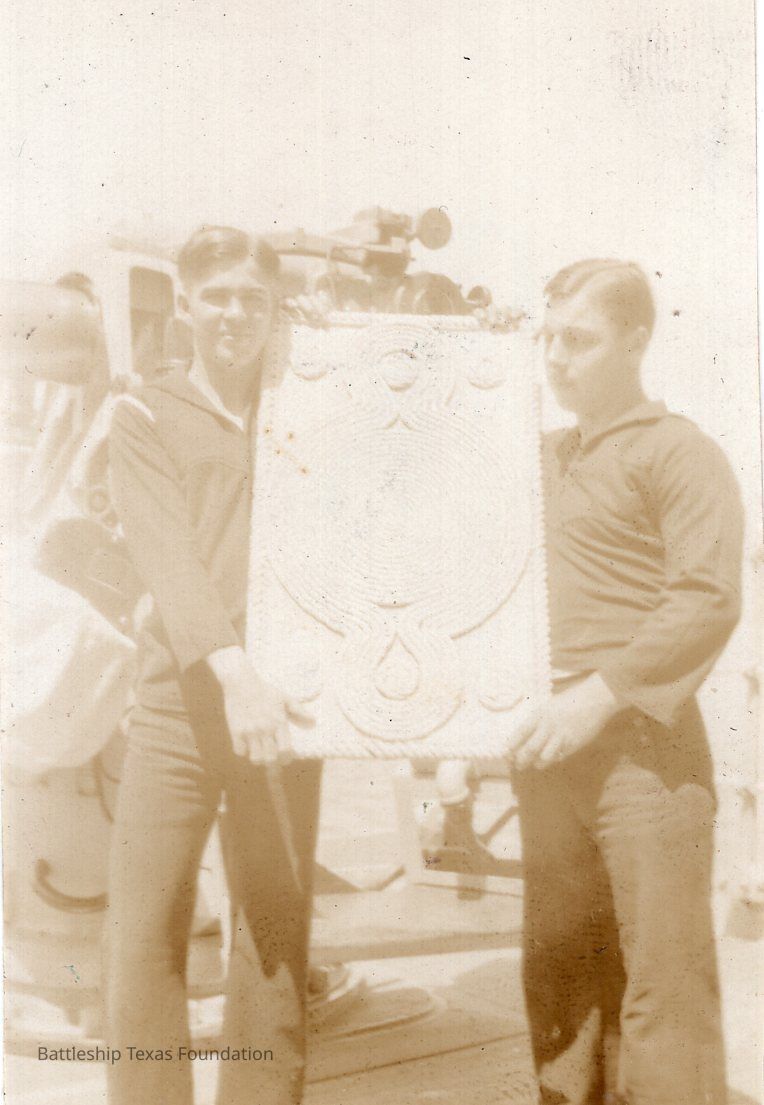
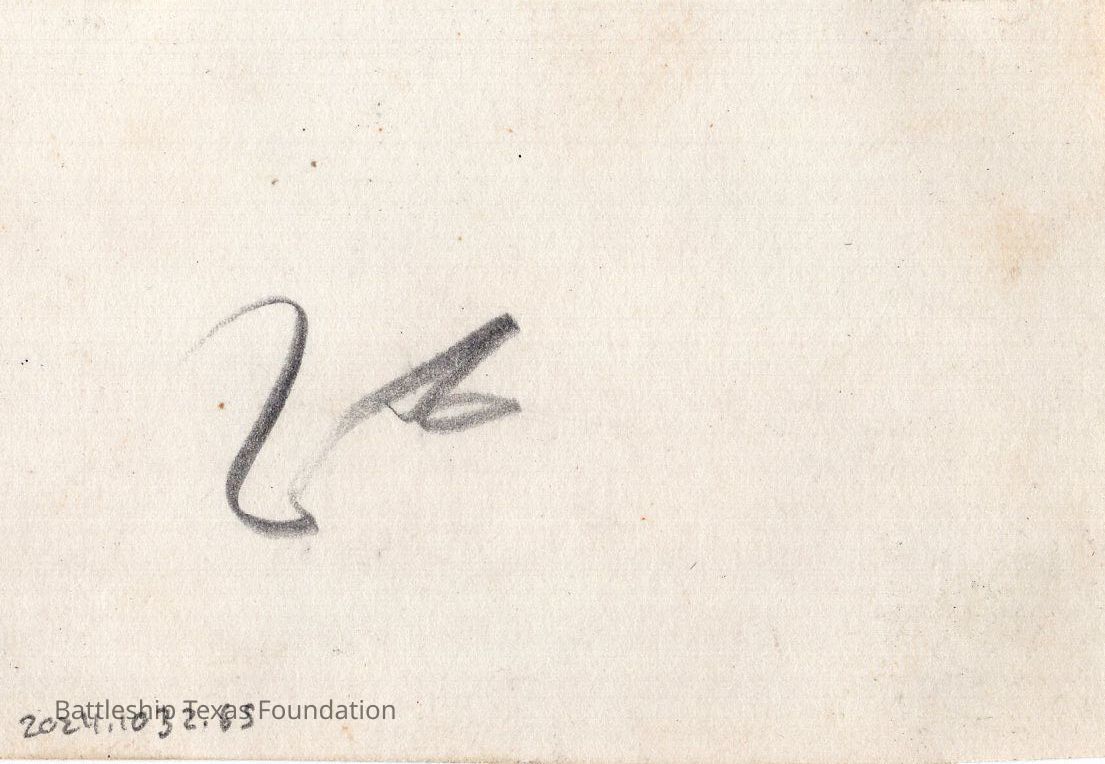
Description
From a donated collection of individual photographs and pages out of a 1930s Texas crewmember's photo album. Items donated by the Los Angeles Maritime Museum. Photograph is the same as 2024.1032.63 Features two sailors holding up a board with rope art.
Context
Battleship Texas was flagship of the United States Fleet from September 1, 1927, to September 15, 1931. Admirals Wiley, Pratt, and Chase served as Commander-in-Chief, United States Fleet in that time. Clarence C. Clifton enlisted on August 2, 1926, and joined the crew of Battleship Texas on October 12, 1926, as a S2c. He advanced to S1c in the summer of 1927 and remained stationed on Texas through the summer of 1931. Many crew members kept photo albums that each have hundreds of photos chronicling their service onboard.
Swagger stick
Description
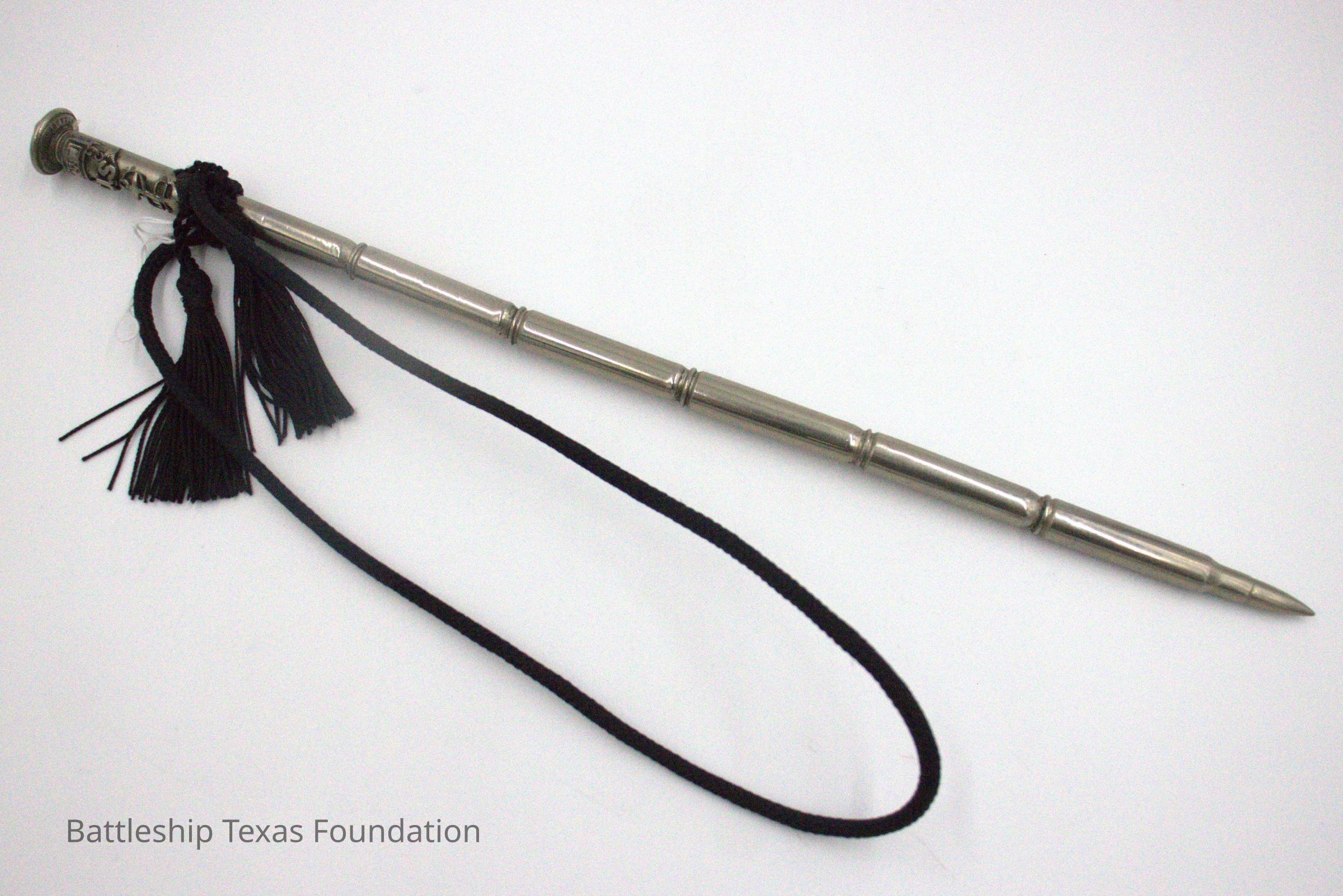
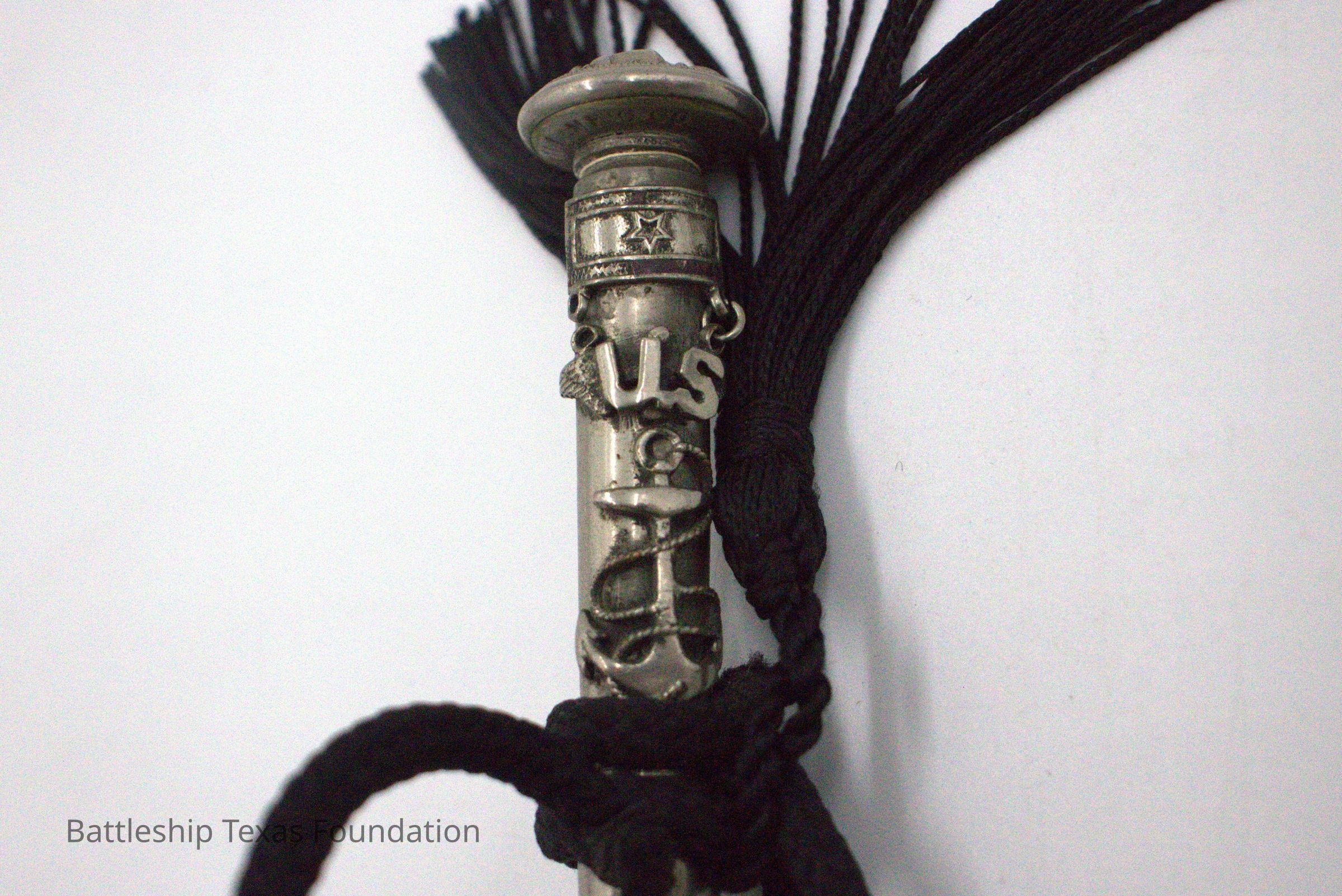
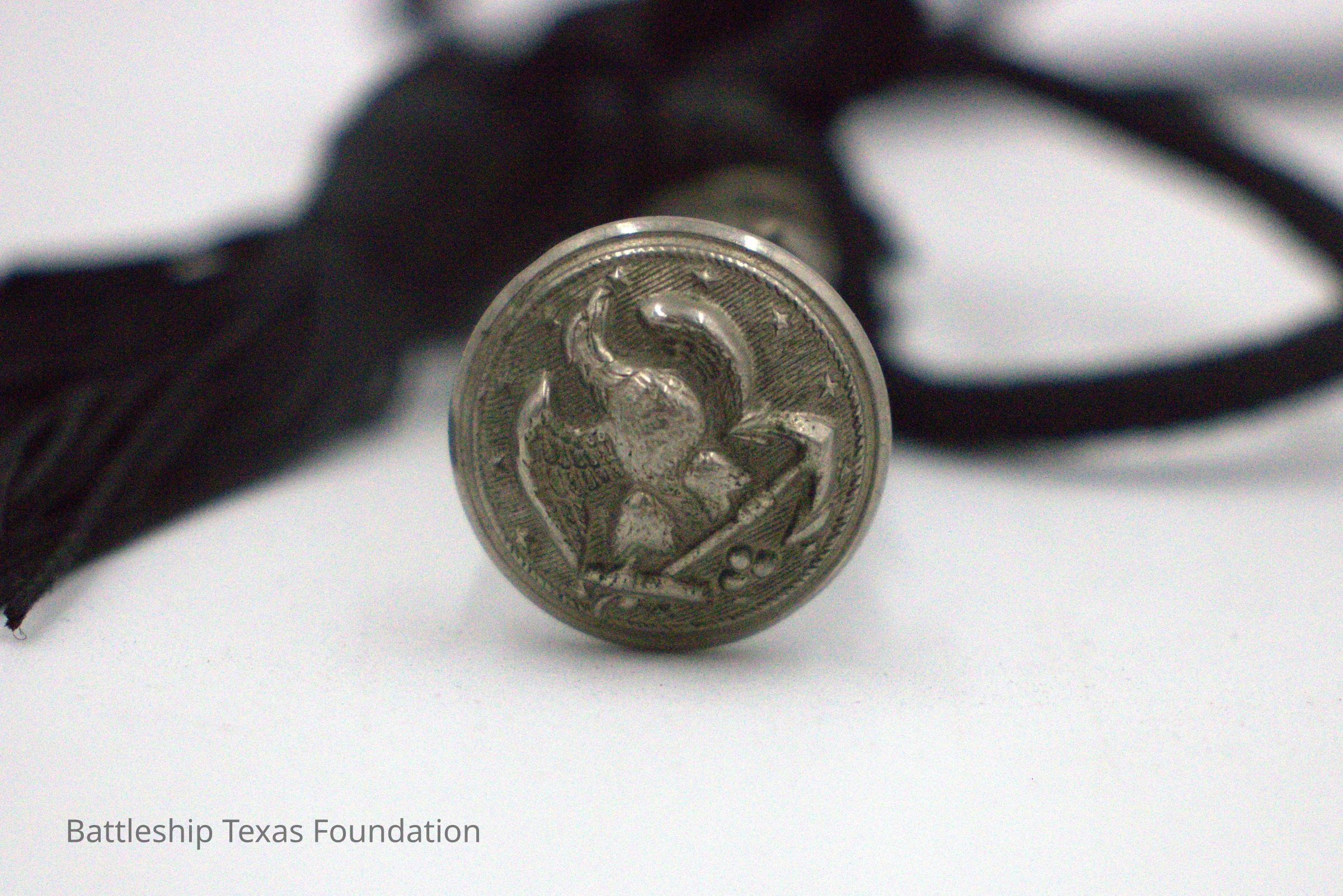
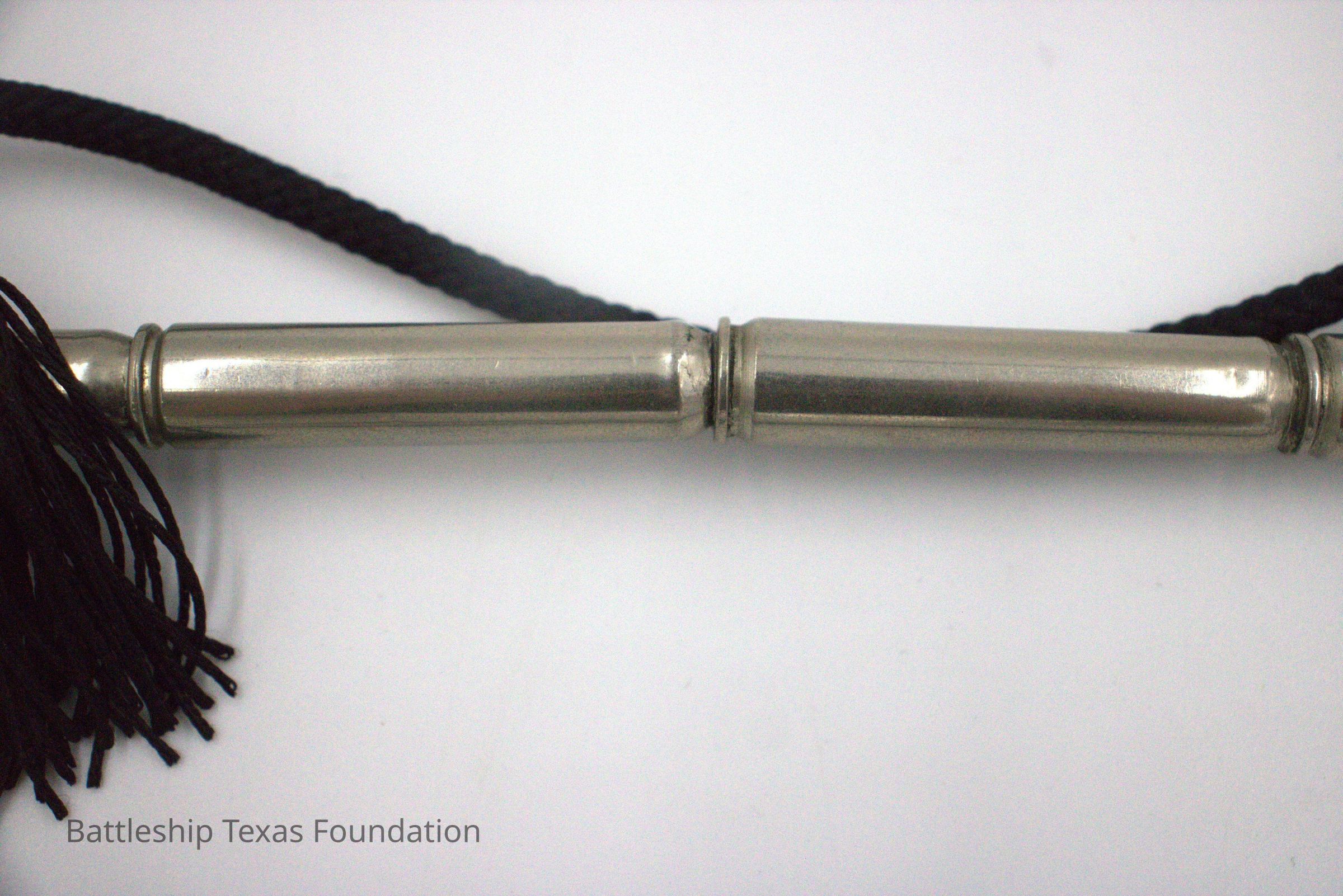
Custom swagger stick made by Lawrence Gaddis from seven bullet casings soldered together. The caliber of rounds used not present on Battleship Texas and are silver colored, likely from nickel plating. Black rope was tied around the end. Soldering weak between third and fourth bullet from base.
Context
Battleship Texas participated in various fleet maneuvers and exercises in the Atlantic Ocean (1919) and later Pacific Ocean from July 1919 through January 1924. Beginning in February 1923, maneuvers became known as Fleet Problems, which continued to 1939. Lawrence J. Gaddis was a musician on Battleship Texas from 1920 to 1922. He collected many souvenirs and performed on and off the ship during his travels in Pacific waters for Fleet Maneuvers and cruises to South America.
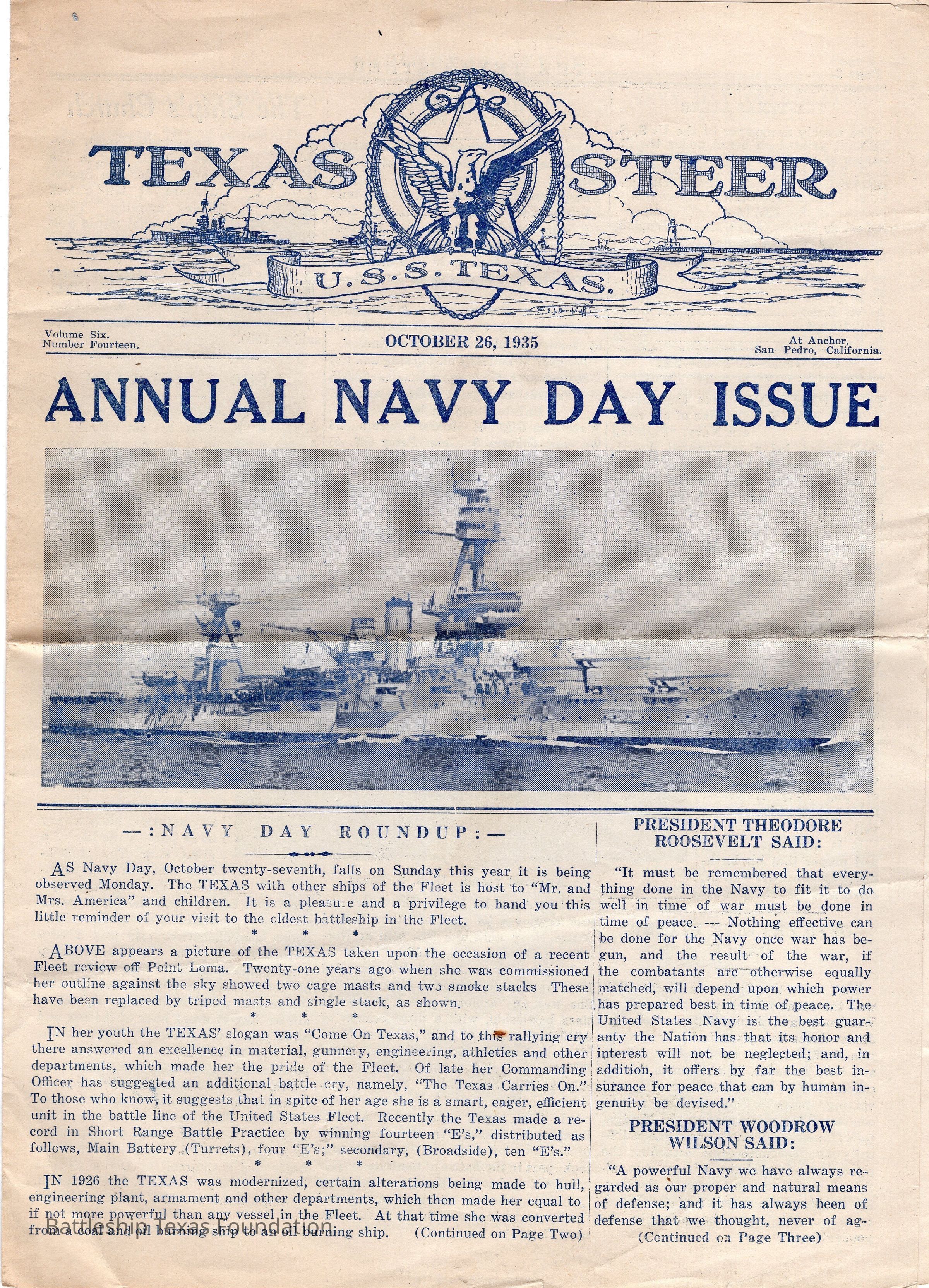
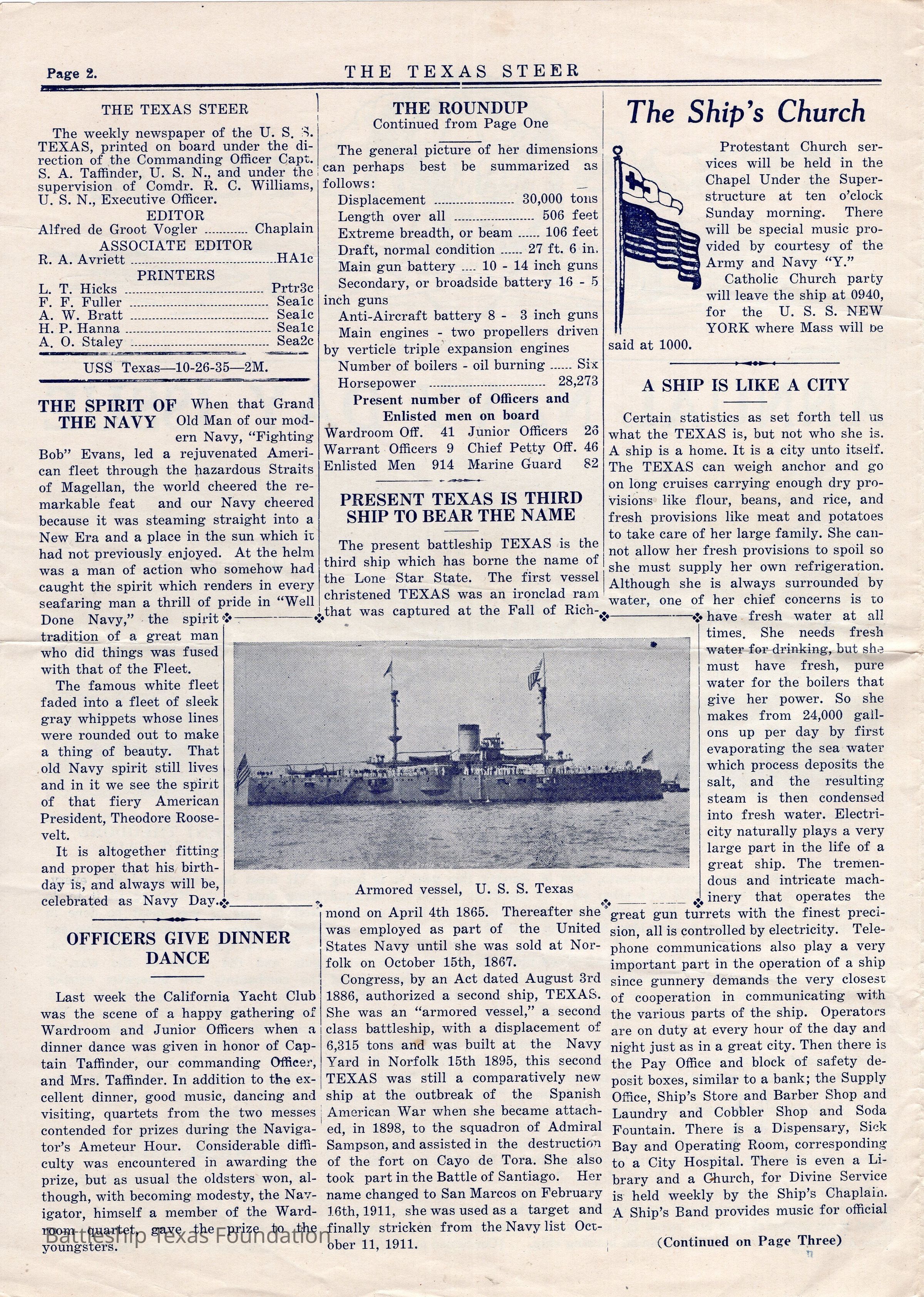
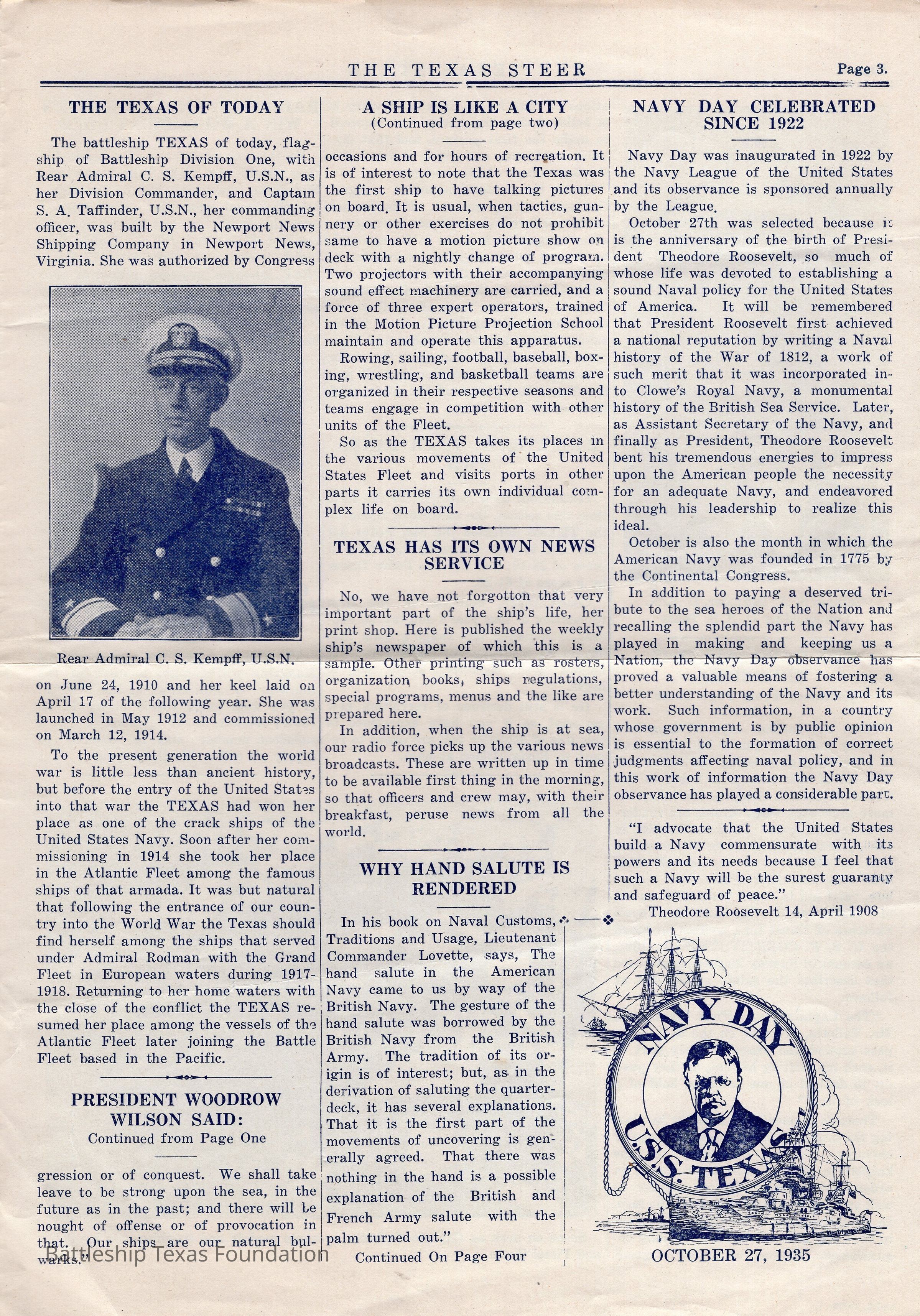
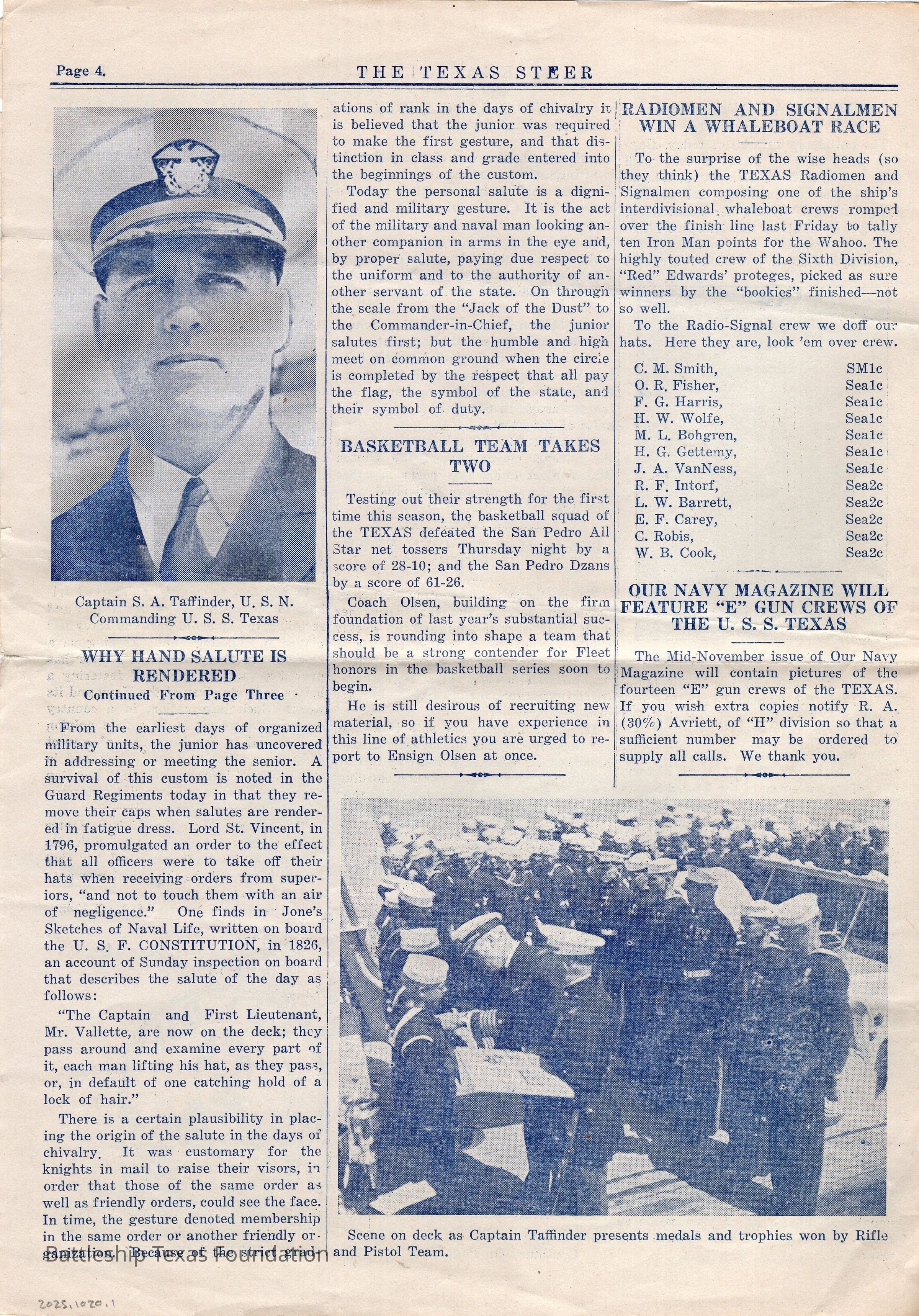
Texas Steer (Vol.6 No.14)
Description
Vol 6 No 14 USS Texas published newspaper's "ANNUAL NAVY DAY ISSUE" from October 26, 1935, while at anchor in San Pedro, California. Artwork on the front by Elmer J. Birdsall. Magazine donated by Keith Fessenden.
Context
Battleship Texas was flagship of Battleship Division One from September 15, 1931, to June 27, 1937. She continued to participate in Fleet Problems throughout this period. “The Texas Steer” was a biweekly newsletter, started in 1924, and published by the crew of Battleship Texas. The paper was published until 1935, running a total of six volumes.
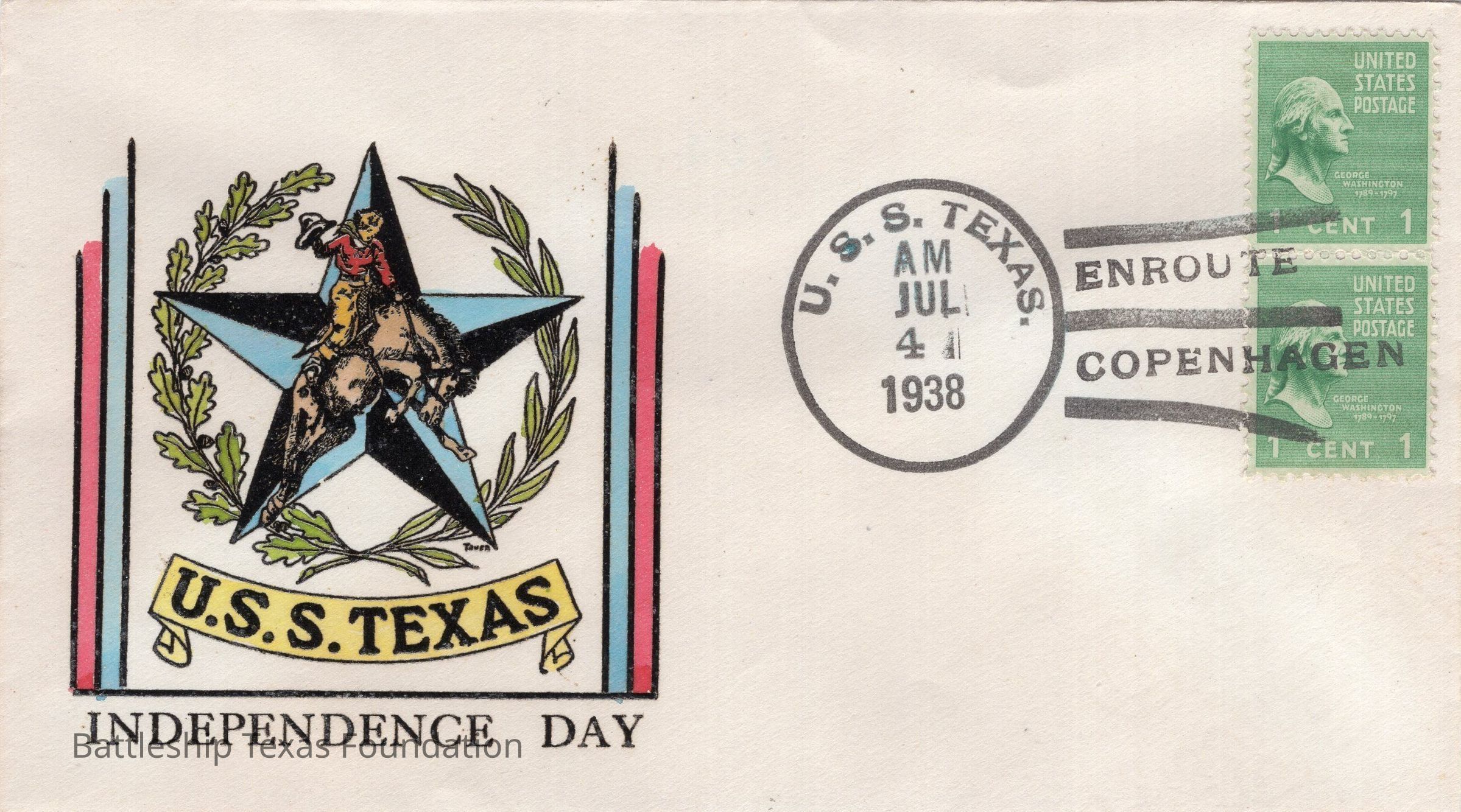
Cachet 1938/07/04 envelope
Description
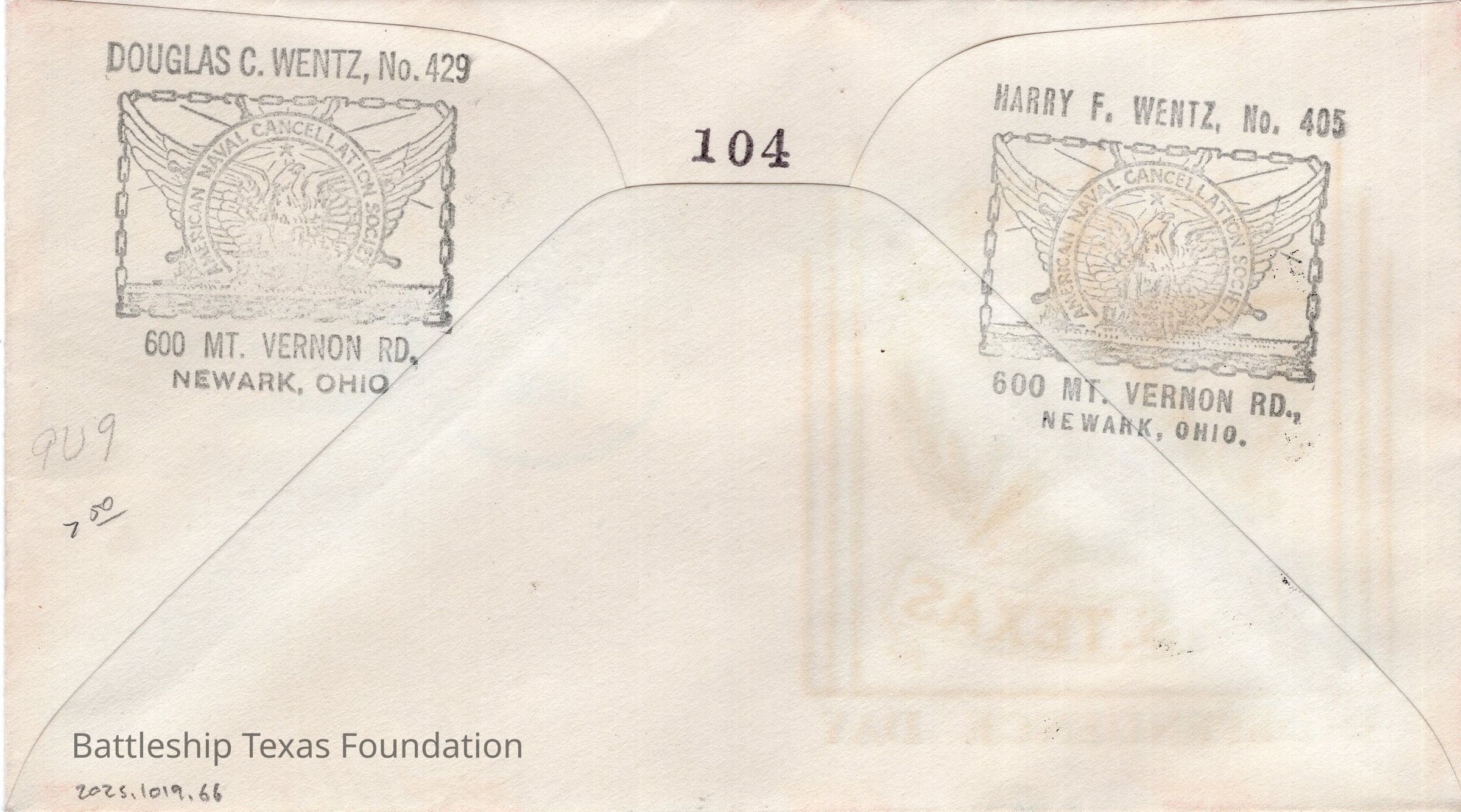
Envelope sent from USS Texas on the morning of July 4, 1938, when the ship was en route to Copenhagen. Features a color stamp of a cowgirl riding a bucking horse, in front of a star, wreathed in branches, with "U.S.S. TEXAS" and "INDEPENDENCE DAY" underneath.
Context
Battleship Texas was flagship of the Training Detachment from June 27, 1937, to September 1, 1939. She made many Midshipman Cruises with students from the Naval Academy throughout this period. Battleship Texas had her own post office. All mail passed through a censor before leaving the ship. Once the package is checked, it was stamped with a “U.S.S. TEXAS” stamp. If in a port, mail could carry the markers of the post office on shore.
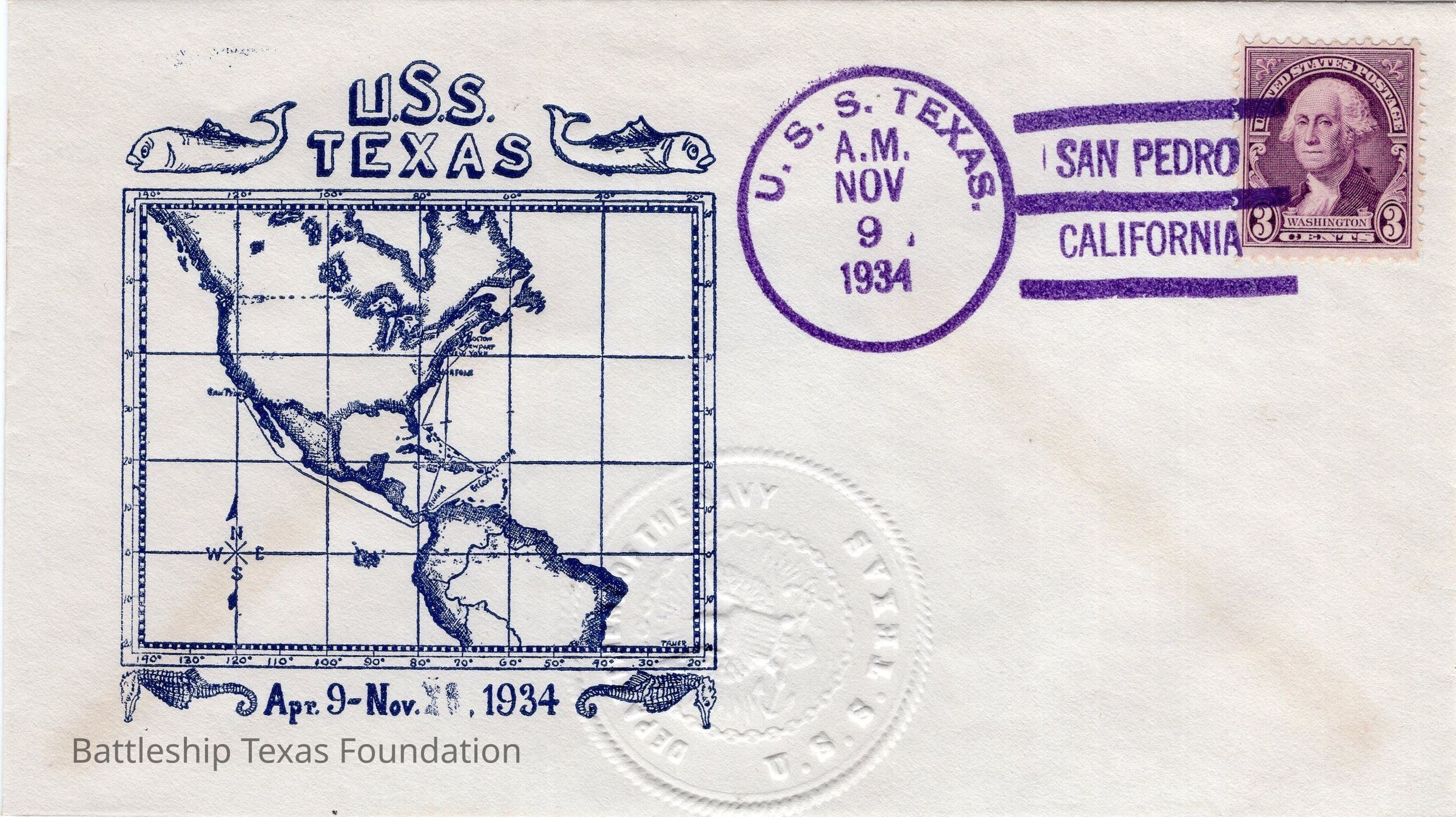
Cachet 1934/11/09 envelope
Description
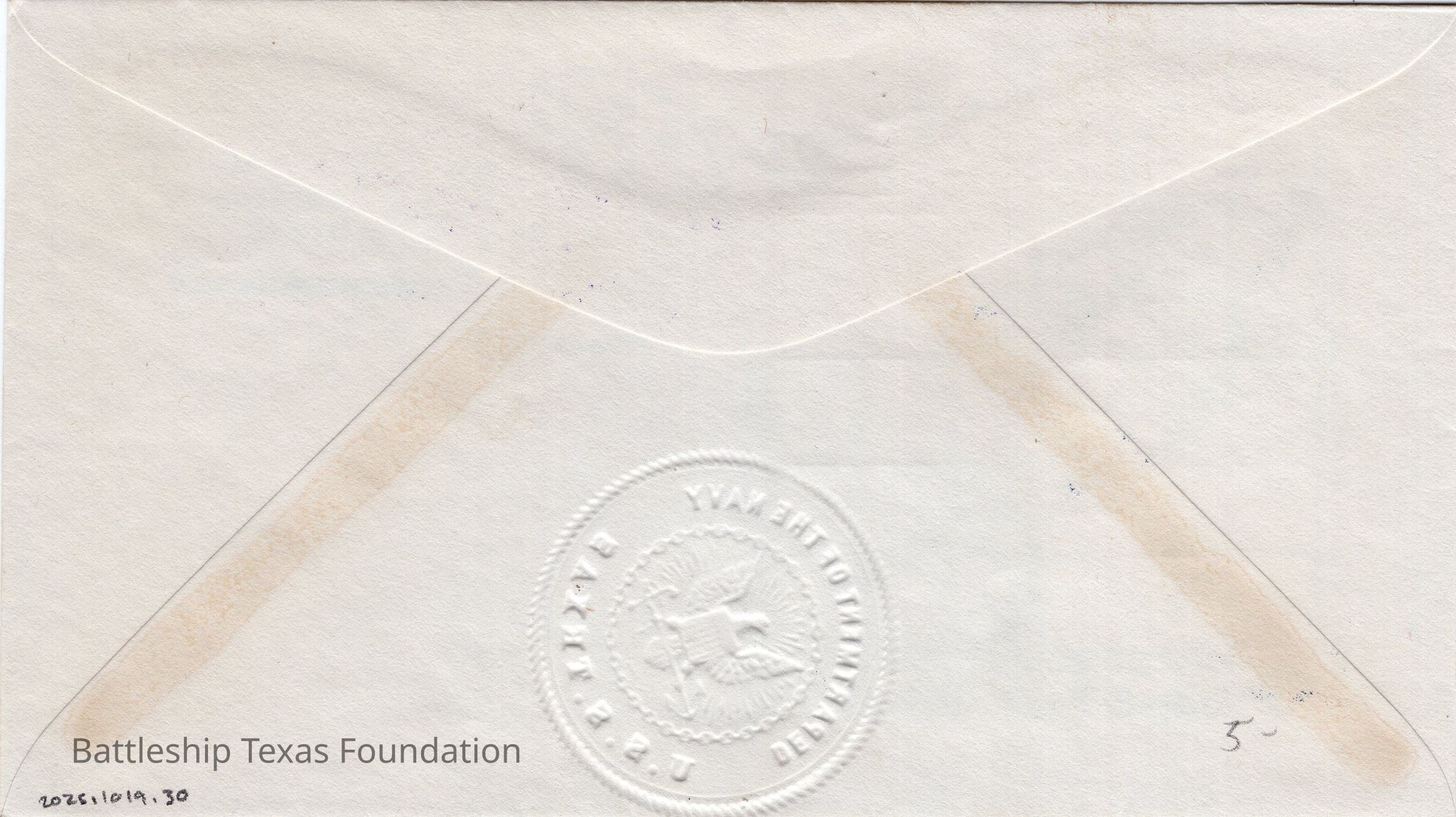
Not addressed to anyone. Envelope sent from USS Texas on the morning of November 9, 1934, from San Pedro, California. Features a large stamp with a map of North America, and most of South America on a gridded map. Titled "U.S.S. TEXAS" and guarded by fish on the top. Stamp dated for the cruise April 9 through November [illegible], 1934. Embossed with Department of the Navy seal with "U.S.S. TEXAS” on the bottom of the seal.
Context
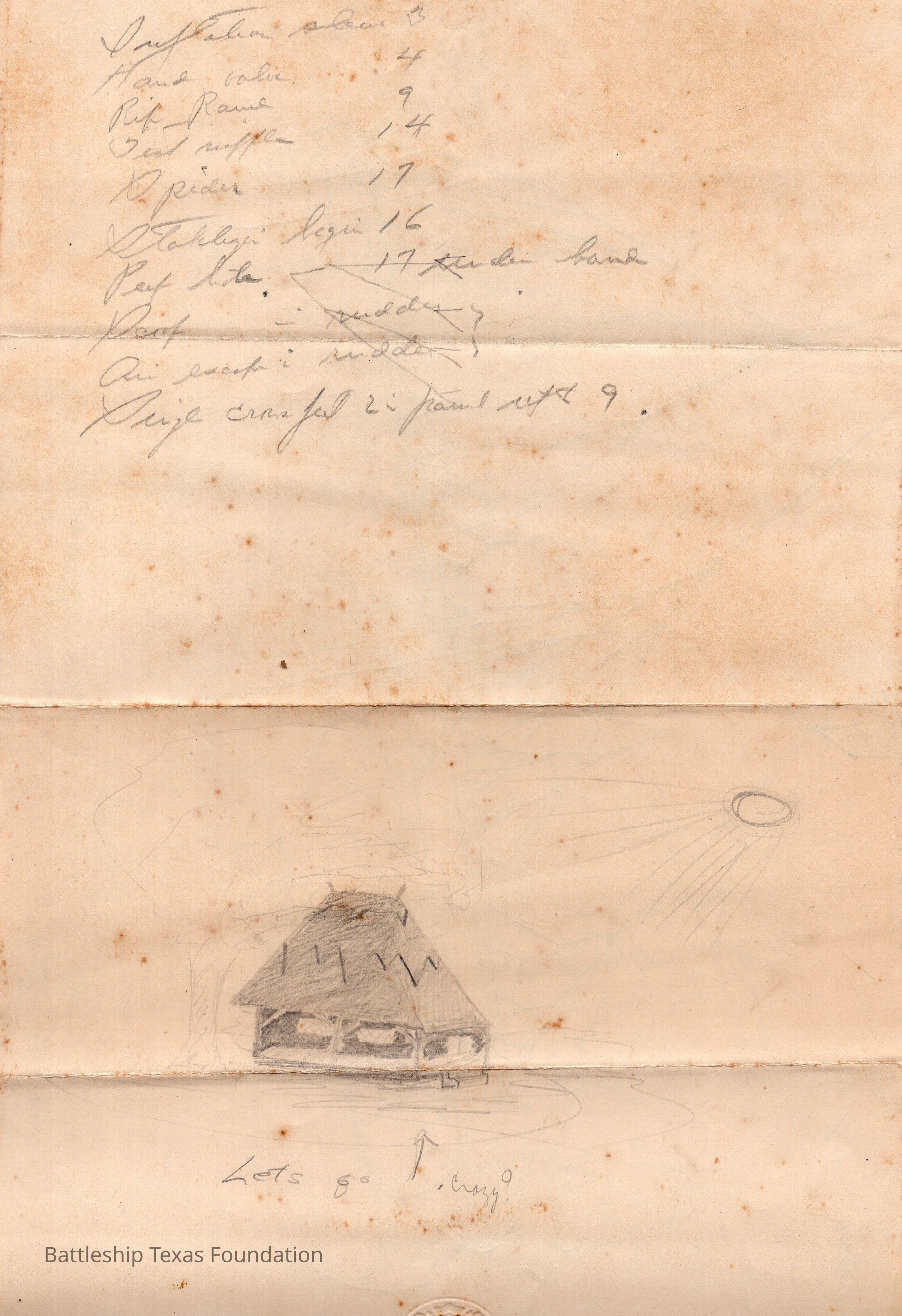
Battleship Texas was flagship of Battleship Division One from September 15, 1931, to June 27, 1937. She continued to participate in Fleet Problems throughout this period. Erich O. Tauer was the chief machinist on Battleship Texas from 1930 to December 1, 1934. When he had spare time away from duties he sponsored, designed, and drew many holiday cachets used on envelopes. Battleship Texas had her own post office. All mail passed through a censor before leaving the ship. Once the package is checked, it was stamped with a “U.S.S. TEXAS” stamp. If in a port, mail could carry the markers of the post office on shore.
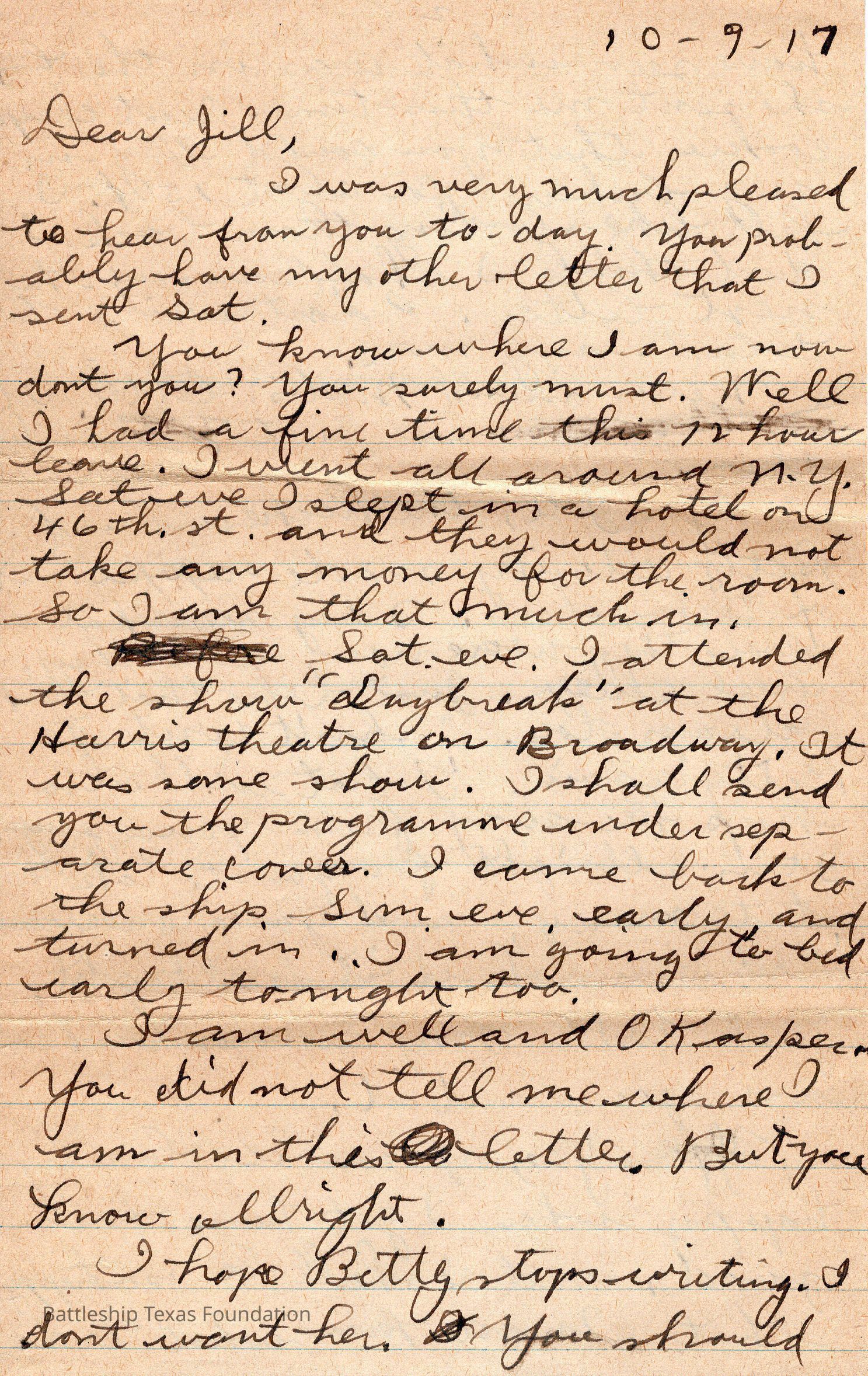
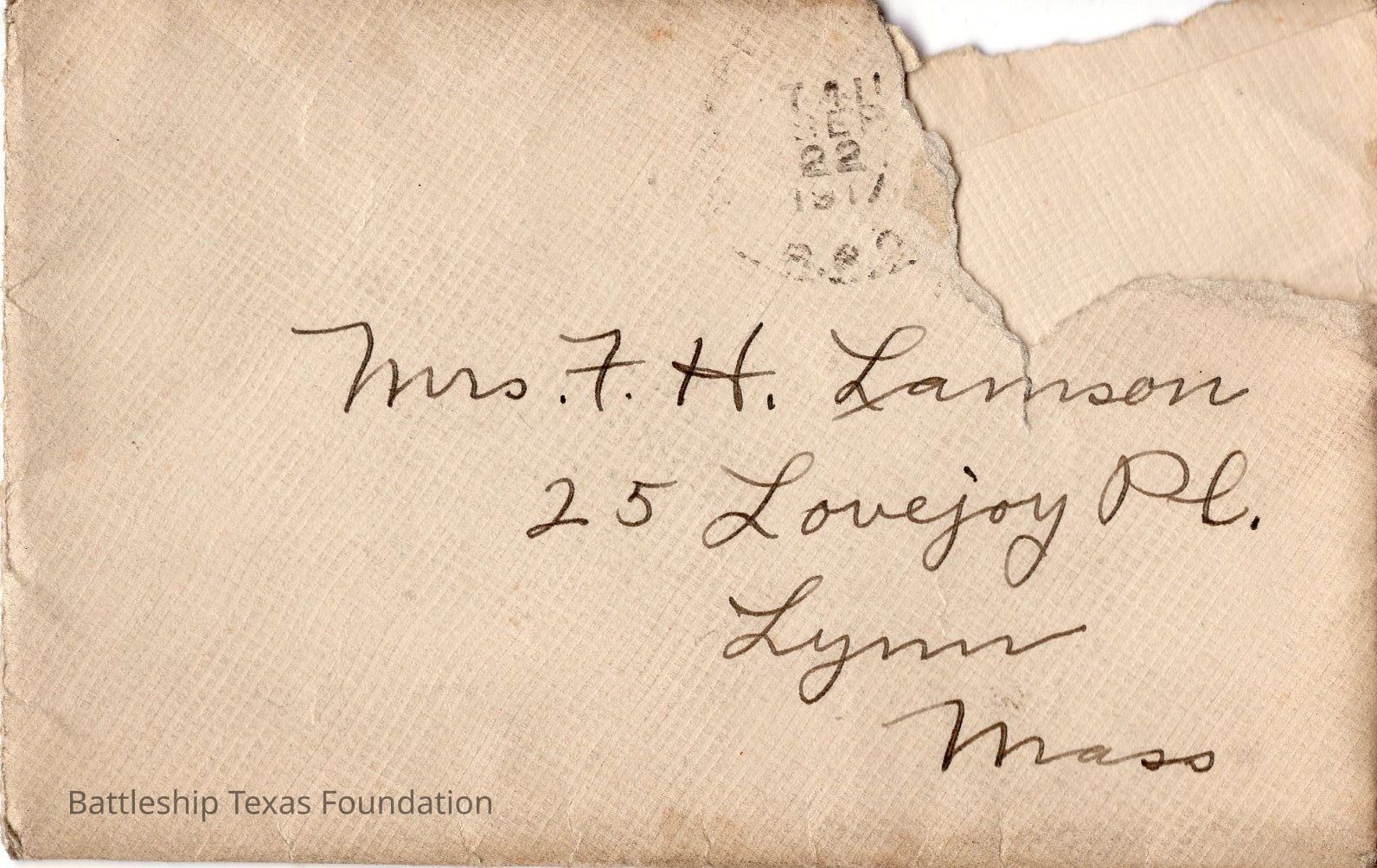
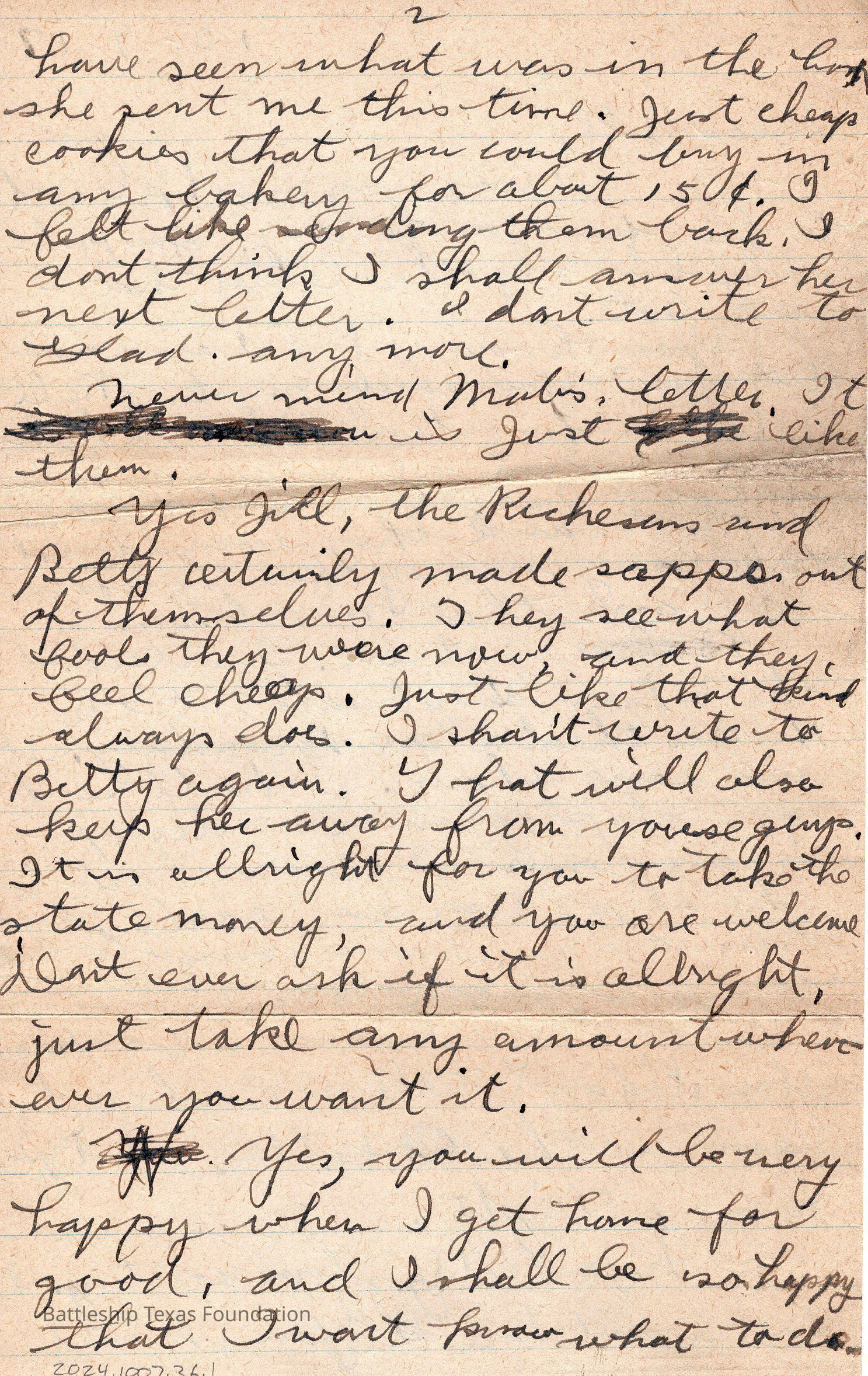
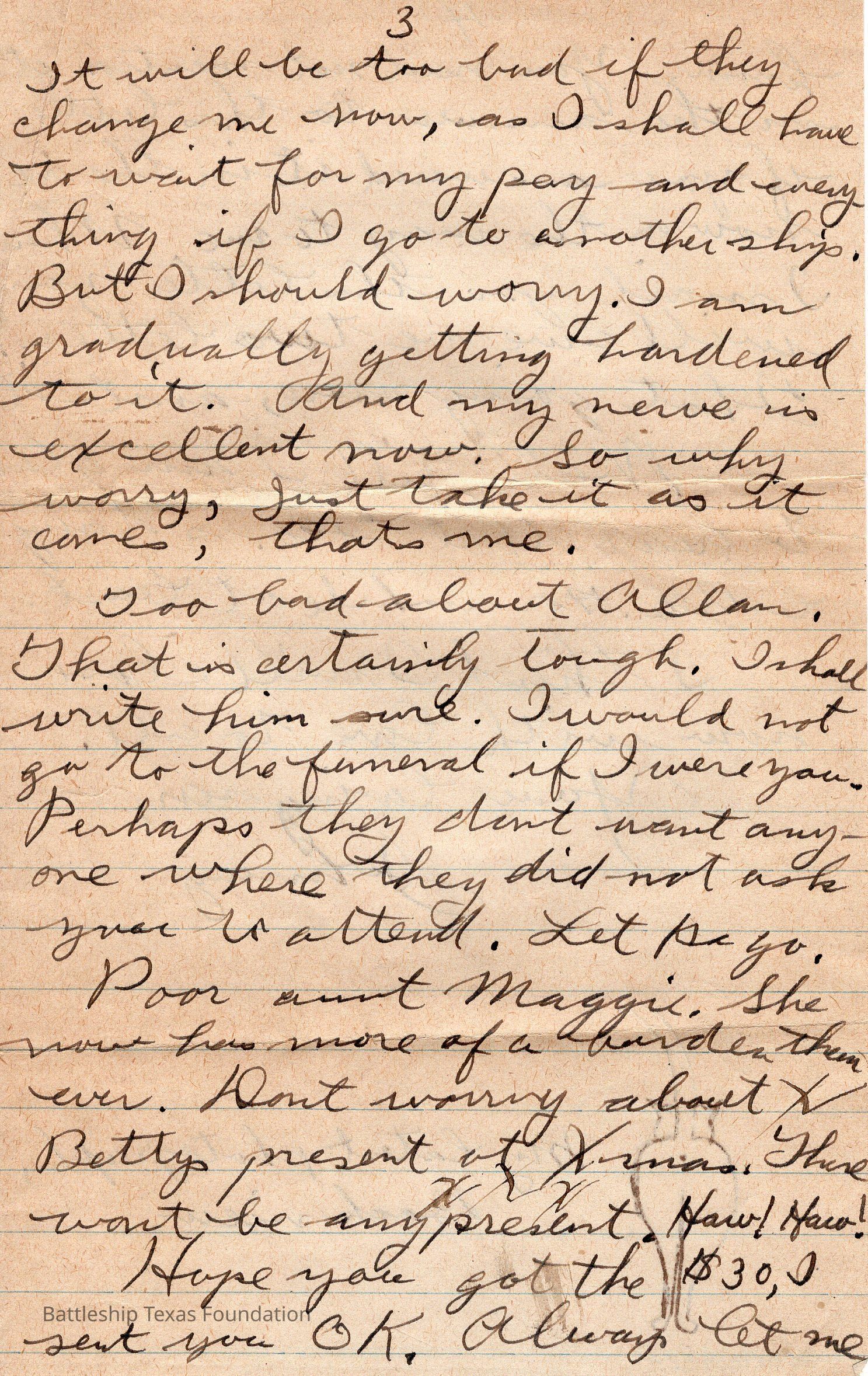
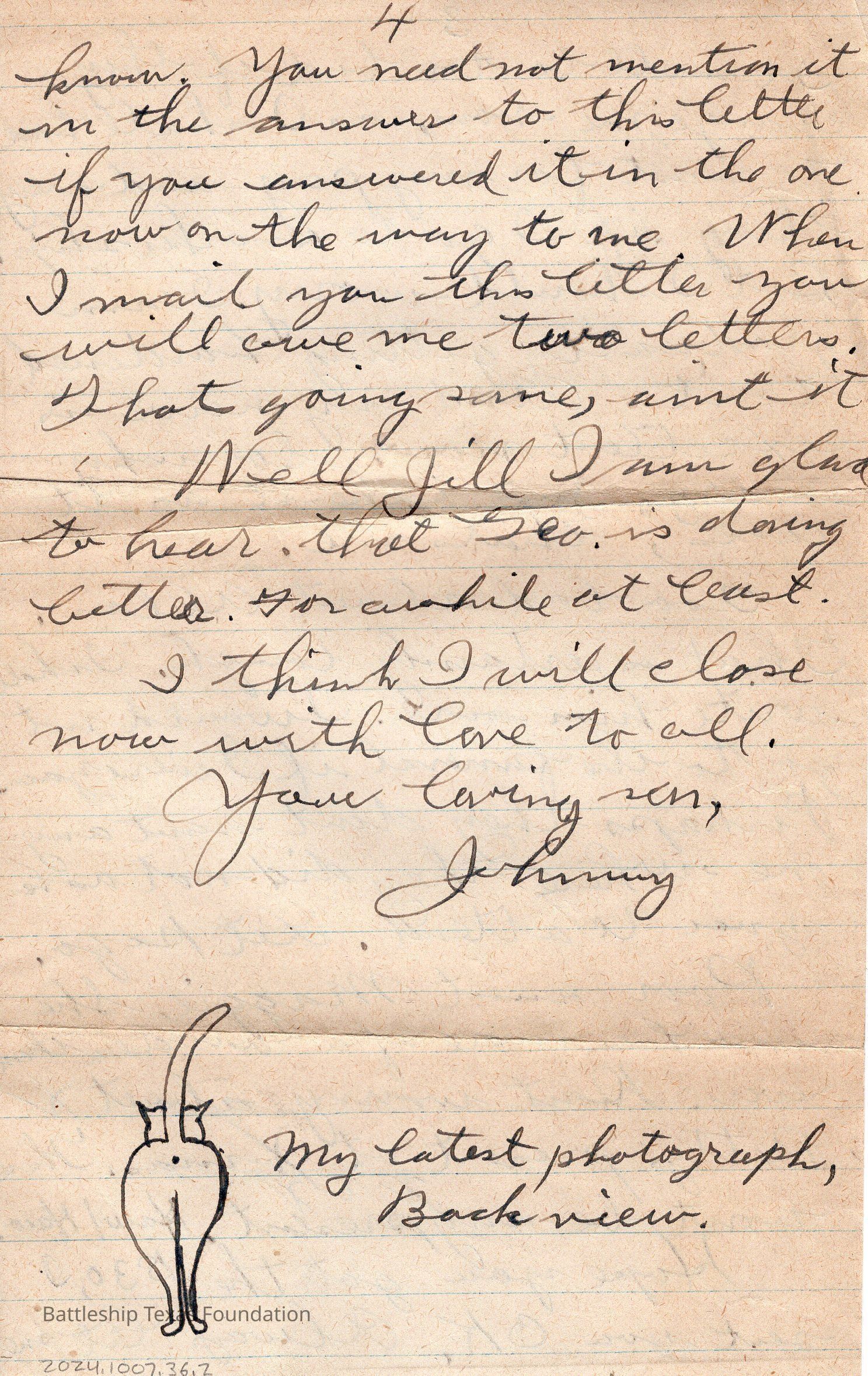
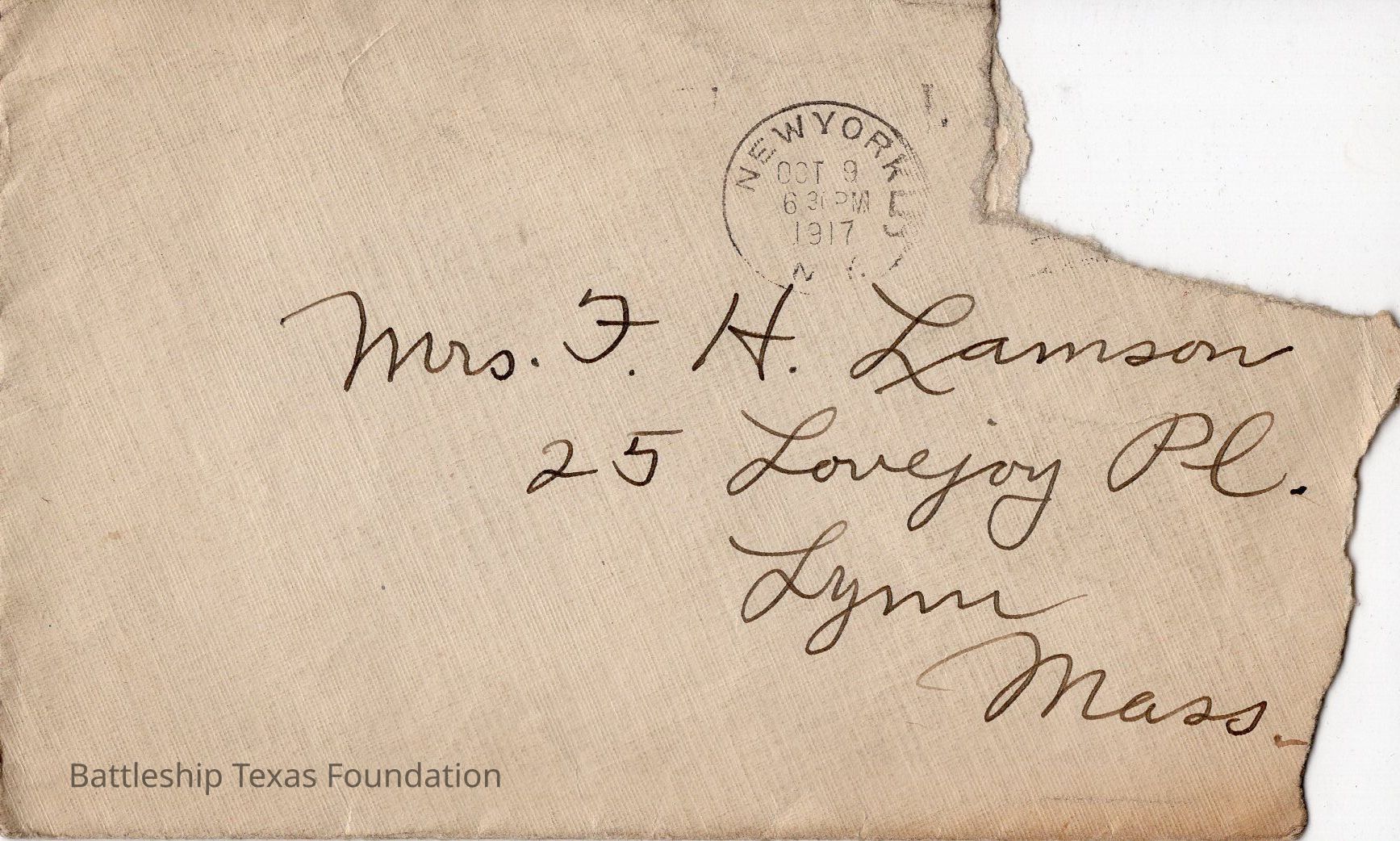
Lamson 1917/10/09 letter
Description
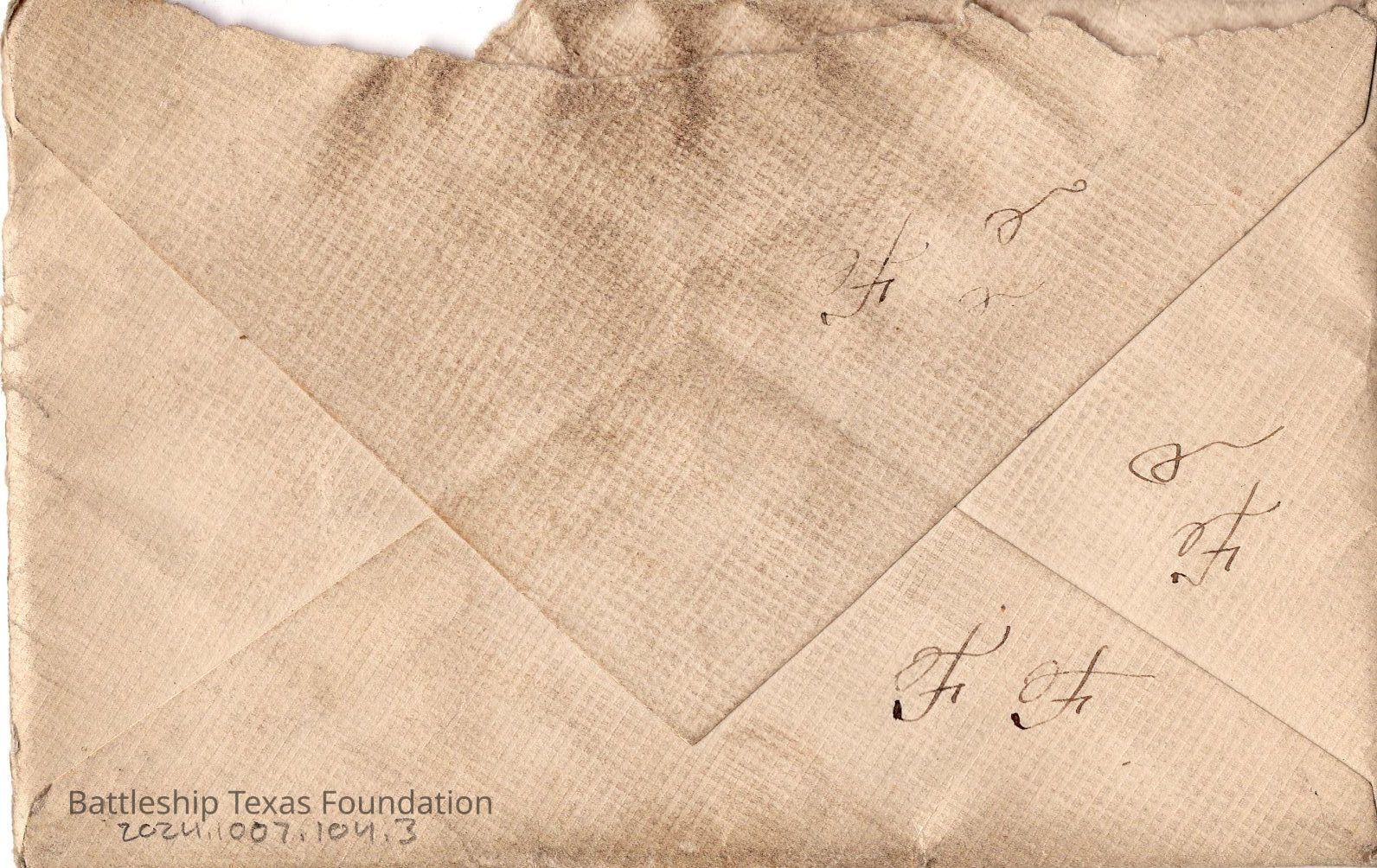
Dated 10-9-17 and addressed to Jill. Cat on back side of the second page, accompanied with caption "my latest photograph, Back view" Envelope: Large portion of right side of envelope torn. Stamped "NEW TORK OCT 9 6:30PM 1917"
Context
Battleship Texas ran aground on Block Island on September 28, 1917. She underwent repairs in New York Navy Yard and departed for Scapa Flow on January 30, 1918. John Lamson was a MM1c on Battleship Texas from May 1917 to June 1919. Throughout his time on Texas, he sent a letter to his family at least once a week, often more. Longer stretches of absence are explained either by movement across the Atlantic, or with the Grand Fleet. Battleship Texas had her own post office. All mail passed through a censor before leaving the ship. Once the package is checked, it was stamped with a “U.S.S. TEXAS” stamp. If in a port, mail could carry the markers of the post office on shore.
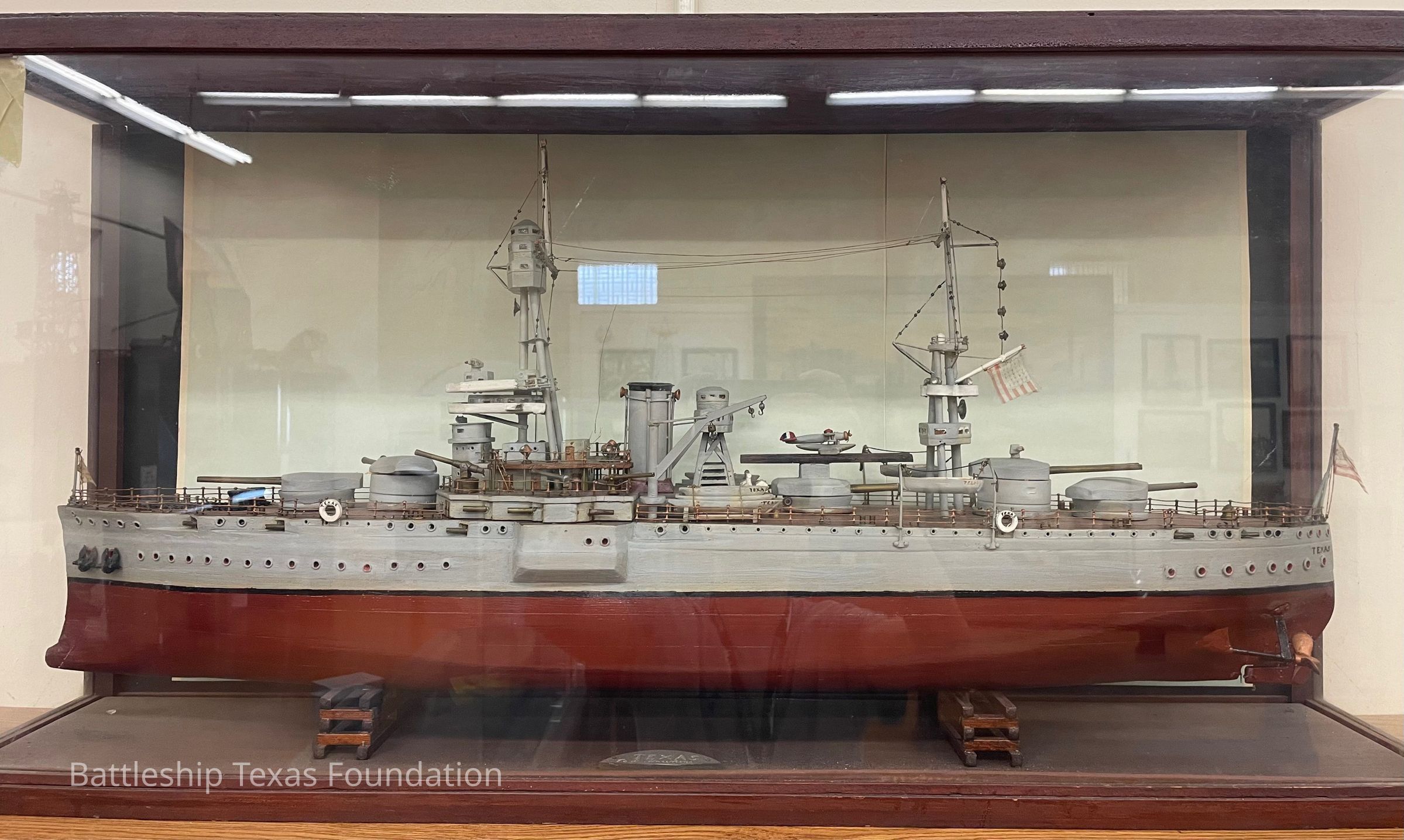
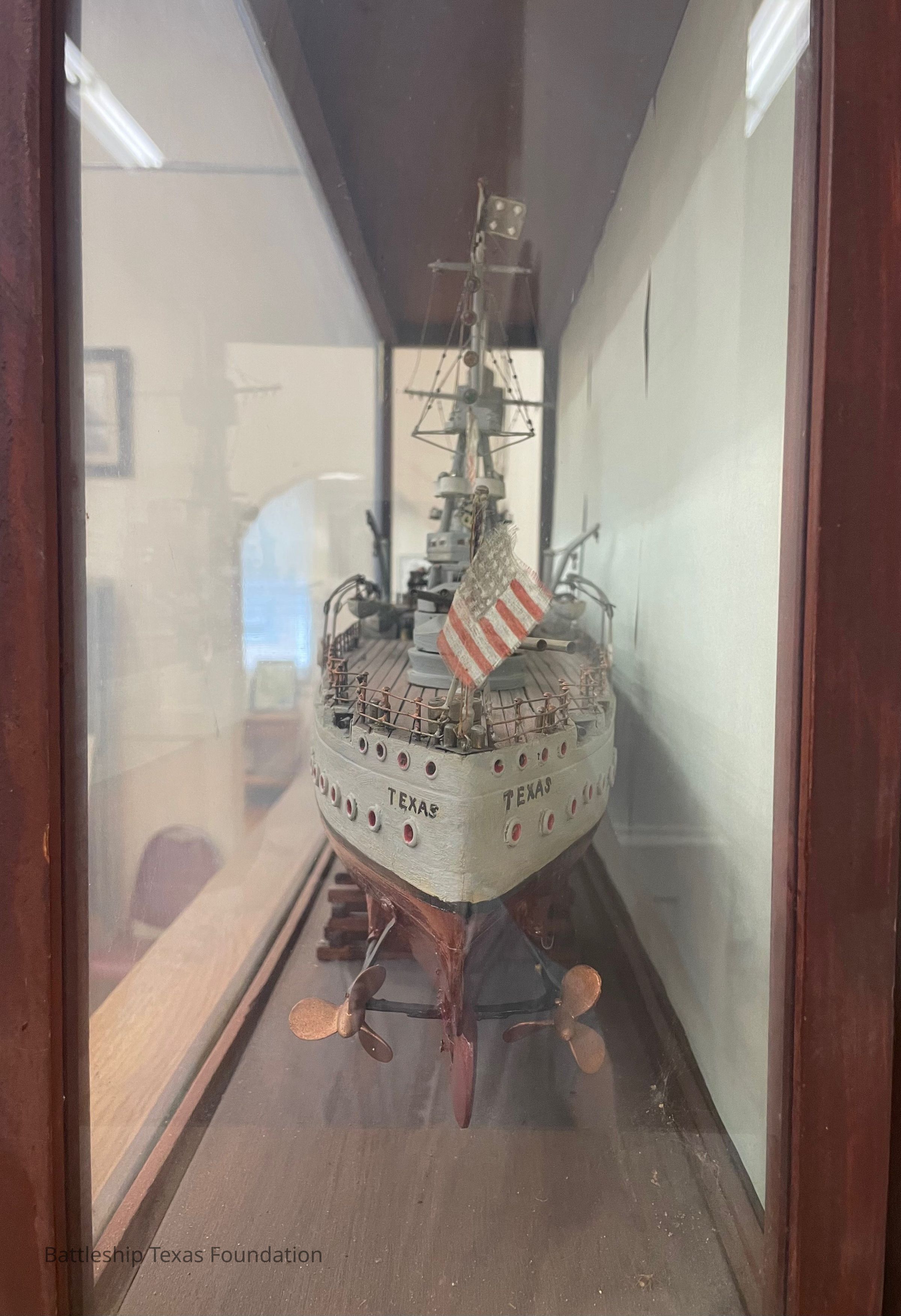
Model Battleship Texas
Description
The model is inside a wood and glass case. The case has solid back and top with the front and sides being glass. The model is supported in the case by brass rods that are hidden by two stacks of wood "cribbing" -one under turret 2 and the other under turret 4 of the model. There is a half circle brass tag bearing "TEXAS" and "Ted Hawkins" in cursive. The case is 35 5/8" (l) x 8 1/4" (w) x 19 3/8" (t)
Context
Handmade wooden model of USS Texas made from instructions authored by Captain E. Armitage McCann and published within five issues of Popular Science magazine released between November 1932 and March 1933.
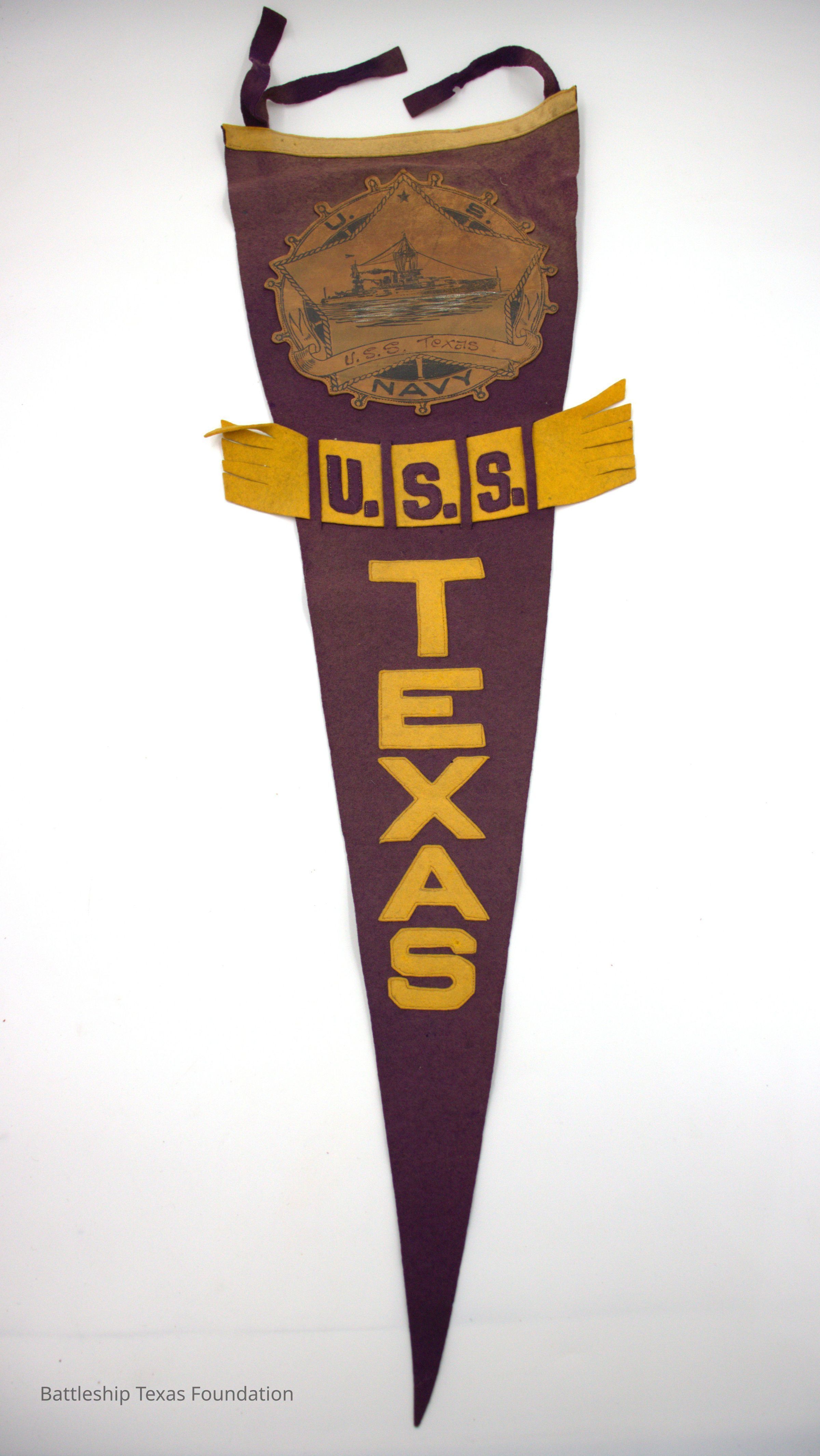
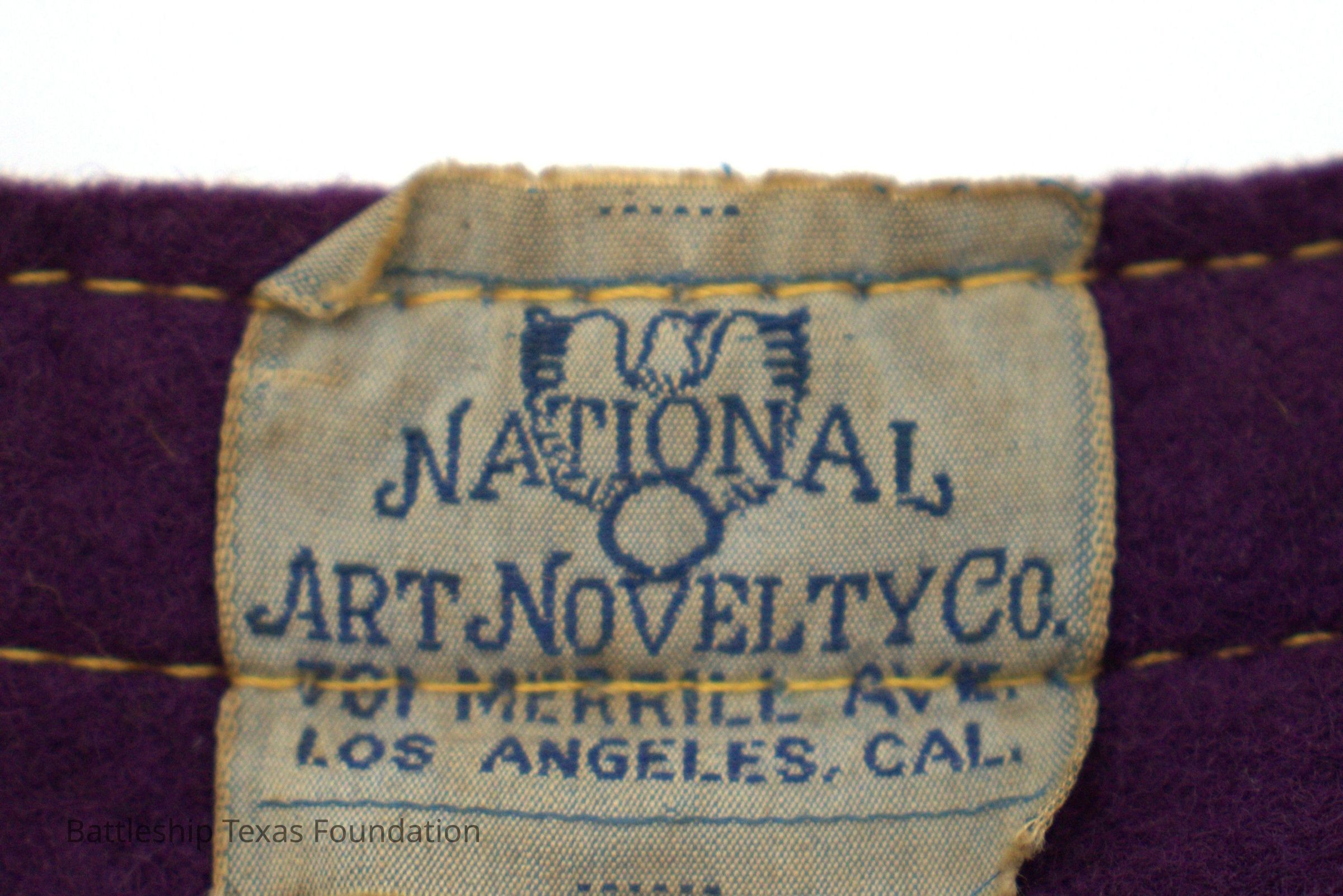
Pennant
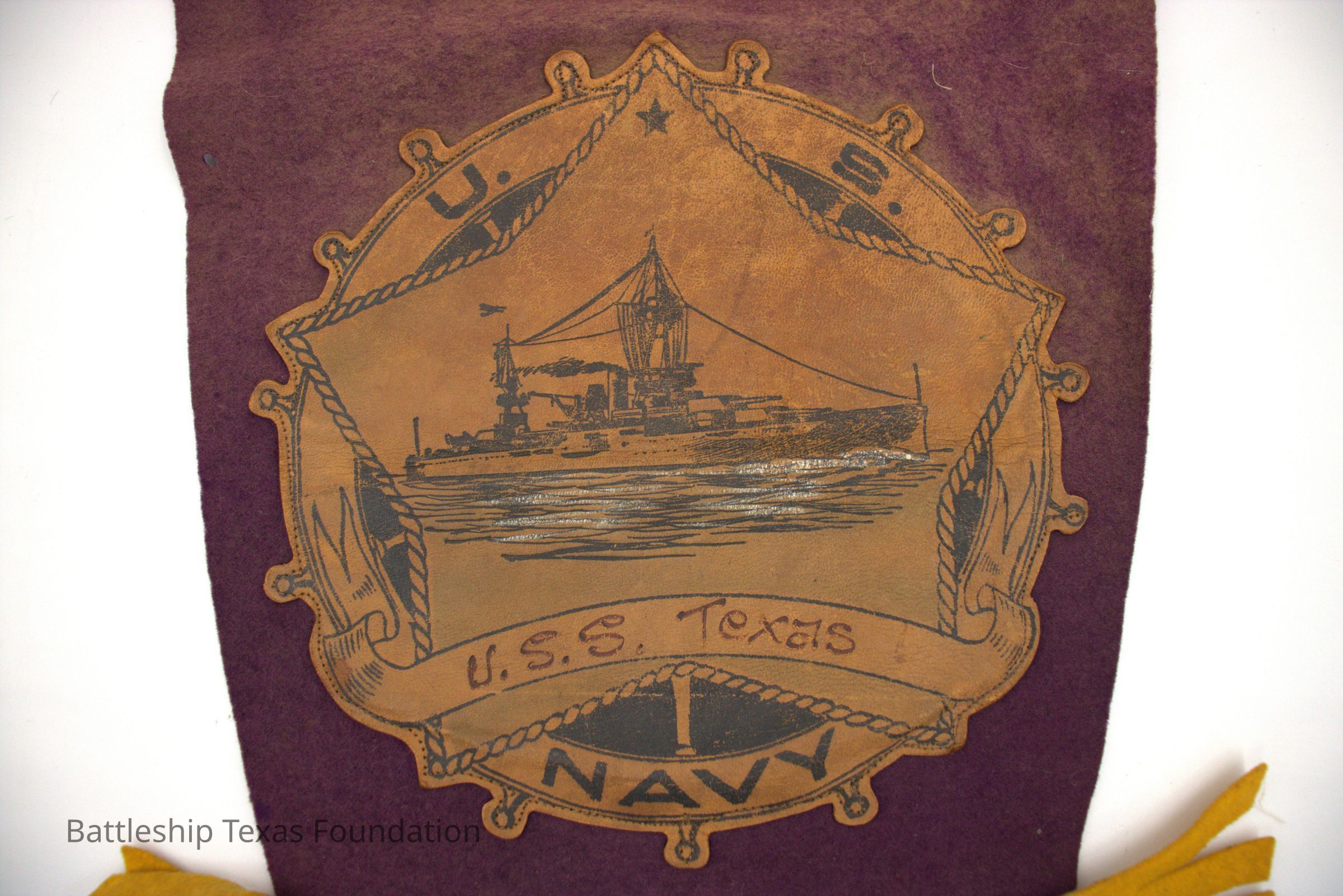
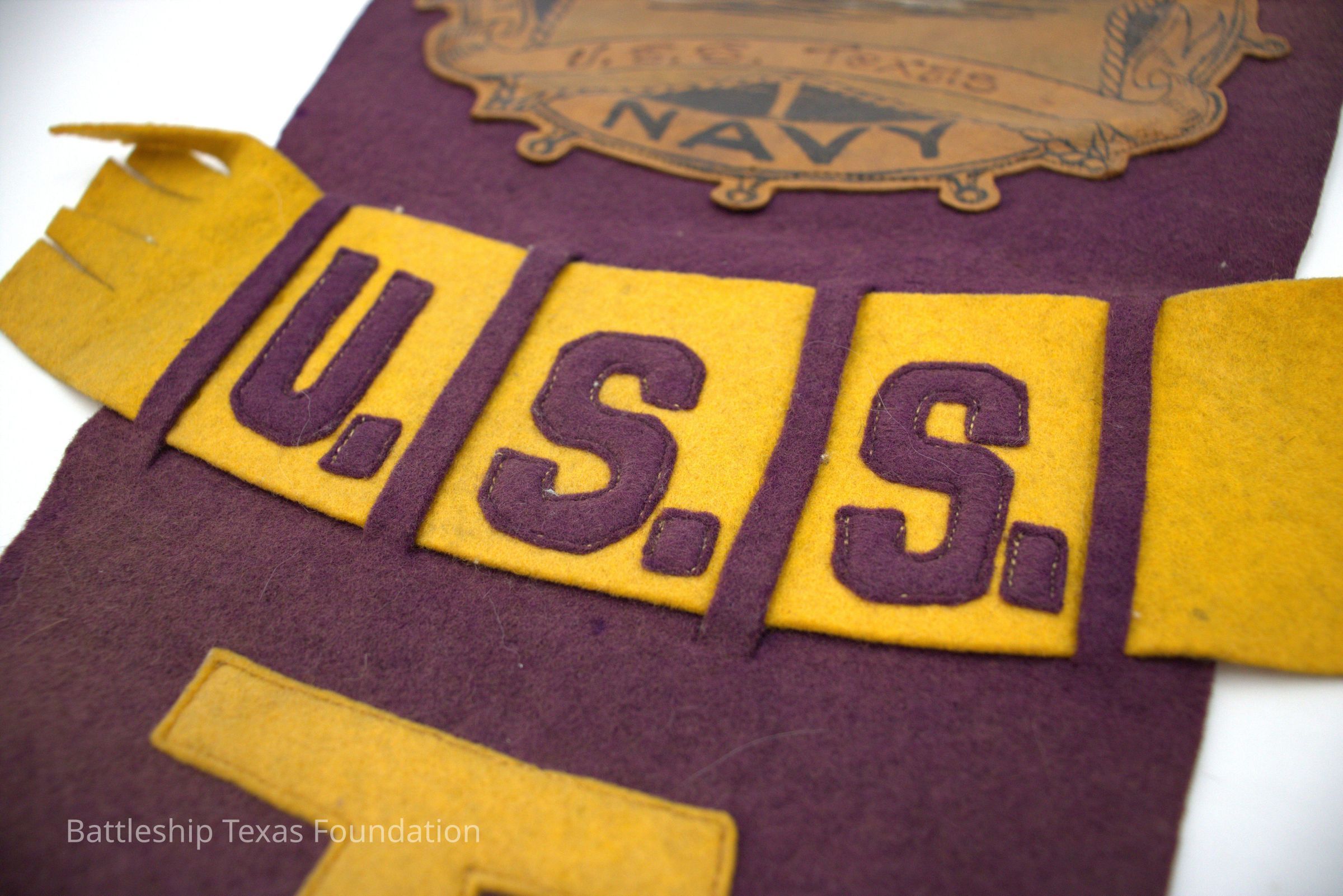
Description
Purple and yellow triangular felt pennant. At the widest end of the pennant, the top end, is two ties on one side and one tie on the other. is a sewn on leather emblem. the emblem appears to be cut from a leather bound photo album cover. The emblem is in the shape of a wheel with a star overlaid over it with a ship in the center of the star. Below that is "USS Texas" hand written on the emblem. "USS" spelled out in cut out yellow felt letters horizontally across it; "TEXAS" is spelled out in cut out yellow felt letters vertically under the "USS".
Context
Hand-made pennant made using elements on photo album covers. Many crew members kept photo albums that each have hundreds of photos chronicling their service onboard.
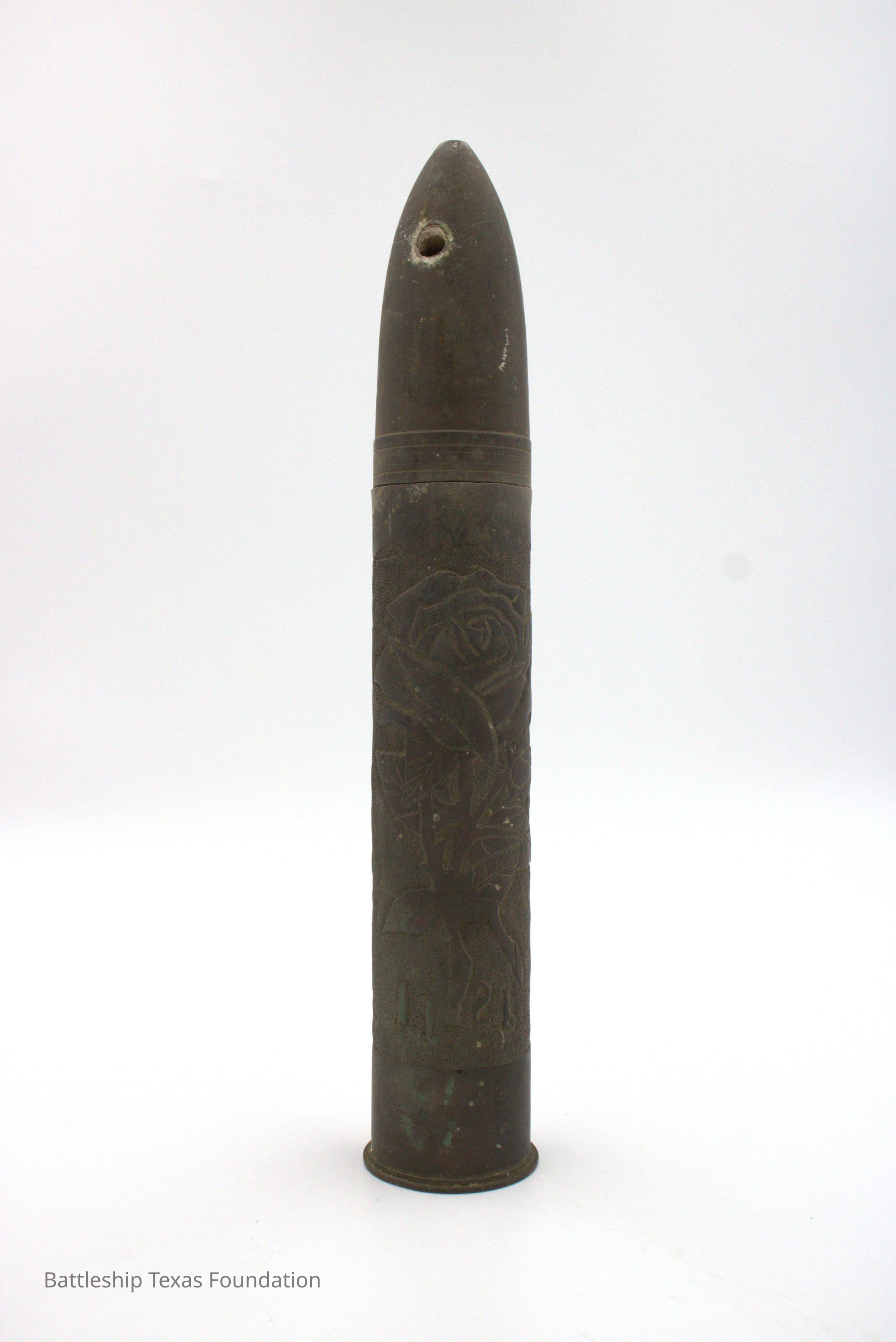
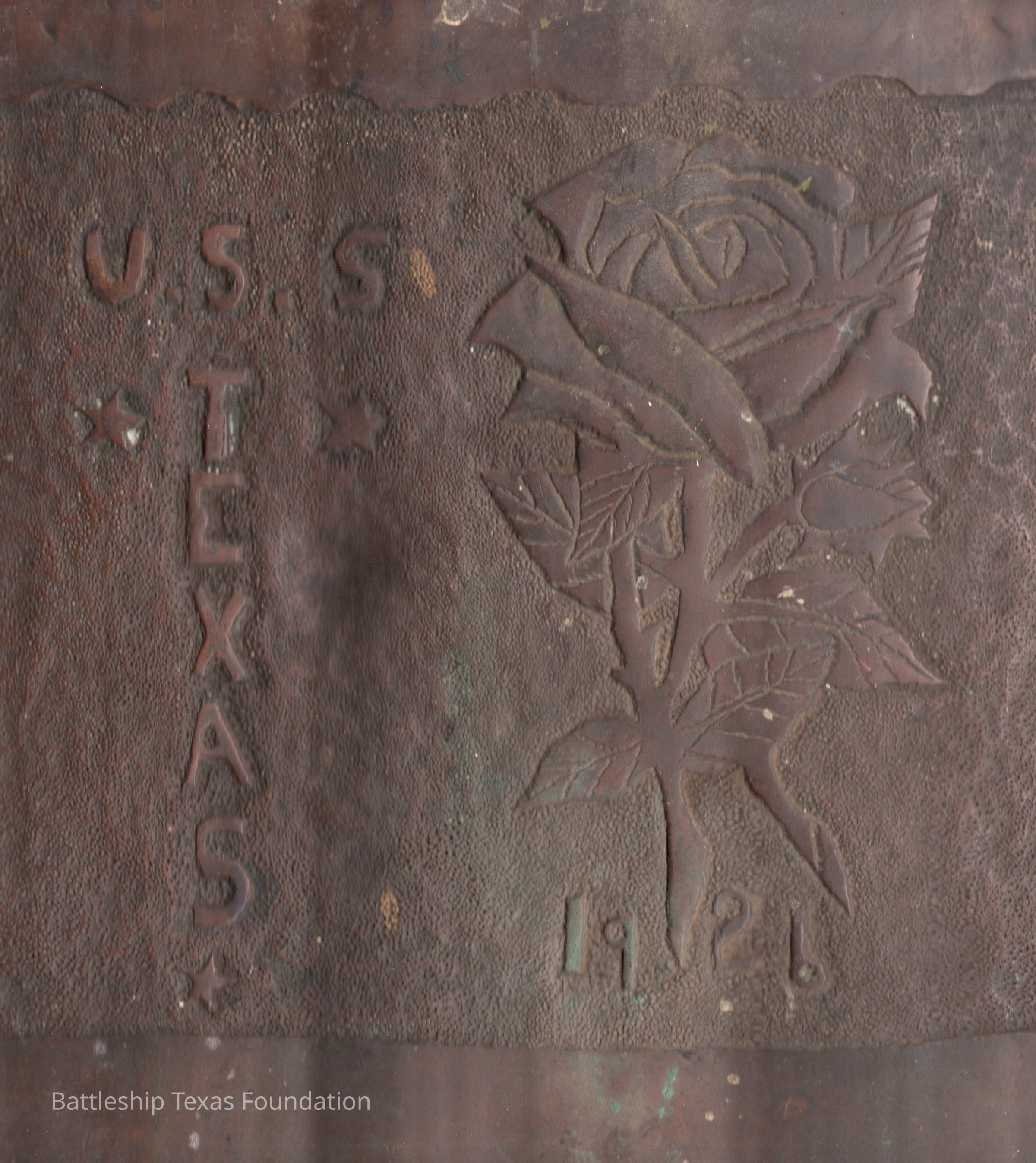
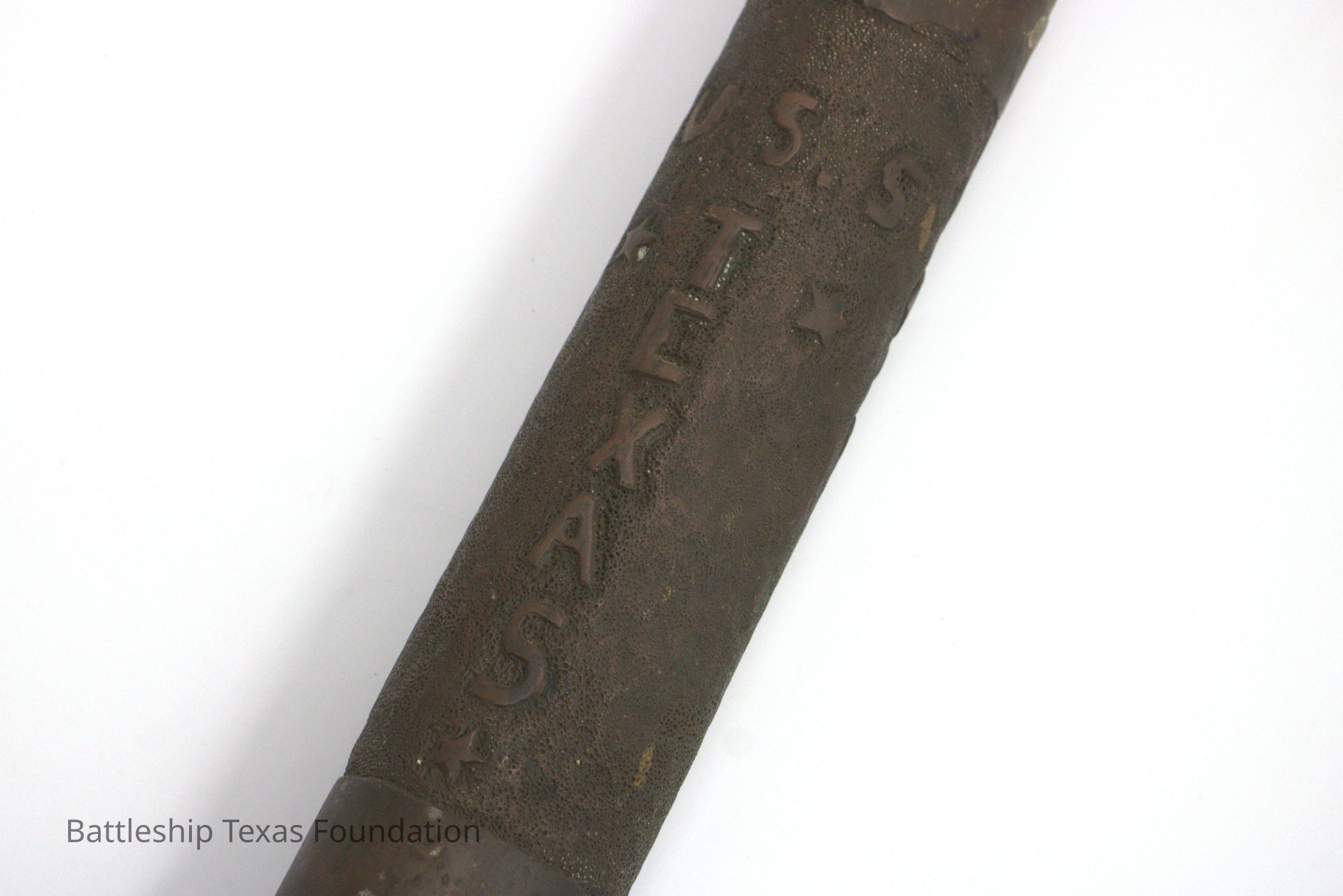
3-pounder trench art
Description
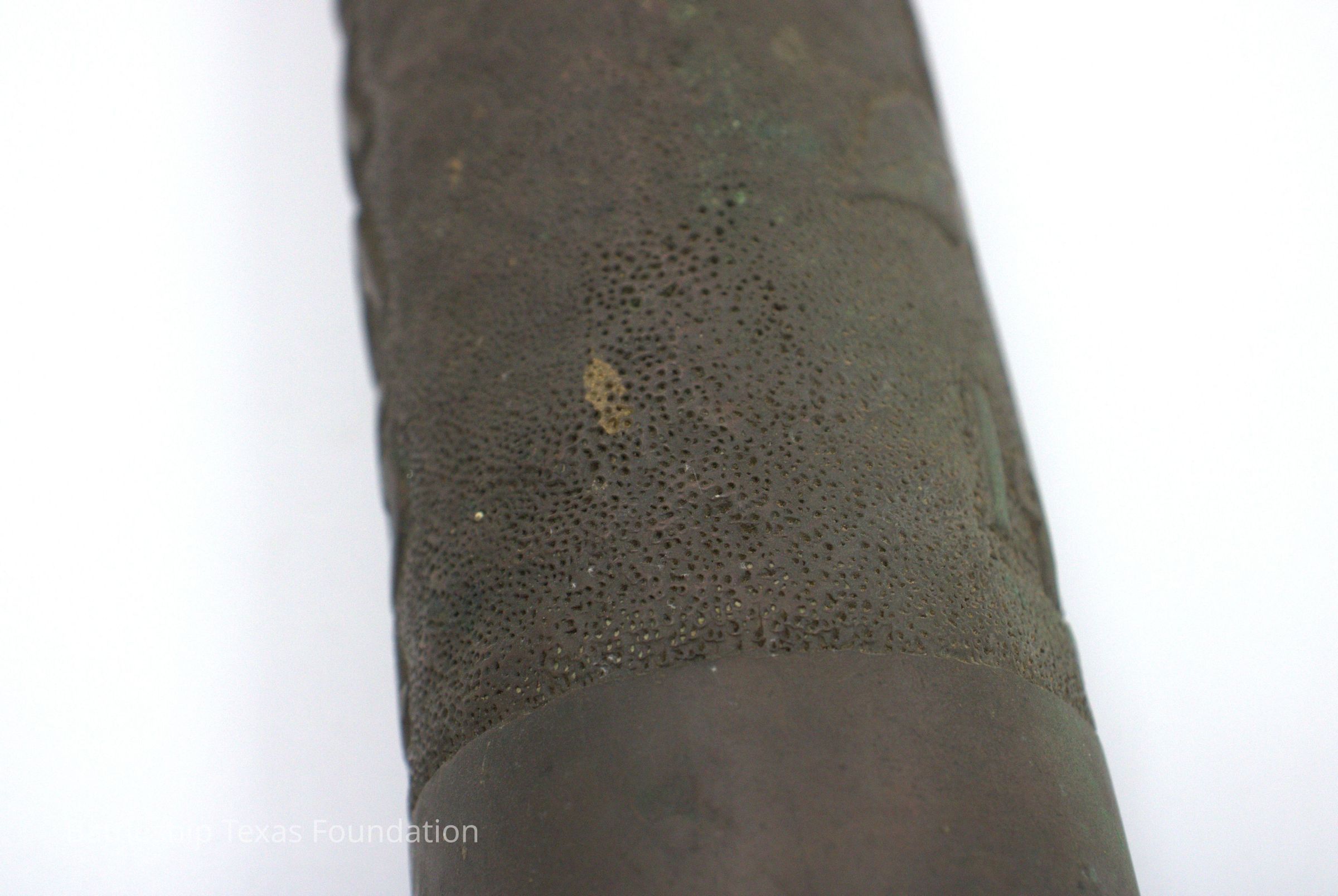
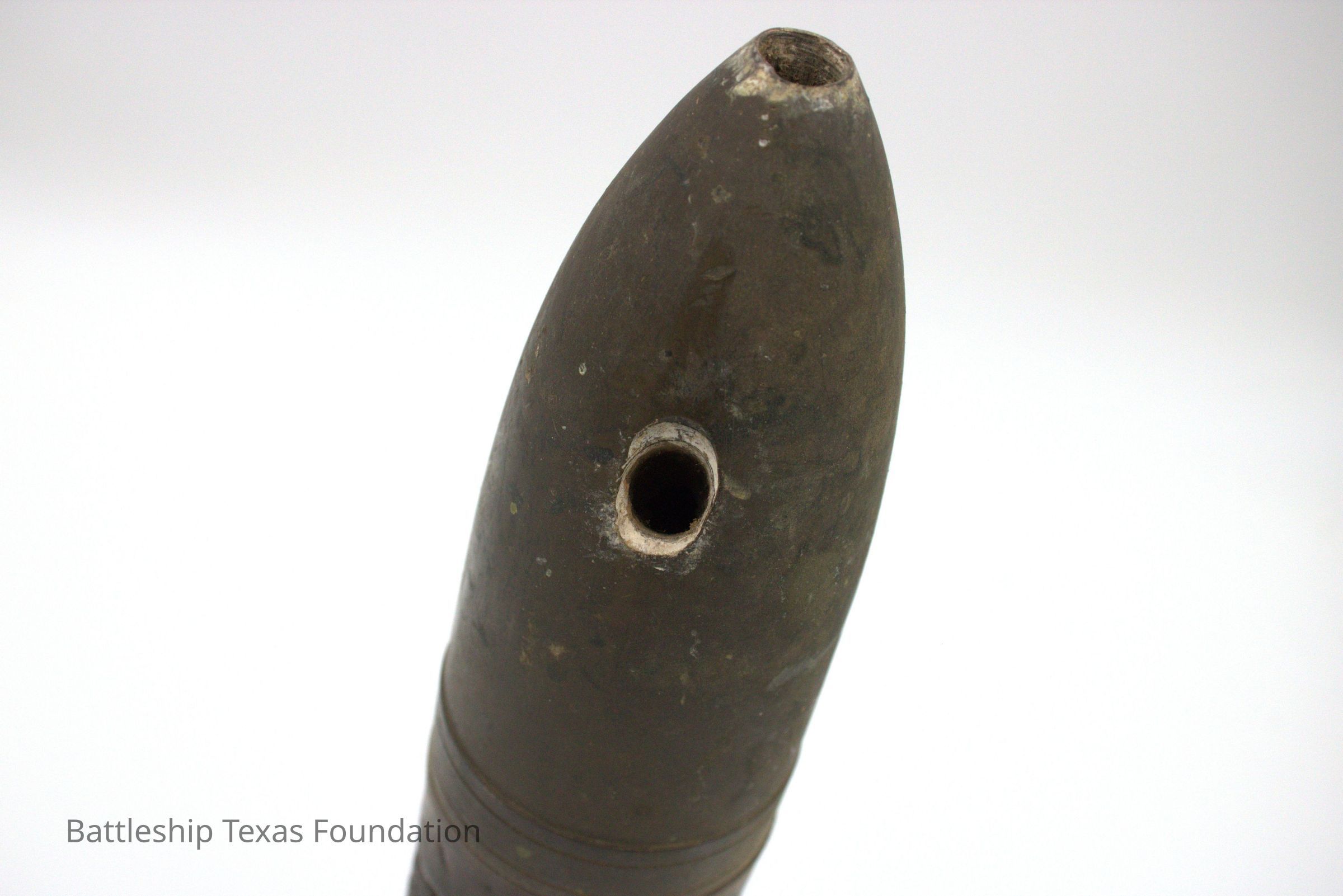
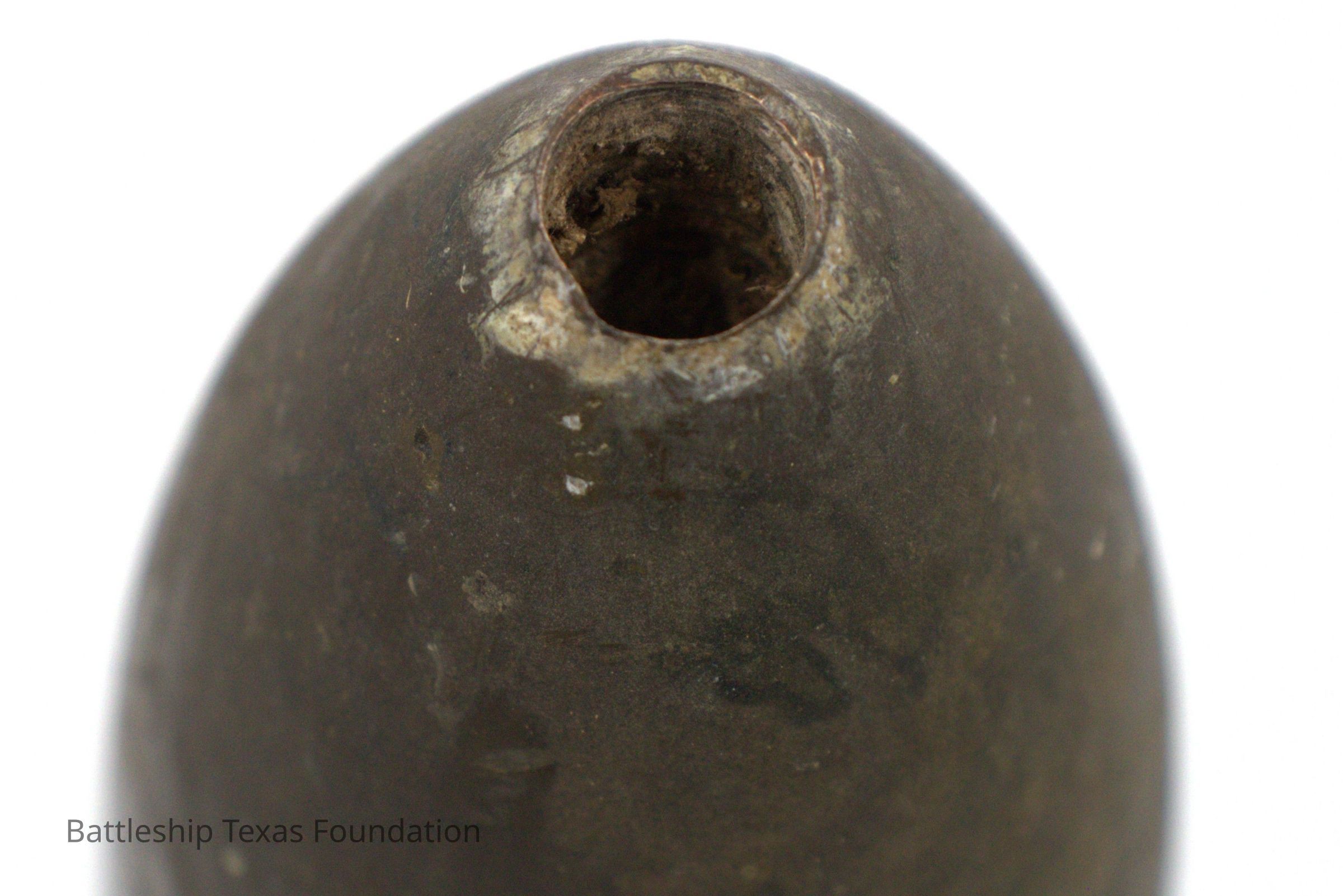
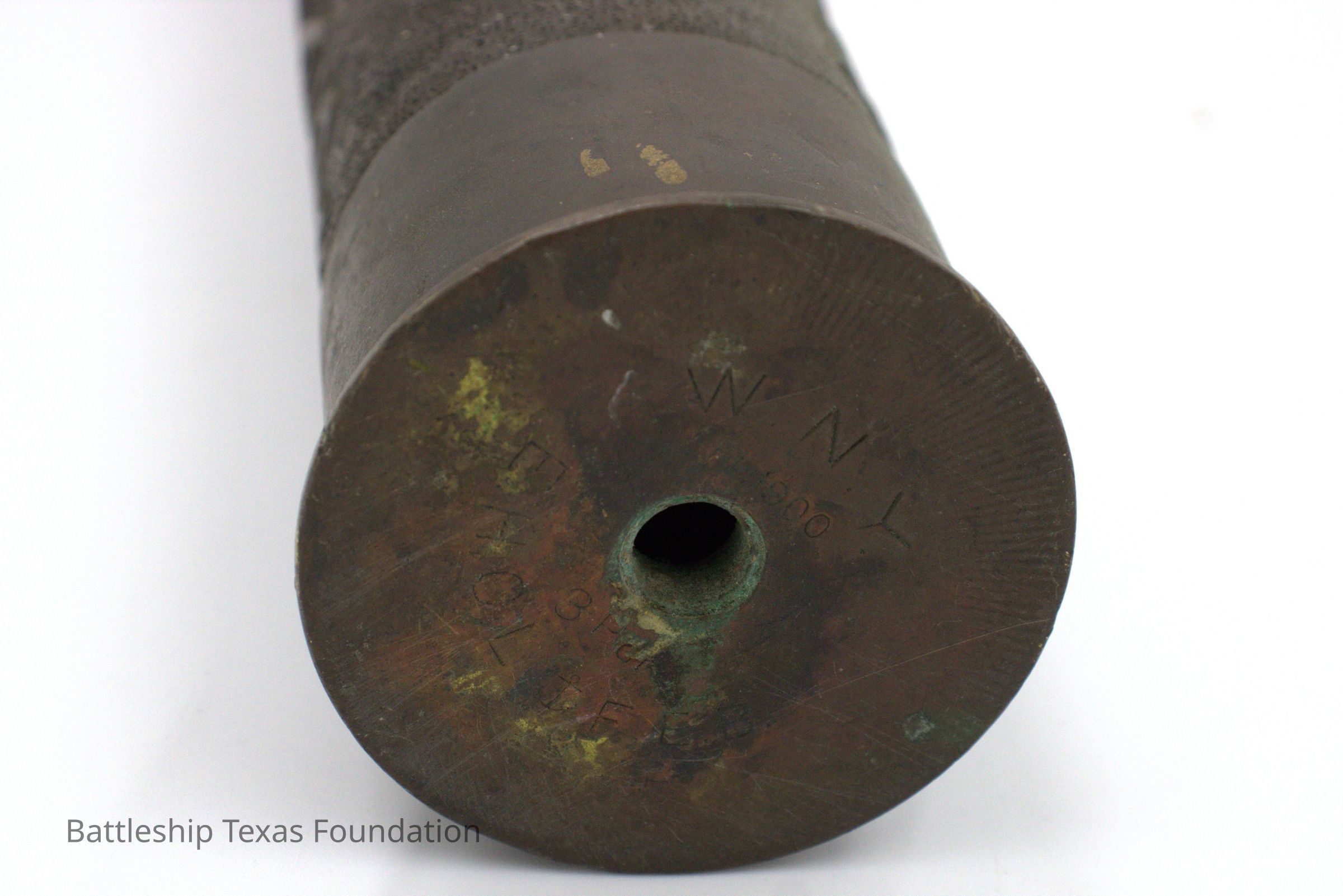
Rose etching on a 1900 3-pounder shell. "1926" around the base of the image, likely indicating the year it was made. Other side of the shell is labelled U.S.S. TEXAS. Projectile has three holes drilled into it on two sides and the nose, with the primer missing. Three holes in the top likely used in the early creation of a lamp that was never completed. The shell was formerly owned by Walter D. Brady and donated by his grandson Lee Brady.
Context
The Washington Naval Treaty was signed in 1922, ending new battleship construction for ten years. As a result, Battleship Texas underwent significant modernization from July 31, 1925, to November 23, 1926. Battleship Texas had an extensive shakedown cruise from November 23, 1926, to September 1, 1927. She had a brief period in dry dock during June and August 1927 before her speed trials. Walter D. Brady enlisted in 1942 and was a gunner’s mate aboard USS Langley (CVL-27) from 1943 to 1945. He participated during the Philippines Liberation and throughout the Pacific Theater. Sometime during his service in World War II, he traded with a crewmember of Battleship Texas for a piece of trench art on a 3-pounder shell. Servicemembers made sculptures most commonly from discarded ammunition shells of various calibers. The practice became popular during World War One and continued into World War Two. Shells could be reshaped, carved, etched, and soldered into myriad decorative objects. USS Langley (CVL-27) was an Independence-class light aircraft carrier commissioned from August 31, 1943, to February 11, 1947. She was transferred to the French Navy on January 8, 1951, and later scrapped in 1964.
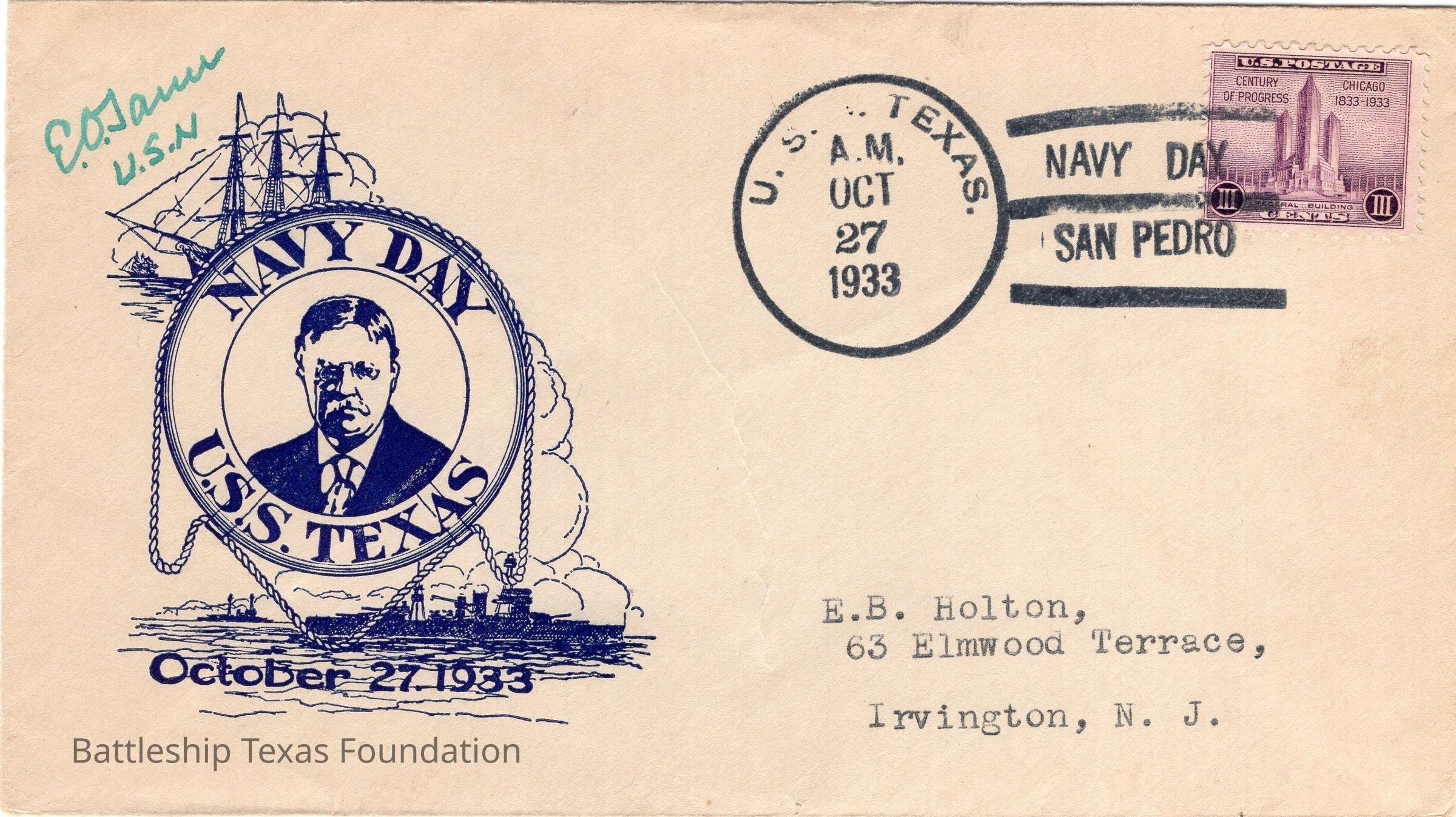
Cachet 1933/10/27 envelope
Description
Addressed to E.B. Holton from E.O. Tauer. Envelope sent from USS Texas on the morning of October 27, 1933 from San Pedro, California. Features a Navy Day stamp with Theodore Roosevelt center, and USS Texas below, and dated to the same day as when sent.
Context
Battleship Texas was flagship of Battleship Division One from September 15, 1931, to June 27, 1937. She continued to participate in Fleet Problems throughout this period. Erich O. Tauer was the chief machinist on Battleship Texas from 1930 to December 1, 1934. When he had spare time away from duties he sponsored, designed, and drew many holiday cachets used on envelopes. Battleship Texas had her own post office. All mail passed through a censor before leaving the ship. Once the package is checked, it was stamped with a “U.S.S. TEXAS” stamp. If in a port, mail could carry the markers of the post office on shore.
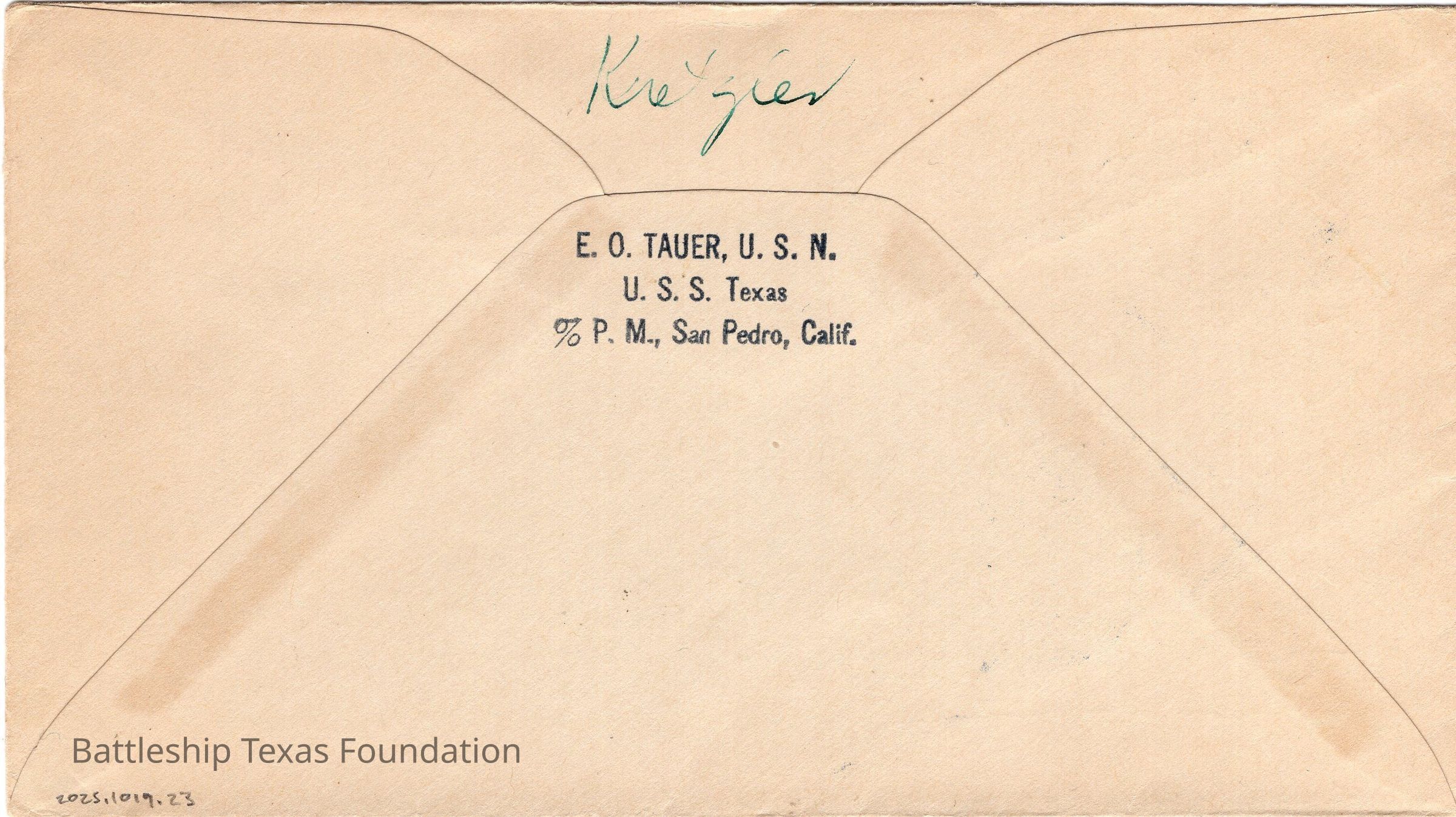
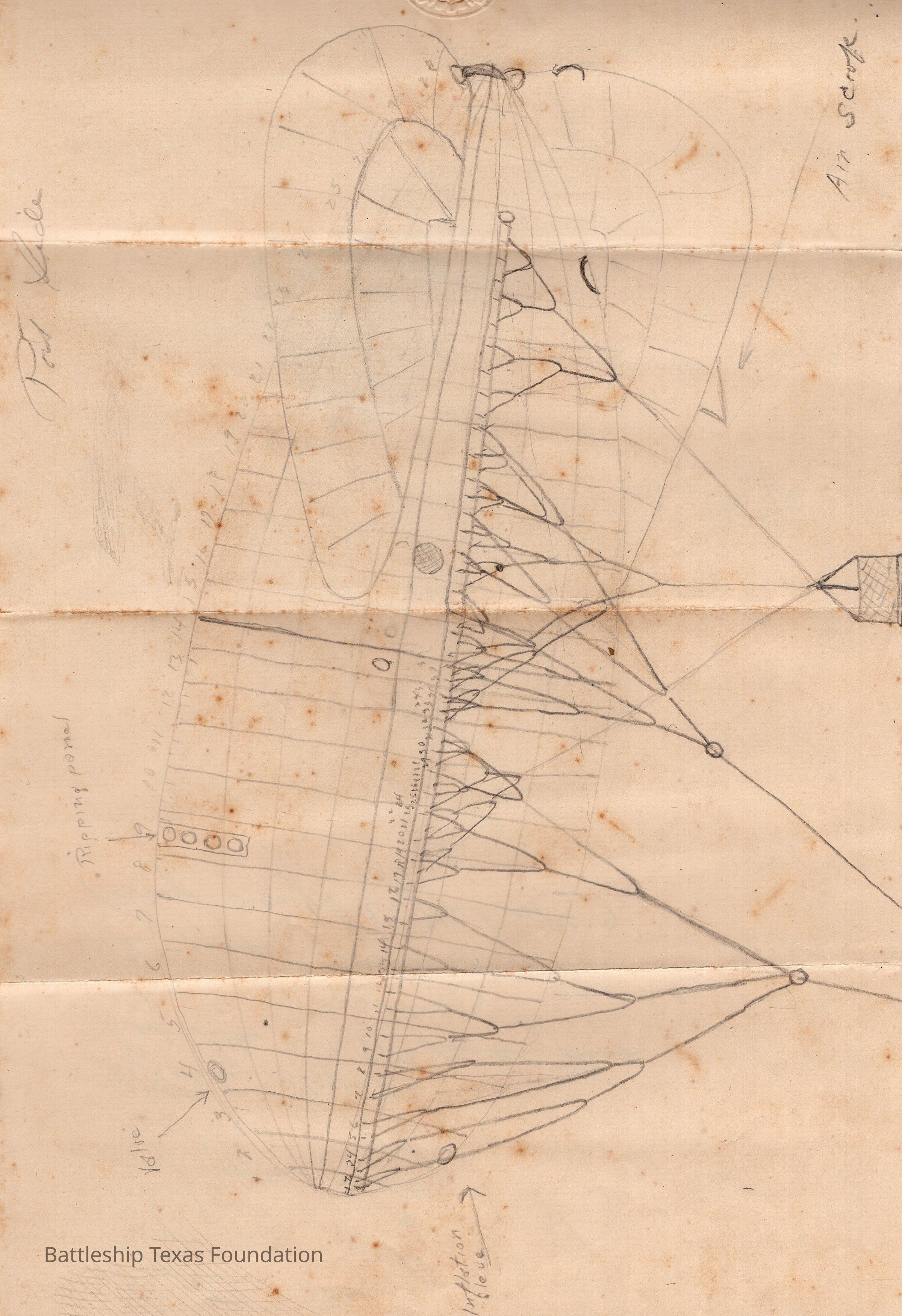
Kite Balloon drawing notes
Description
Drawing on paper of a kite balloon. Back has a sketch of a hut with "let's go" written under it. Other notes on top of back of page.
Context
Battleship Texas arrived in Scapa Flow on February 11, 1918, where she joined the British Grand Fleet. She patrolled the North Sea throughout 1918, escorted the German High Seas Fleet to surrender on November 21, and departed the Grand Fleet on December 1, 1918. William Wilbur served on Battleship Texas from December 1917 to August 1919. During WWI, he was selected to train on Kite Balloons at the Royal Naval Air School.
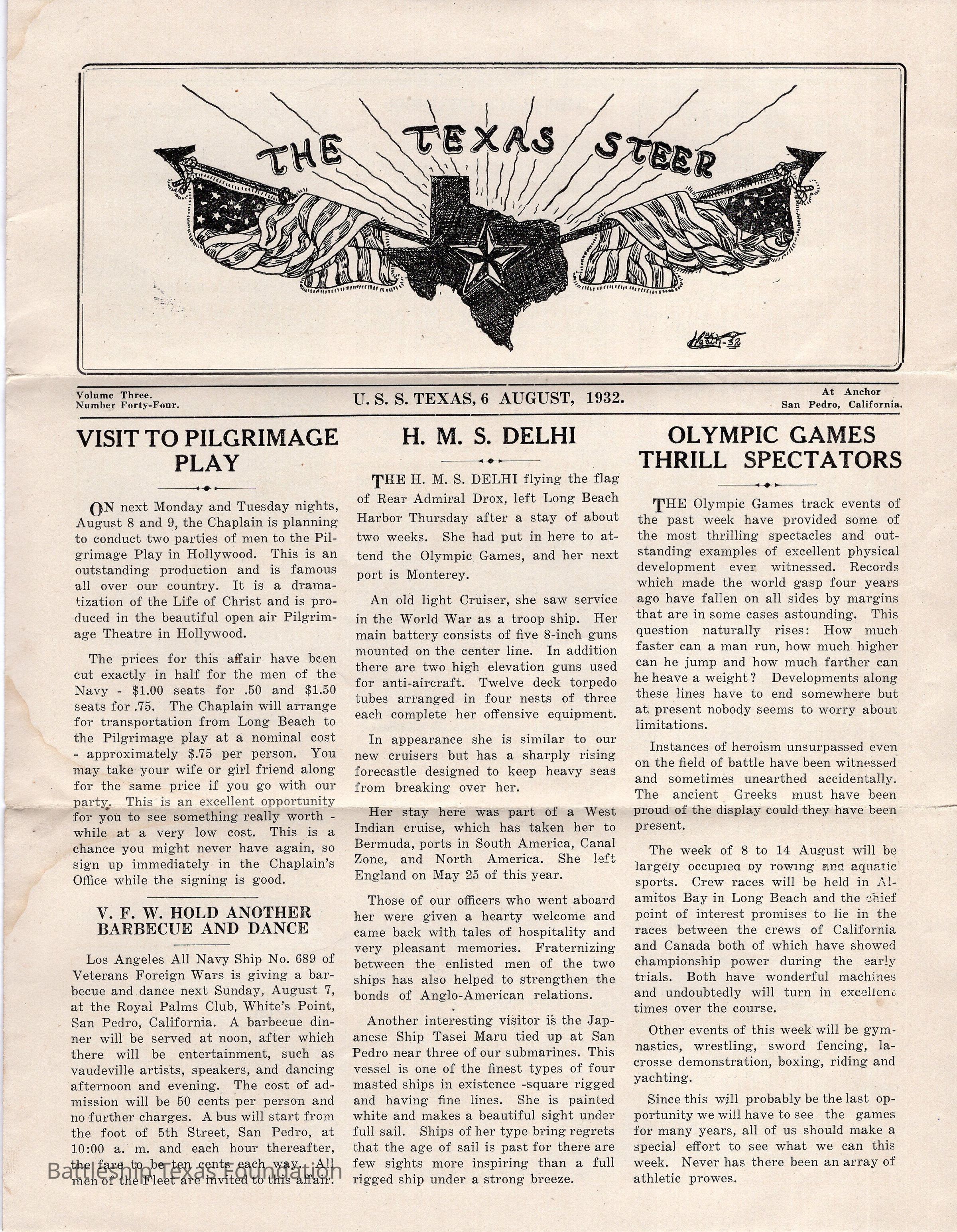
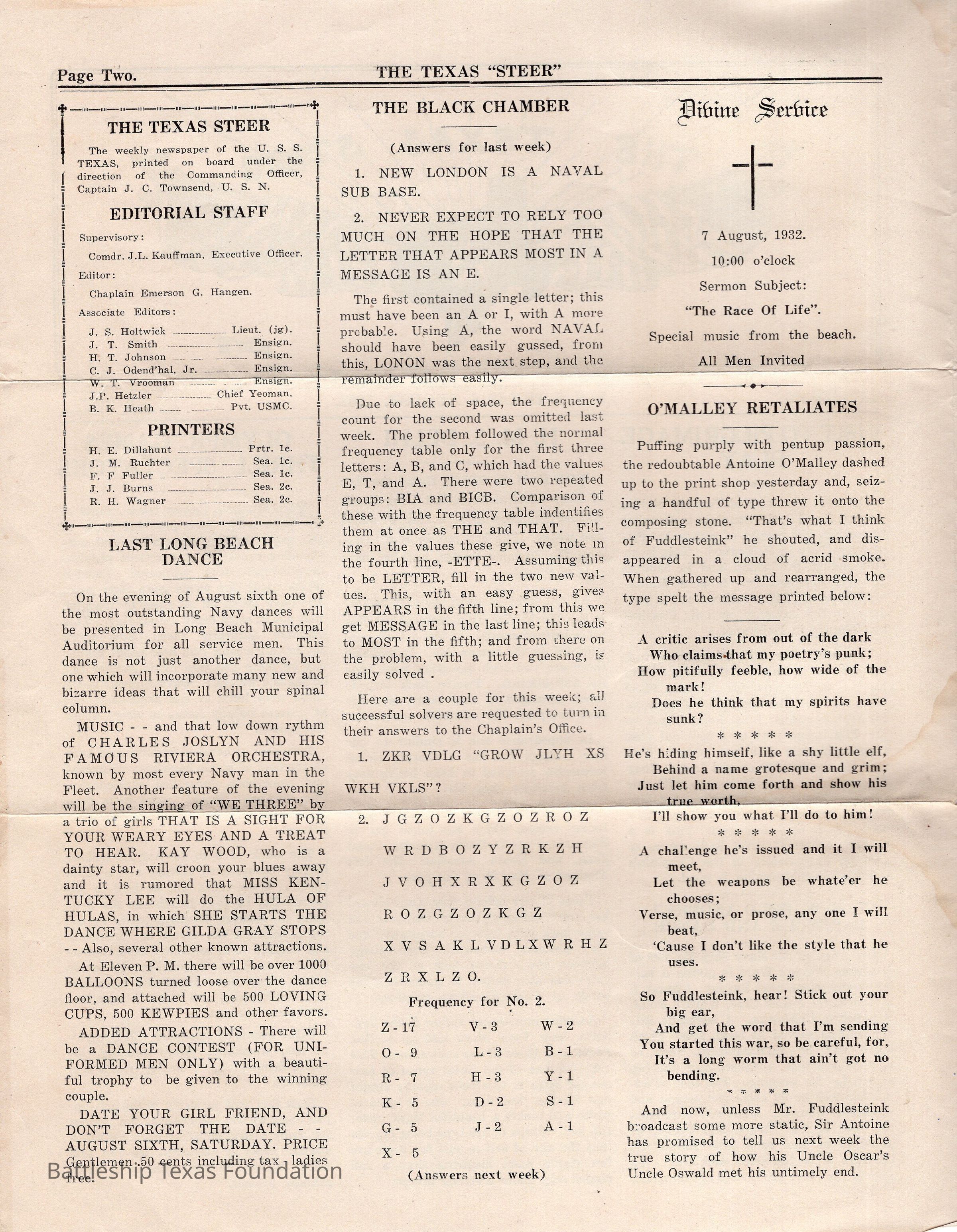
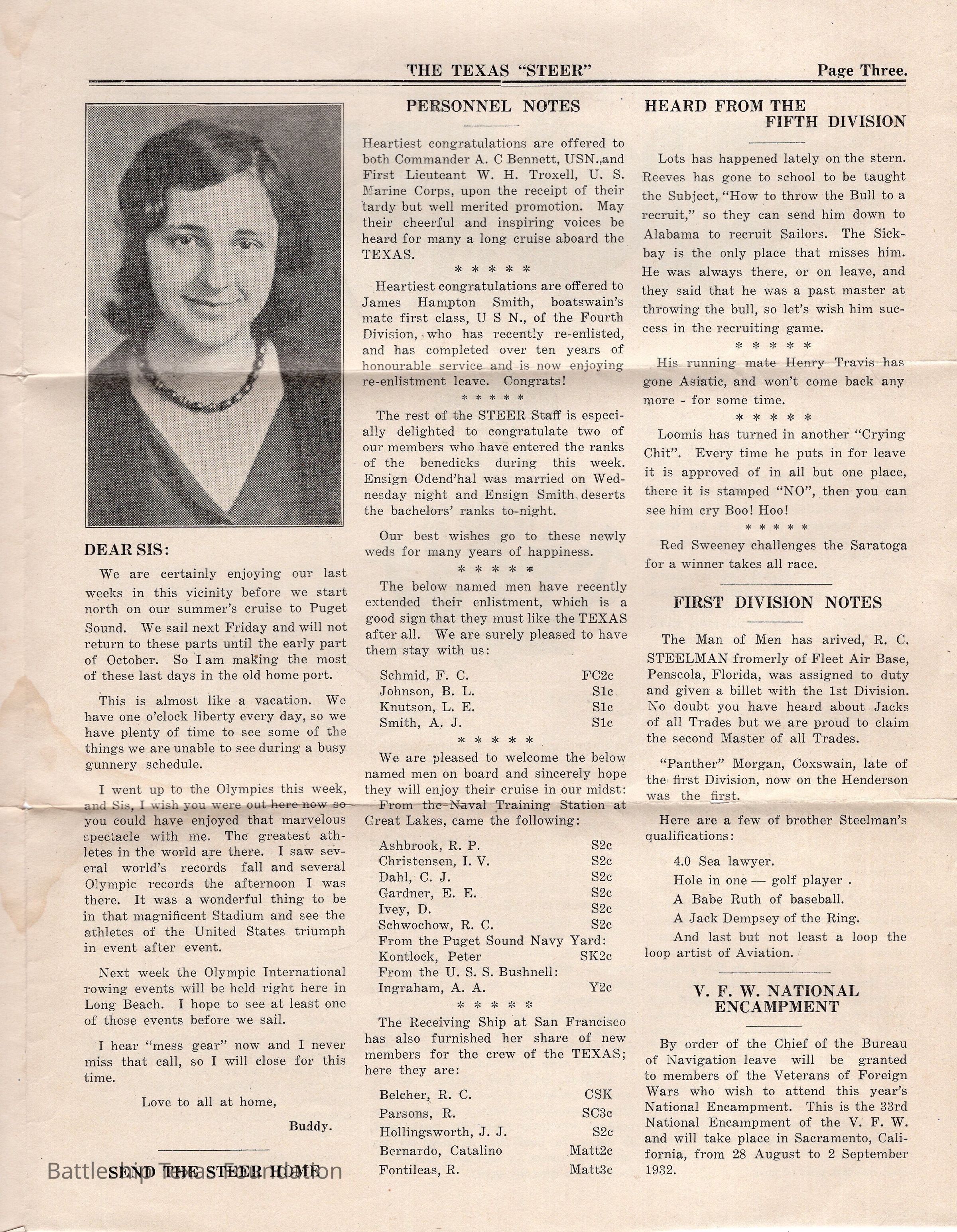
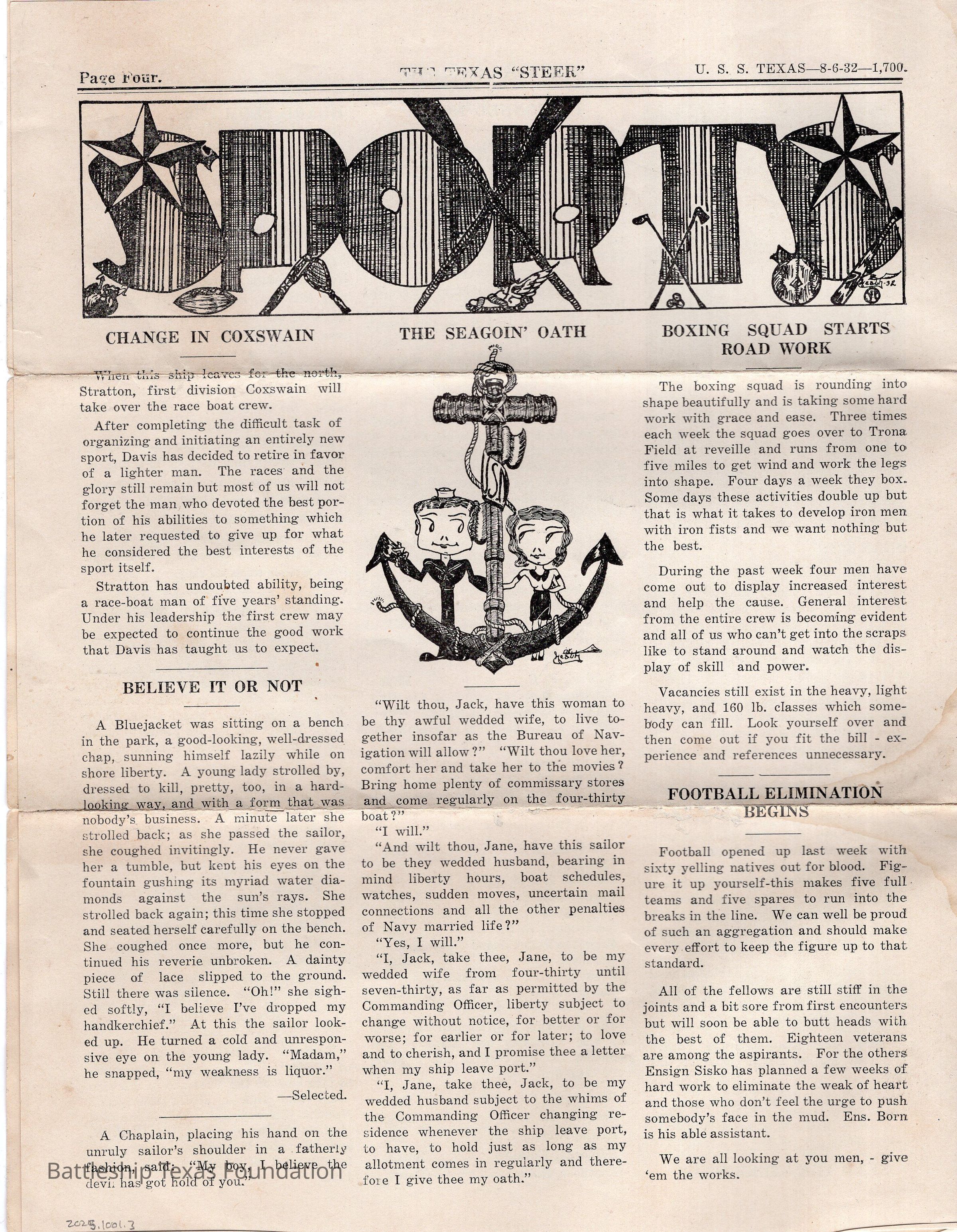
Texas Steer (Vol.3 No.44)
Description
Vol 3 No. 44 USS Texas published newspaper from 6 August, 1932 while she was at anchor in San Pedro, California. Artwork on front and back by Buford K. Heath.
Context
Battleship Texas was flagship of Battleship Division One from September 15, 1931, to June 27, 1937. She continued to participate in Fleet Problems throughout this period. “The Texas Steer” was a biweekly newsletter, started in 1924, and published by the crew of Battleship Texas. The paper was published until 1935, running a total of six volumes.
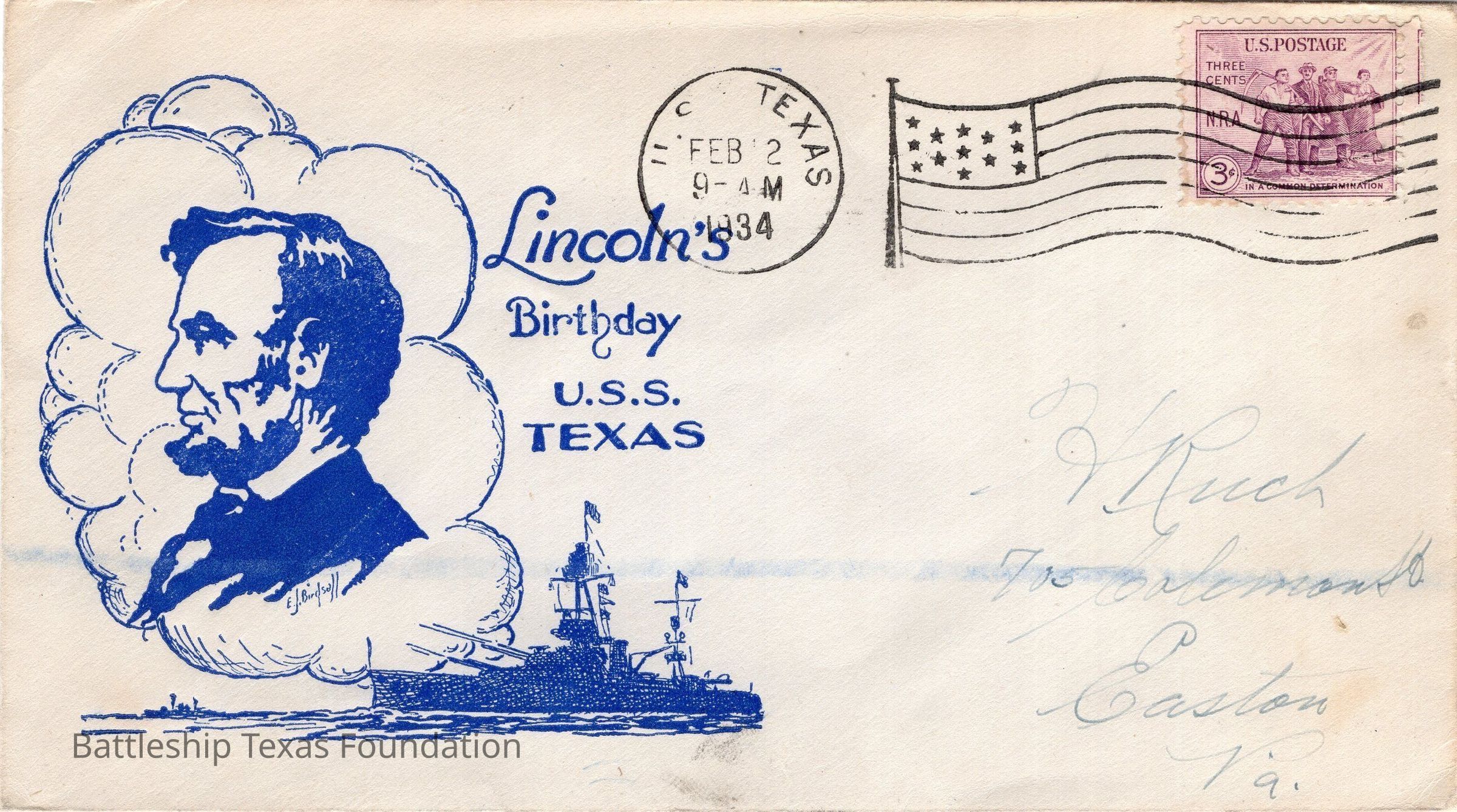
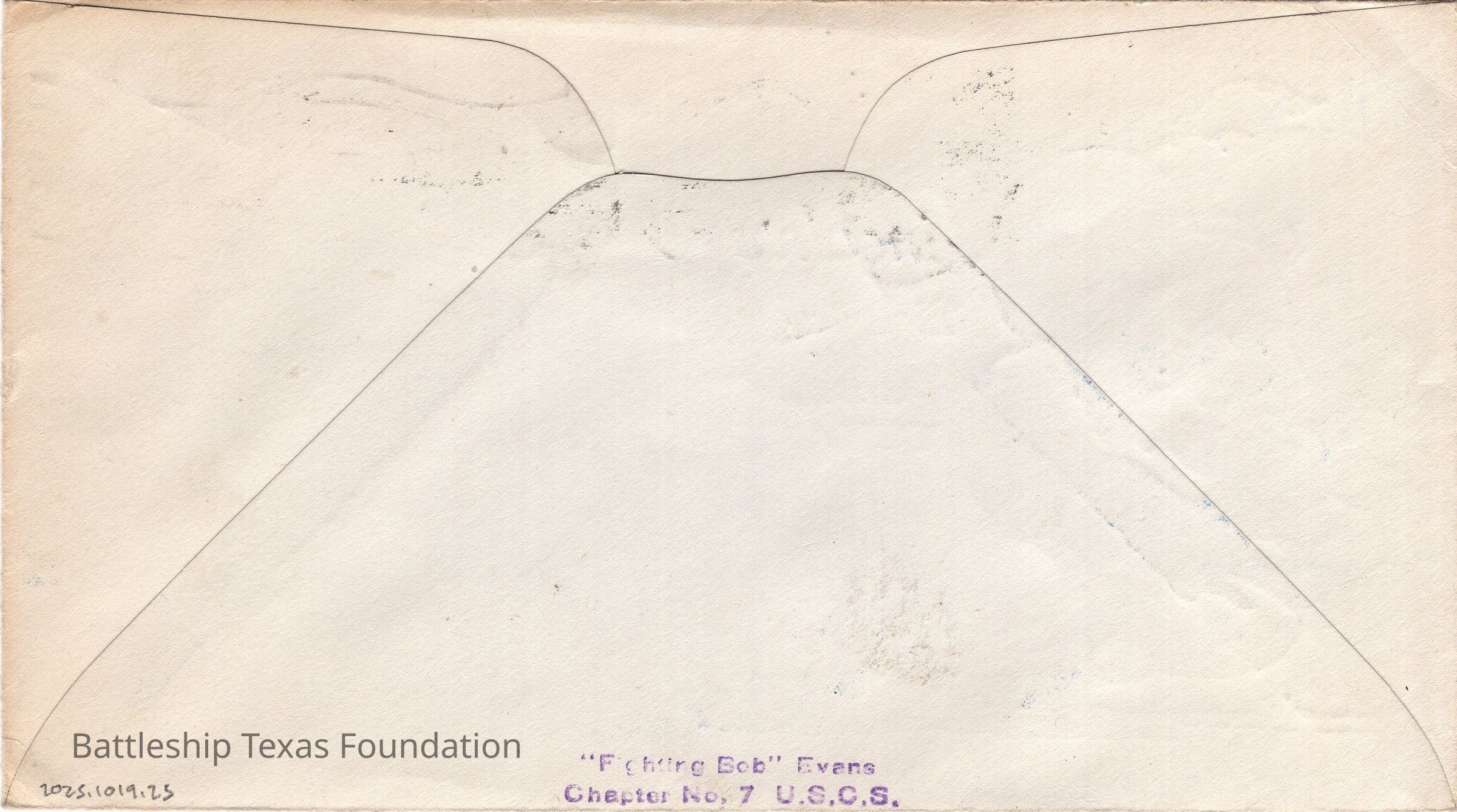
Cachet 1934/02/12 envelope
Description
Addressed to H. Ruch. Envelope sent from USS Texas on the morning of February 12, 1934. Features a stamp of battleship Texas firing her forward two turrets, with Abraham Lincoln's side profile in the smoke, and captioned "Lincoln's Birthday U.S.S. TEXAS." "Fighting Bob" Evans stamped on the back.
Context
Battleship Texas was flagship of Battleship Division One from September 15, 1931, to June 27, 1937. She continued to participate in Fleet Problems throughout this period. Erich O. Tauer was the chief machinist on Battleship Texas from 1930 to December 1, 1934. When he had spare time away from duties he sponsored, designed, and drew many holiday cachets used on envelopes. Elmer J. Birdsall was the artist for a number of the cachets sponsored by Tauer. Battleship Texas had her own post office. All mail passed through a censor before leaving the ship. Once the package is checked, it was stamped with a “U.S.S. TEXAS” stamp. If in a port, mail could carry the markers of the post office on shore.
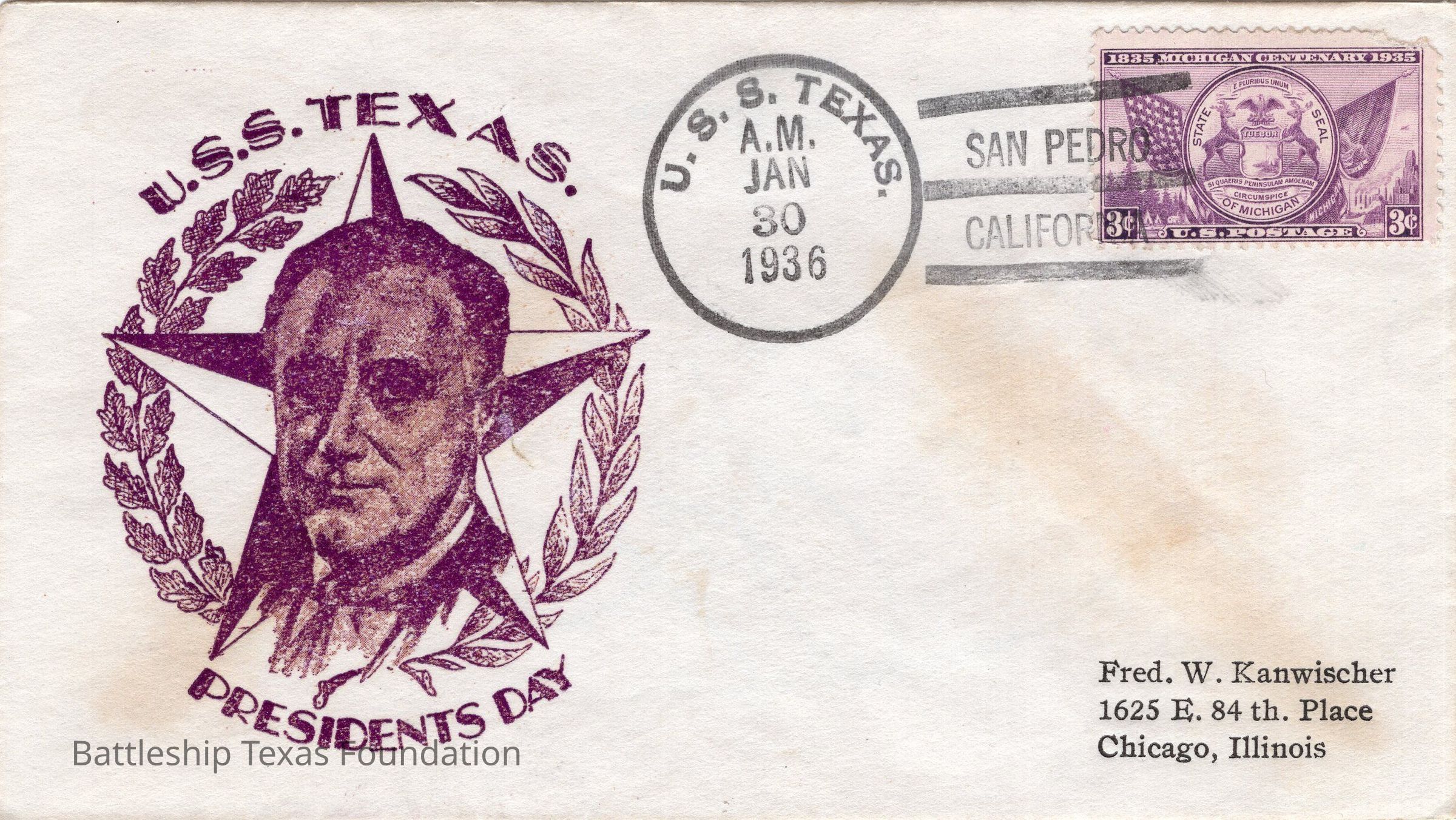
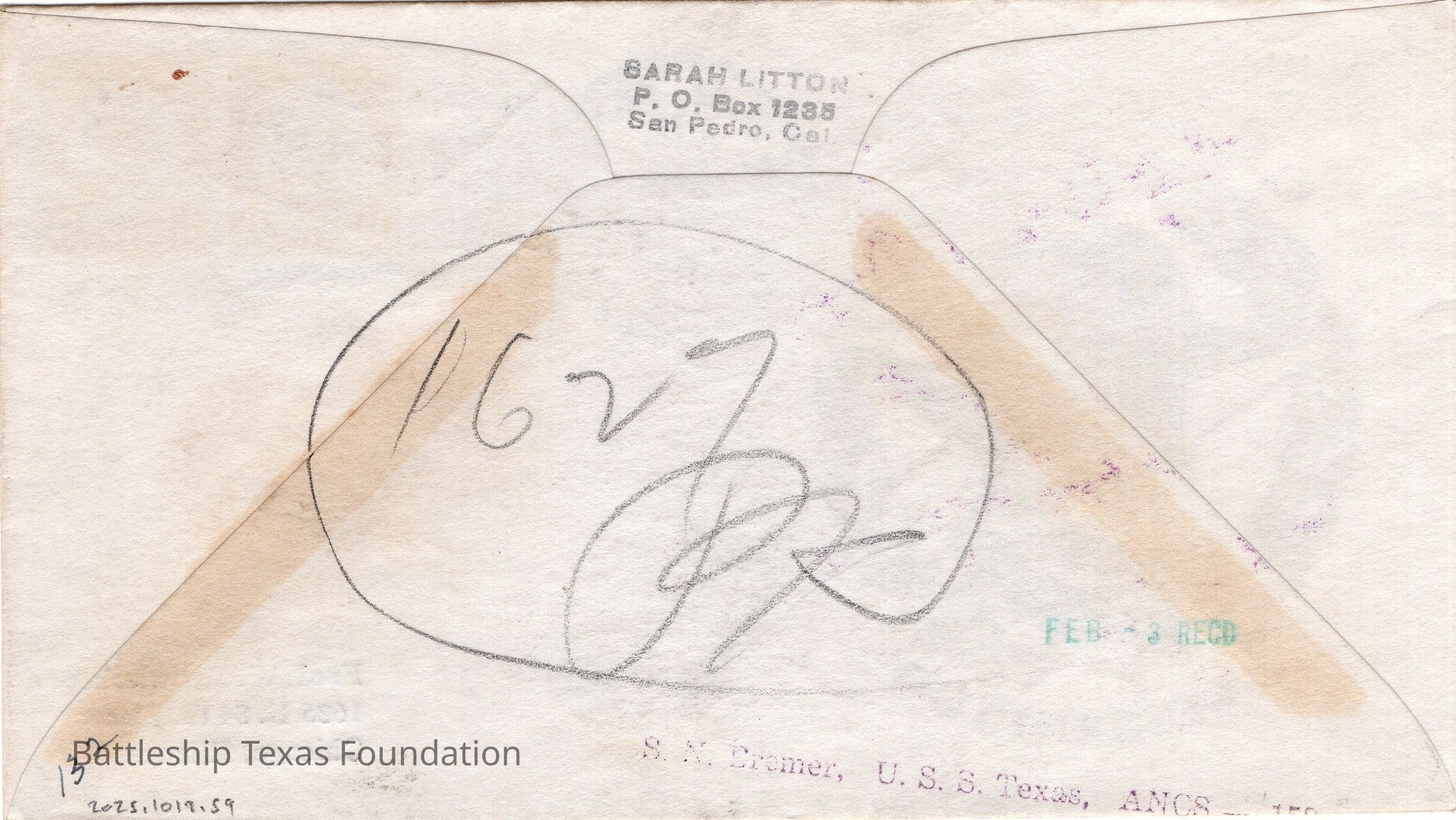
Cachet 1936/01/30 envelope
Description
Addressed to Fred. W. Kanwischer. Envelope sent from USS Texas on the morning of January 30, 1936, when the ship was in San Pedro, California. Features a Presidents Day stamp of Franklin D. Roosevelt in front of a star wreathed in branches. S.N. Bremer stamped on back.
Context
Battleship Texas was flagship of Battleship Division One from September 15, 1931, to June 27, 1937. She continued to participate in Fleet Problems throughout this period. Sidney N. Bremer was a mail clerk on Battleship Texas from January 16, 1935, to February 1941. When he had spare time away from duties he sponsored, designed, and drew many cachets used on envelopes. Battleship Texas had her own post office. All mail passed through a censor before leaving the ship. Once the package is checked, it was stamped with a “U.S.S. TEXAS” stamp. If in a port, mail could carry the markers of the post office on shore.
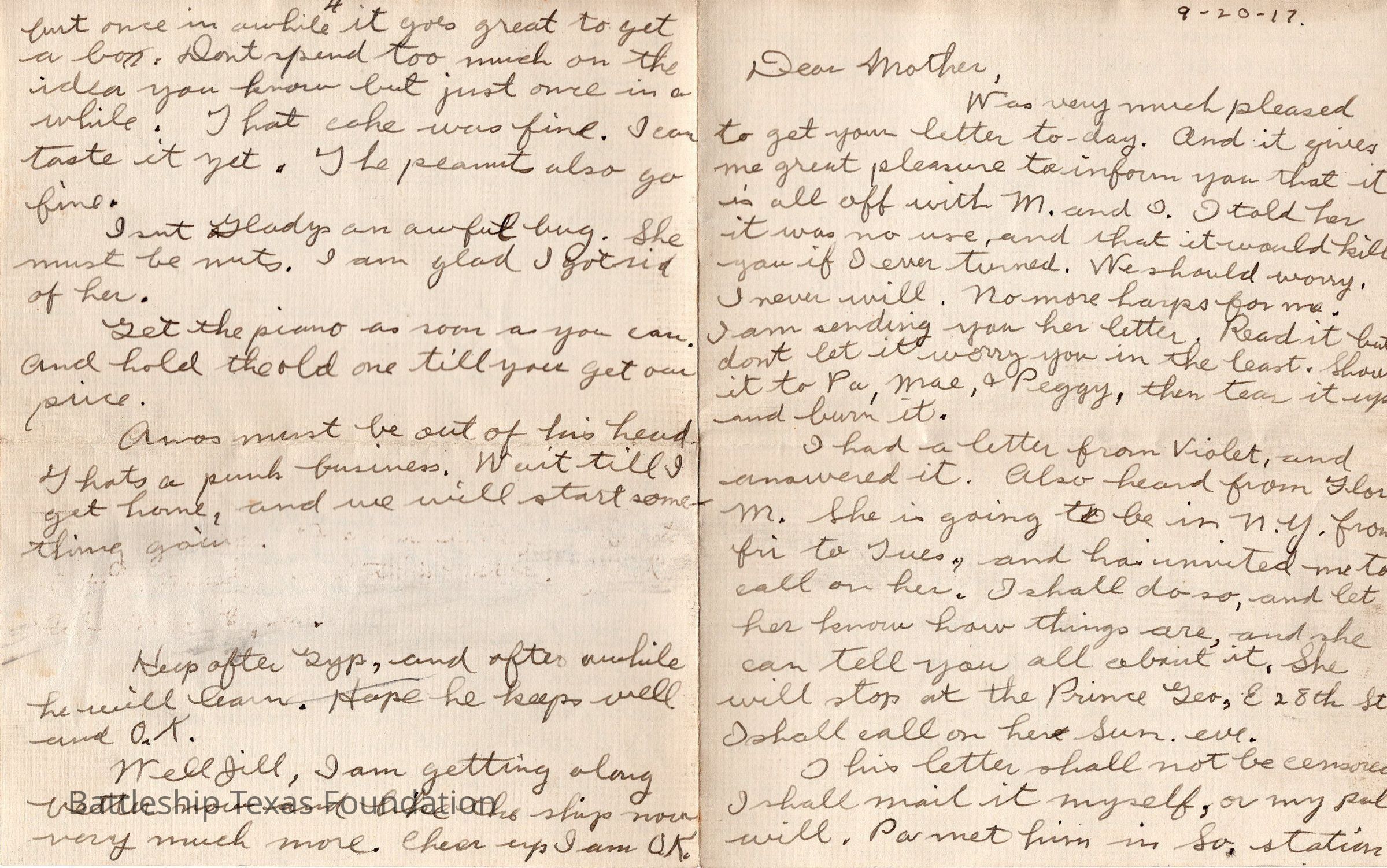
Lamson 1917/09/20 letter
Description
Letter dated 9-20-17 and addressed to Mother. Cat drawn on back of second sheet. Envelope: dated Sep 22, 1917, with top right corner torn off.
Context
The United States entered World War I on April 6, 1917. Battleship Texas and other American coal-fired dreadnoughts began making preparations to join with the British Grand Fleet in the North Sea and began their departure in September 1917. John Lamson was a MM1c on Battleship Texas from May 1917 to June 1919. Throughout his time on Texas, he sent a letter to his family at least once a week, often more. Longer stretches of absence are explained either by movement across the Atlantic, or with the Grand Fleet. Battleship Texas had her own post office. All mail passed through a censor before leaving the ship. Once the package is checked, it was stamped with a “U.S.S. TEXAS” stamp. If in a port, mail could carry the markers of the post office on shore.